How much do MPs and the Prime Minister earn in 2026?
Members of Parliament earn $217,700 a year since April 1, 2026, and the Prime Minister earns $435,400. What ministers, the Speaker and committee chairs earn, and how the yearly raise is set.

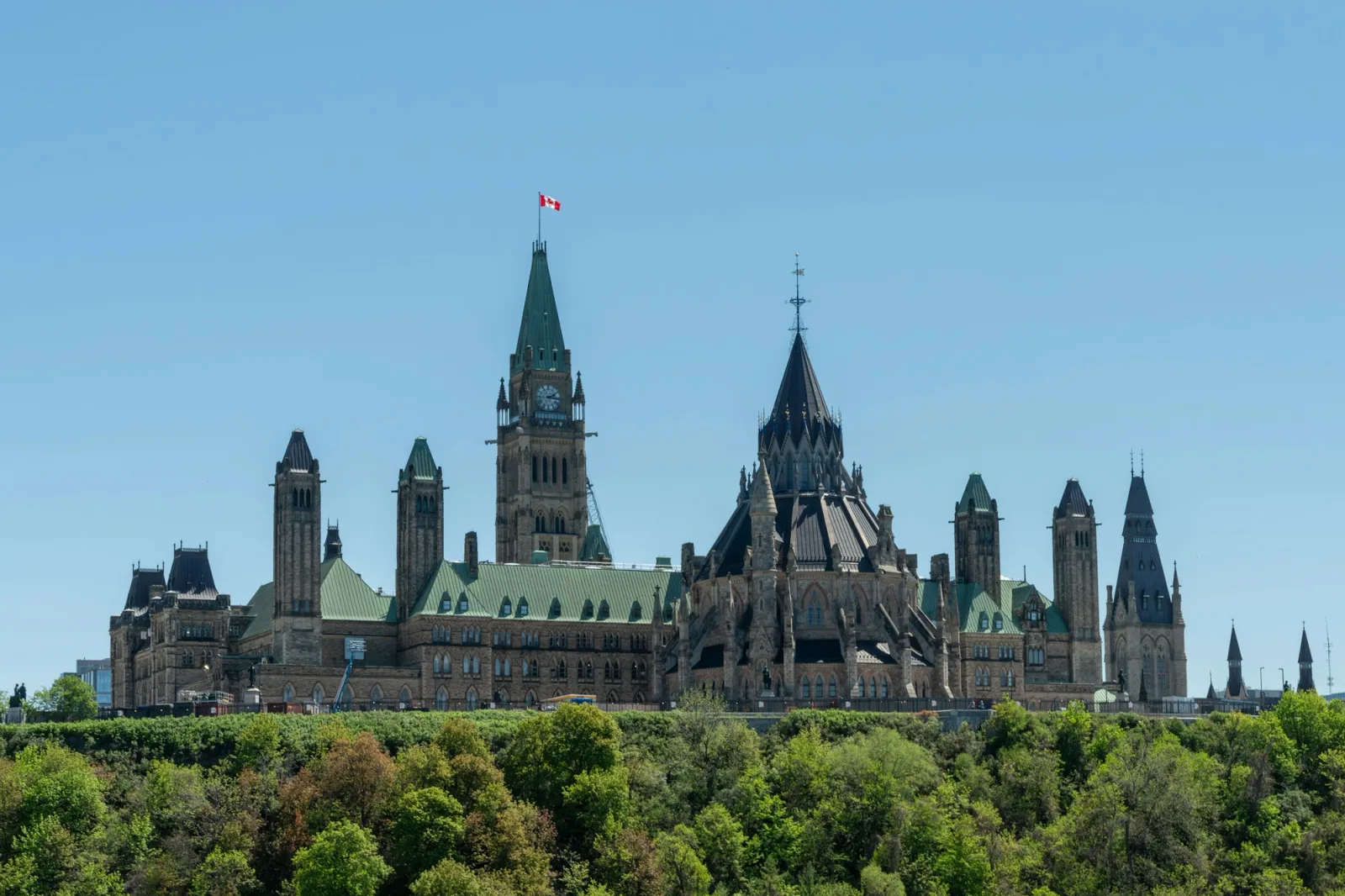
A Member of Parliament earns $217,700 a year since April 1, 2026. Every MP gets that base pay, called the sessional allowance, and many earn more on top for extra jobs in the House. The Prime Minister earns $435,400: the same $217,700 as an MP plus an equal amount again for running the government.
| Role | Base MP pay | Extra salary | Total |
|---|---|---|---|
| Member of Parliament | $217,700 | none | $217,700 |
| Prime Minister | $217,700 | $217,700 | $435,400 |
| Cabinet minister | $217,700 | $103,600 | $321,300 |
| Speaker of the House | $217,700 | $103,600 | $321,300 |
| Leader of the Official Opposition | $217,700 | $103,600 | $321,300 |
| Secretary of State | $217,700 | $77,500 | $295,200 |
| Leader of another recognized party | $217,700 | $73,400 | $291,100 |
| Chief Whip (government or Official Opposition) | $217,700 | $38,500 | $256,200 |
| Parliamentary secretary | $217,700 | $20,900 | $238,600 |
| Committee chair | $217,700 | $14,700 | $232,400 |
The extra salaries come from two laws. The Salaries Act pays the Prime Minister, cabinet ministers and secretaries of state, and the Parliament of Canada Act pays the Speaker, opposition and party leaders, whips, parliamentary secretaries and committee chairs. The two don't double up: a committee chair who is already paid as a minister under the Salaries Act doesn't get the committee chair supplement on top.
Why the pay goes up every April
MPs don't vote on their own raises each year. Under the Parliament of Canada Act, the pay is adjusted automatically every April 1 by the average base-wage increase in major private-sector collective agreements in Canada the year before, then rounded down to the nearest $100.
A backbench MP earned $209,800 before April, according to the Canadian Taxpayers Federation, which tracks the figure each year, so the 2026 raise worked out to about 3.8%. The next adjustment comes on April 1, 2027.
Four years of raises
Because the raise follows private-sector wage settlements, MP pay has climbed quickly since inflation picked up. A backbench MP made $194,600 from April 2023, $203,100 from April 2024, $209,800 from April 2025 and $217,700 now. That's $23,100 more in three years, an increase of about 12%. The Prime Minister's pay rises twice as fast in dollars, since both halves of it move together: from $389,200 in 2023 to $435,400 today.
Skipping the House costs $120 a day
MPs are paid the same whether the House sits or not. The only penalty for staying away is old and small: under section 57 of the Parliament of Canada Act, an MP loses $120 for each sitting day missed beyond 21 in a session. Days away on military reserve training, or on active service in a war, don't count.
Senators, and everyone else
The same law ties senators' pay to MPs': a senator's base salary is the MP figure minus $25,000, so with MPs at $217,700, a senator earns $192,700 a year, and it rises every April on the same formula.
Both are a long way above the typical Canadian household. Statistics Canada puts the median after-tax income of Canadian families at $108,900 in 2024, and $41,000 for people living on their own. A single MP's salary, before tax, is about double what the median family takes home after tax, and more than five times what the median person living alone keeps.
What $217,700 is worth after tax
$217,700 is the gross figure, and the province matters. Run through Canooq's salary calculator with 2026 rates, an employee earning $217,700 keeps about $142,700 a year in Ontario, $145,800 in British Columbia, $148,100 in Alberta and $132,800 in Québec, after income tax and payroll deductions. That's roughly $11,000 to $12,300 a month. An MP's own deposit is lower than those figures, because the pension contributions below also come off every pay, though they reduce the MP's taxable income at the same time. Try your own salary, or an MP's, in the calculator.
The pension, and what doesn't count as pay
MPs pay into their own pension plan, and they pay a lot: member contributions reached 21.80% of pay in January 2026. An MP qualifies for a pension after six years of service. For service from 2016 on, the full pension starts at 65, or from 55 with a reduction of 1% for every year under 65. MPs who leave before six years get their contributions back, with interest. The office budget, staff salaries and travel between Ottawa and the riding are a separate matter: the House of Commons pays them, they don't count as salary, and none of it goes into an MP's pocket.
To see how $217,700 stacks up against other well-paid jobs, see Canooq's list of the highest-paying jobs in Canada.
Page details
- Written by
- Thomas Tremblay
- Last updated
- October 8, 2026
Sources
House of Commons Board of Internal Economy pay table effective April 1, 2026, checked October 8, 2026. Totals are base pay plus additional salary.
- House of Commons Board of Internal Economy: Sessional allowance and additional salariesfederalChecked 2026-10-08
- House of Commons: Remuneration, Pensions and Entitlements (Procedure and Practice, 4th ed.)federalChecked 2026-10-08
- Canadian Taxpayers Federation: MPs getting another big pay hike this yearotherChecked 2026-10-08
- Justice Laws Website: Parliament of Canada Act, section 55.1federalChecked 2026-10-08
- Statistics Canada: Canadian Income Survey, 2024federalChecked 2026-10-08
- Treasury Board of Canada Secretariat: Frequently asked questions: Members of Parliament Pension PlanfederalChecked 2026-10-08
Cite this page: Canooq.ca, How much do MPs and the Prime Minister earn in 2026?, https://www.canooq.ca/blog/mp-salary-canada
Canooq content is educational and may include affiliate or referral links. It is not financial, tax, legal, immigration, employment, mortgage, real estate, or healthcare advice. Verify official sources and provider terms before acting.