Alberta Bucket List: 10 Unmissable Things to Do

June 19, 2026
A practical Alberta bucket list covering Banff, Lake Louise, Jasper, Waterton, Kananaskis, Abraham Lake, Drumheller, Calgary, Edmonton and Head-Smashed-In Buffalo Jump.
What's on this page
Ten Alberta experiences worth planning around, from turquoise Rocky Mountain lakes and winter ice bubbles to badlands, prairie history and city stops.
Alberta is where the Canadian Rockies crash into rolling prairie, where turquoise lakes and dinosaur badlands share the same road atlas, and where two surprisingly fun cities act as bookends to all that scenery. Within one province you get five national parks, several UNESCO World Heritage Sites, and landscapes that flip from jagged peaks and glaciers to open grasslands and eroded canyons in a few hours of driving. Expect lakes that look photoshopped, night skies full of stars, and enough viewpoints that you will genuinely consider upgrading your phone storage mid-trip.
Below is an Alberta bucket list of ten experiences that really deserve a spot on your itinerary, with best views, cafés, and practical details to actually pull them off.
Discover Banff, Lake Louise and Moraine Lake’s perfect postcard
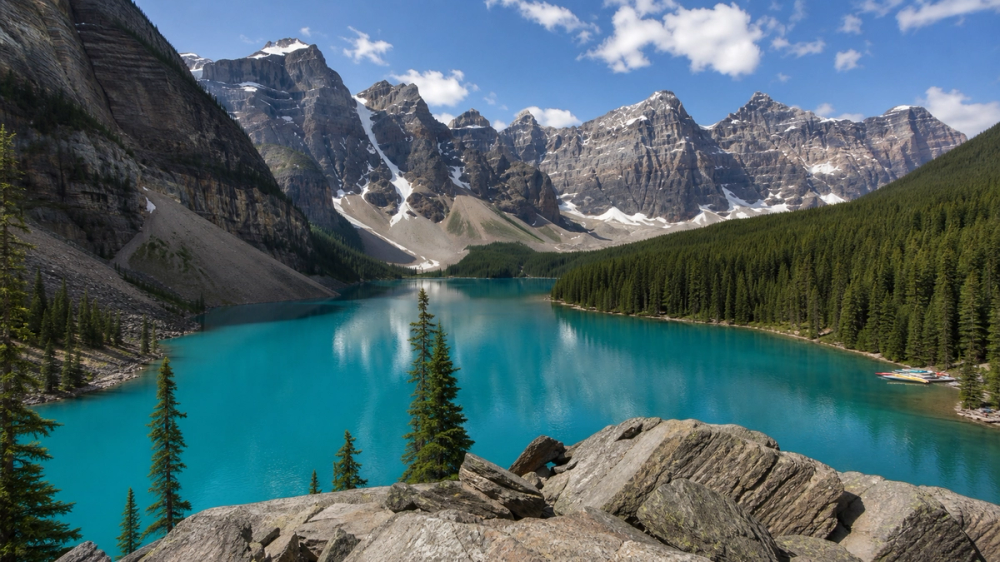
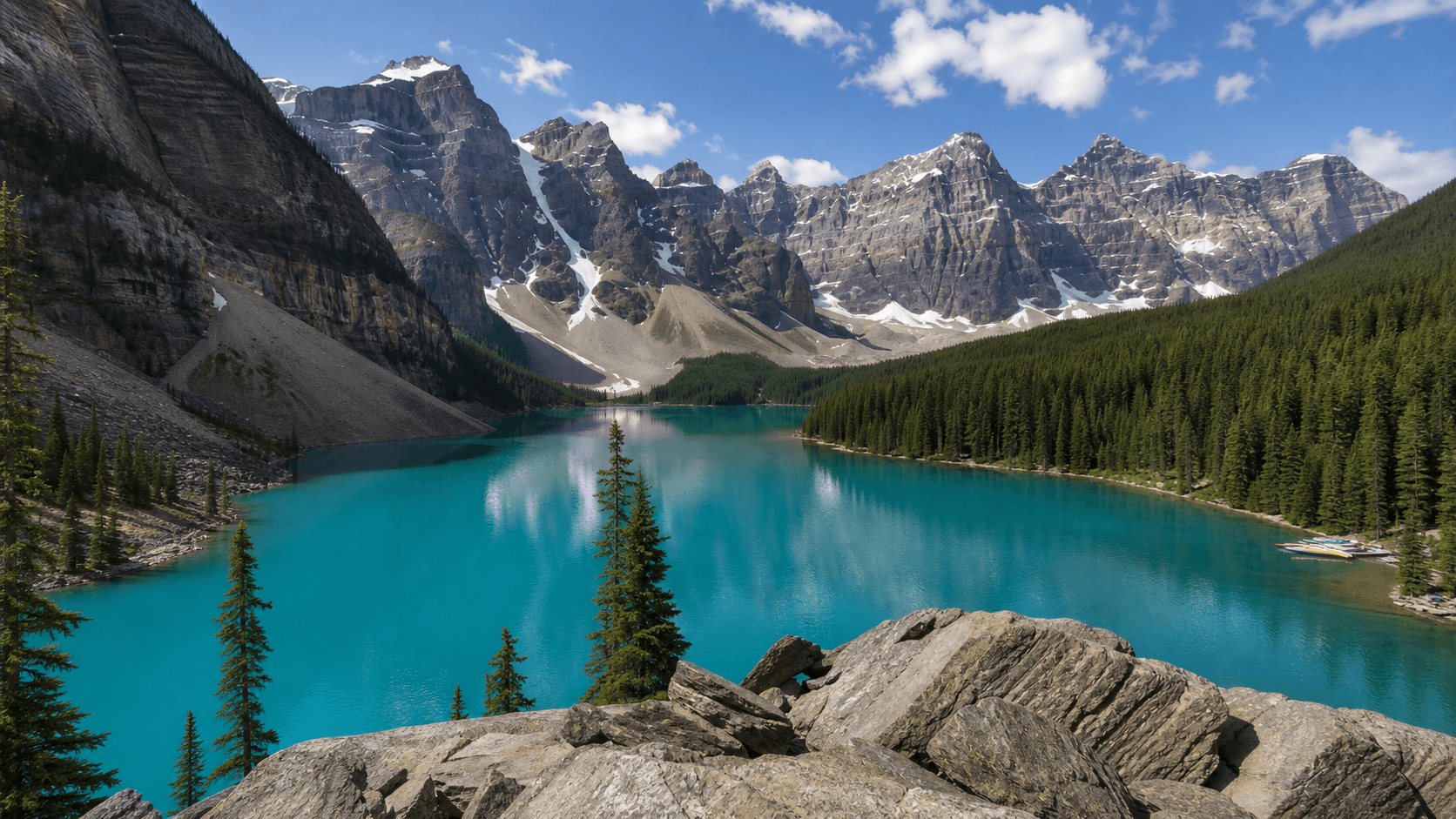
Banff is the classic Rocky Mountains base: a compact town wrapped in peaks, hot springs, and famous turquoise lakes. It sits about 130 km west of Calgary, roughly 1.5–2 hours by car, which makes it an easy first stop straight from the airport or a quick escape from city life. Lake Louise and Moraine Lake are the headliners here, and they earn their fame: Louise is a long glacial bowl framed by the Victoria Glacier, while Moraine is a tight valley of ten peaks reflected in brilliant blue water that looks almost fake in midday sun.
In town, the Banff Gondola zips you up Sulphur Mountain, where boardwalks thread along a ridgeline with sweeping views over the Bow Valley and the town nestled below. It is a great spot for orientation on your first day, especially around sunset when the peaks warm to gold and lights flicker on in the valley. When your muscles complain, Banff Upper Hot Springs offers hot mineral pools in an open-air setting, the sort of place where conversations drift between hikes just done and hikes ambitiously planned.
Food-wise, you have more choice than you strictly need. The Maple Leaf and The Bison deliver hearty Canadian dishes like bison short ribs, steaks, and fish, while Bear Street Tavern and Eddie Burger Bar look after the pizza-and-burger craving. For coffee and a simple breakfast, Whitebark Café is a go-to for espresso and baked goods before you point your day toward the lakes. Banff uses reservations as a survival mechanism in summer; book dinners ahead and treat lunches and brunch like flexible breaks between adventures.
Best view
Moraine Lake rock pile: Climb the short trail up the rock pile at Moraine Lake for that classic view of blue water backed by the Valley of the Ten Peaks. This is the money shot.
Need-to-know: Moraine Lake access
- No private cars: Since 2023, Moraine Lake Road is closed to private vehicles in summer; only Parks Canada shuttles, Roam Transit, commercial buses, taxis, and vehicles with disabled permits are allowed.
- Seasonal window: The road is typically closed to all vehicles from mid-October to early June, when it’s open only to non-motorized traffic like bikes and ski tourers.
- How to get there in 2026: From Lake Louise Ski Resort Park & Ride, Parks Canada shuttles run daily to Lake Louise and Moraine Lake from early June to early/mid-October, with reservations required and no walk-ons. Tickets include the Lake Connector shuttle, so one booking lets you visit both lakes the same day.
- Booking tip: A chunk of seats sells out when reservations open in spring, but extra seats are released two days before travel at 8:00 am MDT, so set an alarm if you missed the first round.
How to spend a day
Early shuttle to Moraine Lake for crowd-reduced views, then Lake Louise for a lakeshore walk or short climb to Fairview Lookout, late lunch back in Banff, afternoon soak at the hot springs, and a sunset ride up the Banff Gondola.
Road-trip the Icefields Parkway between Lake Louise and Jasper
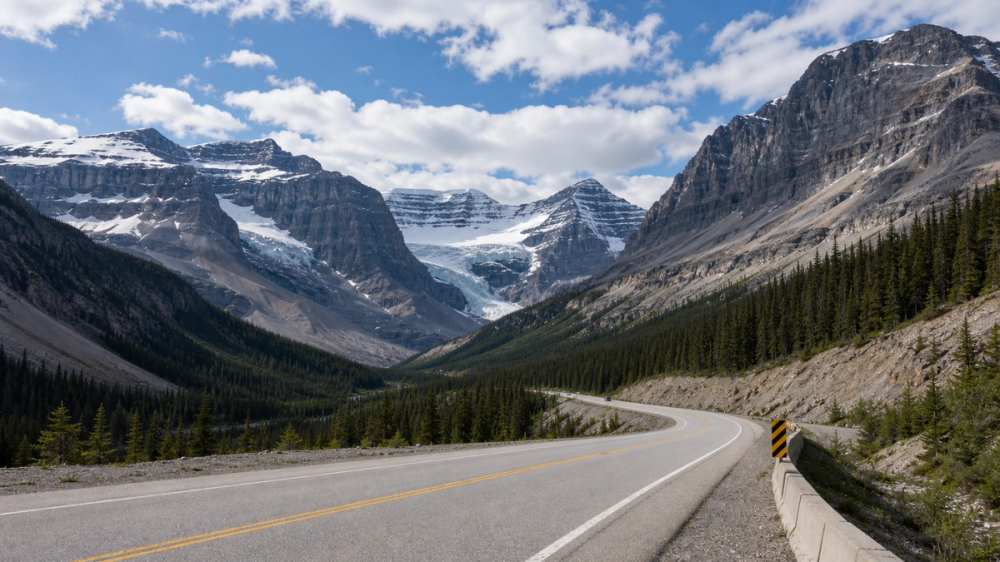
The Icefields Parkway between Lake Louise and Jasper isn’t just “a nice drive” – it is essentially a 230 km alpine museum with glaciers, cliffs, and waterfalls on either side of the road. The scenery has range: hanging icefields, milky blue rivers, forests, and wide U-shaped valleys carved by long-retreated glaciers. Pullouts appear so often that you either discipline yourself or resign your schedule to chaos.
Peyto Lake is the first big, non-negotiable stop heading north from Lake Louise. A short walk from the parking area leads to a platform overlooking a brilliant turquoise lake shaped vaguely like a wolf’s head, with forest and peaks layered behind. Further along, the Columbia Icefield area gives you a front-row seat to the shrinking tongue of the Athabasca Glacier; you can join tours that roll specialized buses onto the ice or walk the Glacier Skywalk, a glass platform projecting out over the valley. Sunwapta Falls and Athabasca Falls near Jasper are compact, powerful canyonside waterfalls that provide dramatic scenery for only a few minutes of walking.
This is a highway without many services, so think more “wilderness corridor” than “service-plaza crawl.” Fuel up in Lake Louise or Jasper and treat Saskatchewan River Crossing as a backup for gas and basic snacks. Cell service drops in and out, so download offline maps, bring layers for rapidly changing mountain weather, and stock up on picnic supplies in Banff or Lake Louise so you can eat at whichever unnamed roadside lake steals your heart.
Key stops
- Peyto Lake viewpoint – high vantage point over that neon-blue “wolf-head” lake.
- Columbia Icefield / Athabasca Glacier – visitor centre, glacier views, and optional tours.
- Sunwapta Falls & Athabasca Falls – short trails to roaring waterfalls in tight canyons.
Practical tips
- Driving time: Lake Louise to Jasper is about 230 km; allow a full day so you can actually get out of the car without panic.
- Season: Summer and early fall offer the best conditions; in shoulder seasons, check for snow, ice, and closures before committing.
- Photo tip: Start early to catch calmer water for mirror-like reflections and fewer tour buses at major stops.
Slow down in Jasper and cruise to Spirit Island
Jasper feels looser than Banff: fewer people, broader valleys, and a sense that wilderness extends a long way beyond the town limits. It is designated a dark-sky preserve, which means light pollution is tightly managed; on clear nights, you can step outside town or walk to Pyramid Lake and see the Milky Way with ridiculous clarity. Wildlife sightings are common, so keep your distance, use your zoom, and let elk and bears go about their business without helping your Instagram.
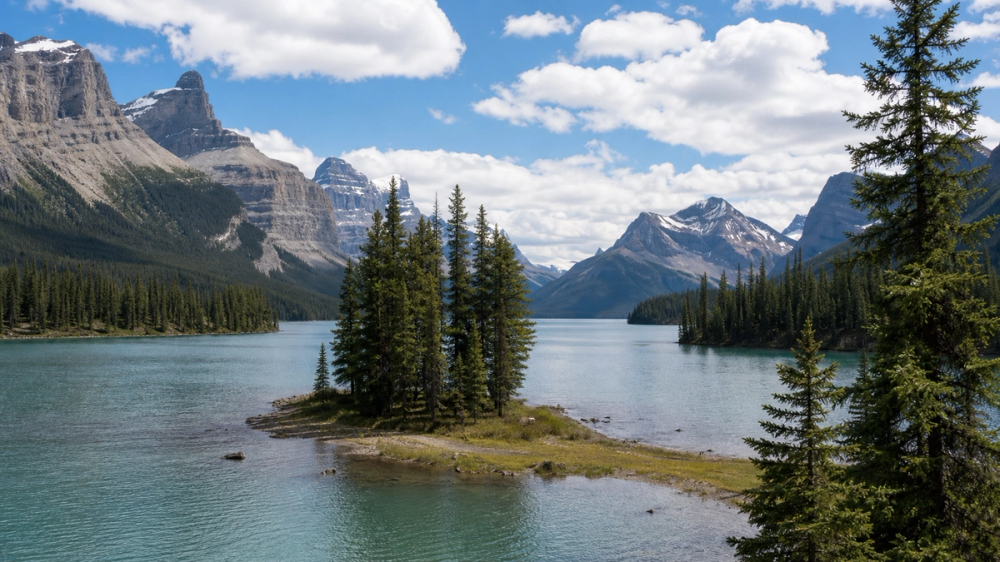
Maligne Lake is Jasper’s showstopper. The Maligne Lake Classic Cruise is a 1.5-hour trip that glides through a corridor of mountains to Spirit Island, a tiny tree-covered outcrop that somehow lives up to every postcard, mural, and screensaver you have seen. Disembarking at the island, you walk a short trail to viewpoints that frame it against a long hallway of peaks known as the Hall of the Gods. On still days the reflections double the drama; on windy days the lake feels more raw and wild.
Back in town, Jasper’s food and coffee scene is small but well tuned to hikers. Bear’s Paw Bakery and Snowdome Coffee Bar do strong coffee, pastries, and portable sandwiches that make ideal hiking lunches. For a gentle walk, the Valley of the Five Lakes offers a moderate loop past five different-coloured lakes, each ringed by forest and fitted out with the occasional bench that rudely tempts you into staying longer than planned. Finish with the Jasper SkyTram up Whistlers Mountain for sunset and, if you hang around, dizzying star views.
Don’t miss
- Spirit Island viewpoint on the Maligne Lake cruise, easily one of the most iconic scenes in the Rockies.
- Valley of the Five Lakes for an easy-moderate trail with maximum colour payoff.
Jasper hacks
- Book the cruise in advance in high season; midday departures are busiest, mornings and late afternoons are quieter.
- Dark-sky bonus: If you are around during the Jasper Dark Sky Festival in October, expect extra astronomy events layered onto already fantastic night skies.
Mix prairie and peaks in Waterton Lakes
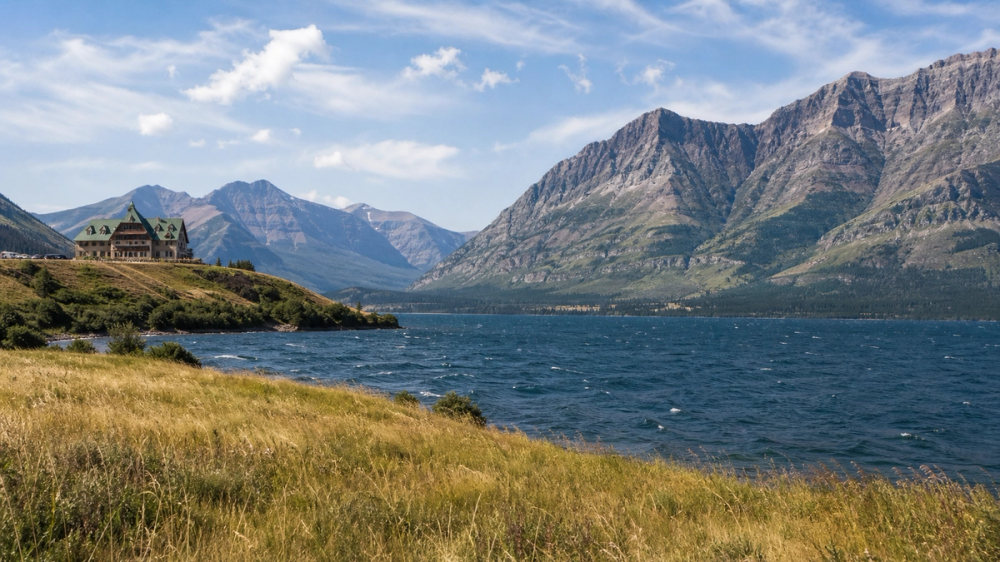
Waterton Lakes National Park feels like a secret pocket of the Rockies: a tiny village wedged between steep mountains and deep, wind-streaked lakes where the prairie simply stops and the cliffs begin. It forms an international peace park with Glacier National Park in Montana and is recognized as a UNESCO World Heritage Site, yet it dodges the scale of Banff’s crowds for most of the year. On any given evening you might find deer grazing on front lawns a block from the lakeshore.
The park’s signature building is the Prince of Wales Hotel, perched dramatically on a hill above Upper Waterton Lake. From the grassy slopes around it you get huge views along the lake toward the U.S. border, with mountains on either side and the village tucked into its own bay. The short but steep Bear’s Hump hike, beginning near the hotel access road, gives you an even higher vantage point where the hotel turns into a miniature and the lakes spread in three directions.
Inside the Prince of Wales, afternoon tea is a very civilised way to bask in the view: multi-tiered trays, proper teapots, and an entire wall of windows facing the lake. Reservations are recommended in summer, especially on weekends, since the room is as popular with photographers as with pastry fans. For the rest of your stay, treat Waterton village as a low-key base: short lakeshore walks, boat cruises, and scenic drives like Akamina Parkway and Red Rock Canyon Road fill the days without much effort.
Waterton highlights
- Panoramic view: Grassy hill and viewpoints around the Prince of Wales, plus Bear’s Hump summit.
- Classic experience: Afternoon tea at the Prince of Wales with uninterrupted lake views.
- Easy adventures: Short hikes and lakeside strolls signposted throughout the park, perfect if your legs are still mad about yesterday’s peak.
Unplug in Kananaskis and thaw out at the Nordic Spa
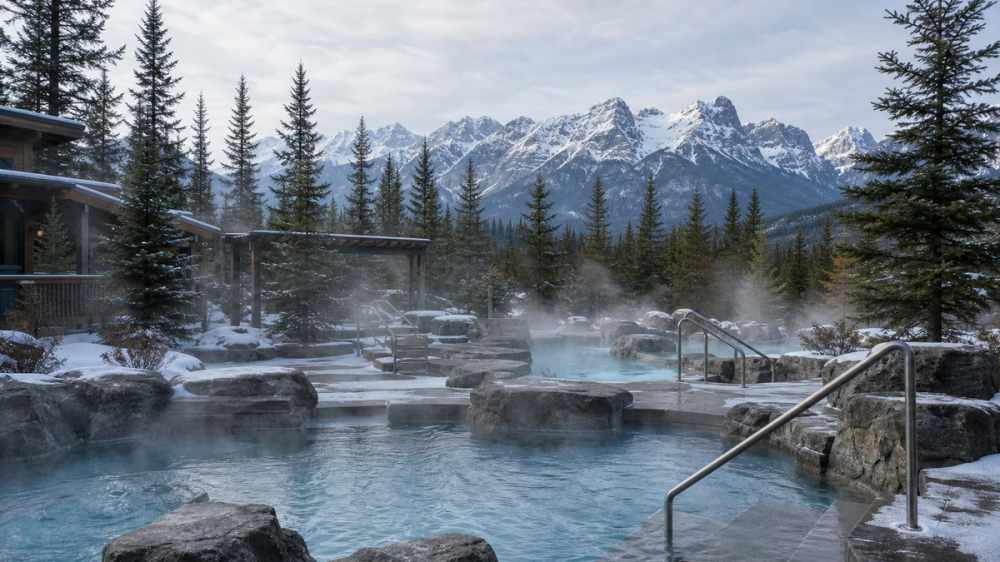
Kananaskis Country is where Albertans go when they like Banff’s mountains but not Banff’s crowds. South and east of Canmore, it is a network of valleys, rivers, and sharp peaks threaded by Highway 40, with trailheads starting right from roadside parking lots. In summer, you get hiking and ridge walks; in winter, cross-country skiing, snowshoeing, and a feel of genuinely wild country a short drive from Calgary.
At the centre of Kananaskis Village, the Kananaskis Nordic Spa has become a near-legendary place to recover from all that ambition. Built next to the Pomeroy Kananaskis Mountain Lodge, it offers an outdoor circuit of hot pools, cold plunges, steam rooms, saunas, and relaxation areas tucked among trees with mountains looming behind. The vibe is grown-up, slow, and blissfully unhurried; many visitors happily spend half a day drifting between pools and decks.
If you prefer your hot springs wild, the Mist Mountain hot springs hike climbs a steep trail off Highway 40 to natural rock pools partway up the mountain. The route is unofficial and conditions can change quickly, so treat it as a proper mountain hike, not a quick soak. On the way in or out, nearby Canmore is your best stop for food and coffee; The Uprising Bake Shop + Espresso Bar on 6th Avenue does sourdough, pastries and espresso in a relaxed lounge that feels like a second living room.
Kananaskis essentials
- Most relaxing view: Hot pools at the Nordic Spa with steam rising and peaks in the background.
- Trail teaser: Pick a short lake or ridge hike in Kananaskis to earn your spa session; many signed trails start near the village.
- Canmore pit stop: Uprising Bake Shop for breakfast on the way in or dessert on the way out.
Walk on ice over bubbles at Abraham Lake
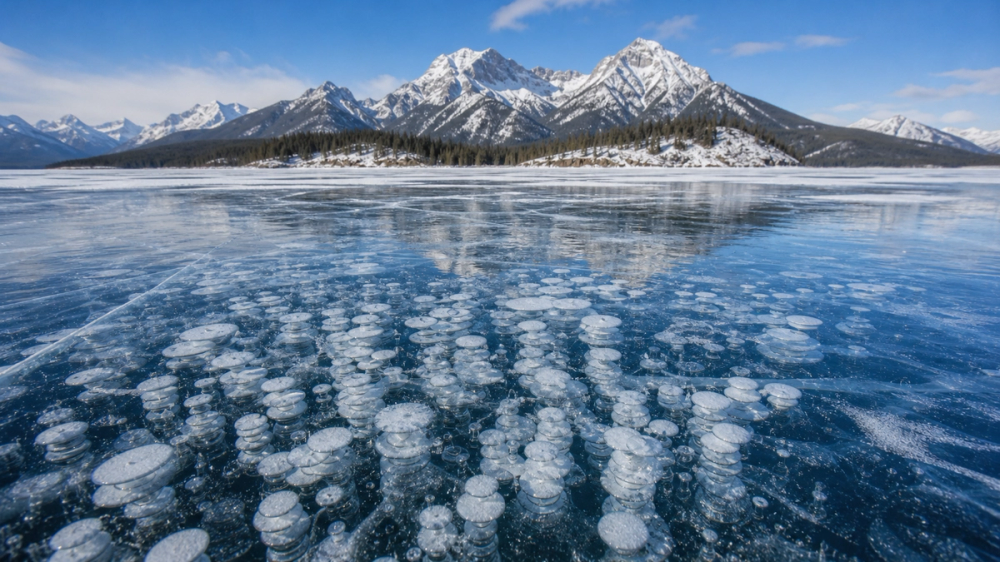
Abraham Lake is a long, wind-swept reservoir along the David Thompson Highway that looks fairly ordinary in summer and completely other-worldly in mid-winter. As methane bubbles from decaying organic matter rise through the water, they freeze into stacked white disks trapped in clear ice, turning large sections of the lake into a giant frozen lava lamp. When the wind has scoured the surface clean of snow, you can look down through multiple layers of bubbles to the lakebed, which is equal parts gorgeous and slightly vertigo-inducing.
The lake lies along Highway 11, about 35 minutes east of its junction with the Icefields Parkway near Saskatchewan River Crossing, making it a realistic side trip from Banff, Lake Louise, or Jasper if you are willing to commit a half day. Access is via roadside pullouts, especially near the southwestern end at spots like Preacher’s Point, and many visitors simply drive along the shore until they see a stretch of polished, snow-free ice. The best window is often late January through February, when the ice is thick and repeated winds have cleared away fresh snow.
There are no facilities at Abraham Lake, so you bring everything: fuel, food, water, and common sense. Locals strongly recommend microspikes or crampons for traction, and a conservative approach to ice safety: avoid areas with slush, open water, or spider-web cracks, and be extra cautious near inlets and outlets where currents thin the ice. Do not treat it like a skating rink; treat it like a wild mountain lake that happens to have given you a rare chance to stand on its surface.
Abraham Lake snapshot
- Most dramatic angle: Crouch low so foreground bubble stacks lead the eye toward snow-capped peaks on the horizon.
- Best timing: Deep winter, once the ice is solid and wind has polished it; conditions change year to year, so check recent reports before you go.
- Logistics: Combine with a night in Nordegg or fold it into your Icefields Parkway travel day for an extended adventure.
Hunt dinosaurs in Drumheller and the Alberta Badlands
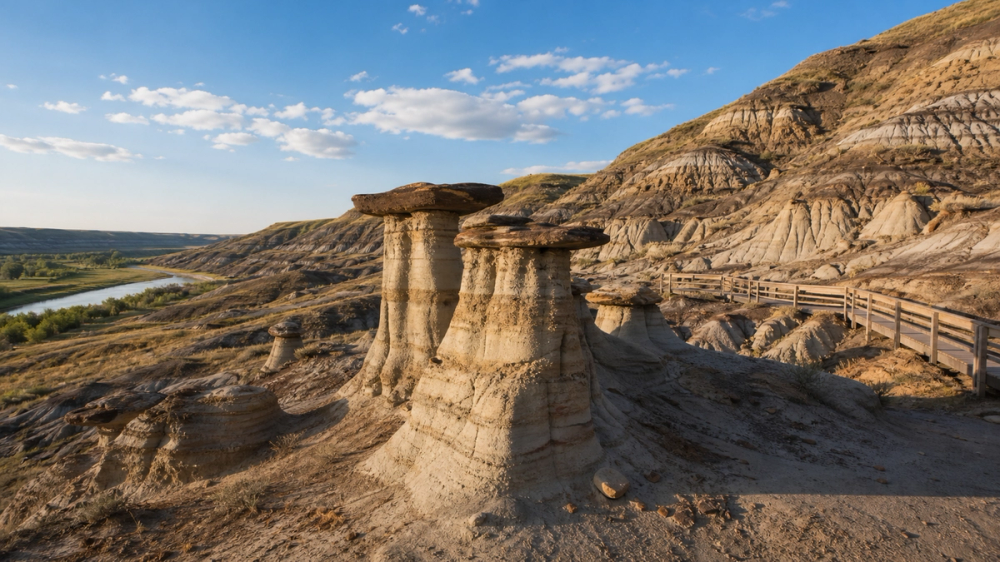
Drumheller is the pivot away from mountains into badlands: steep eroded hills, coulees and hoodoos that look like a landscape sketch left half-finished by time. These formations stretch across a wide swath of eastern Alberta and are rich in dinosaur fossils, which is why this region has become Canada’s dinosaur capital. Driving down into the Red Deer River valley toward Drumheller feels like dropping into another world after days of evergreen and granite.
The Royal Tyrrell Museum of Palaeontology just outside town is world-class. Inside, you will find complete skeletons, fossil galleries, and exhibits that walk you through Alberta’s prehistoric eras, from tropical seas to dinosaur-packed floodplains. South of town, the Drumheller Hoodoos rise up to six metres tall, soft clay pillars capped with harder rock that protects them from eroding too quickly. A short boardwalk leads through the formations while signage explains how they formed and why climbing them is a terrible idea for both you and the hoodoos.
Between science and geology lessons, Drumheller feeds you well enough. Black Mountain Roasters and Café Olé are popular for coffee and snacks, while Whifs Flapjack House hits peak “we earned this” energy for breakfast and brunch. With a car, you can make a full day of it: morning at the Tyrrell, lunch in town, afternoon at the Hoodoos and roadside viewpoints, and a final quiet stop in a coulee to watch the badlands switch from harsh midday light to soft evening tones.
Badlands at a glance
- Signature view: Hoodoos area at golden hour, when stripes and ridges light up dramatically.
- Easy add-ons: Scenic drives and viewpoints along Highway 10 and surrounding backroads, plus tiny hamlets with old grain elevators and bridges.
- Food stop: Coffee at Black Mountain Roasters, breakfast at Whifs, snack top-ups at Café Olé.
Taste city life and cowboy energy in Calgary
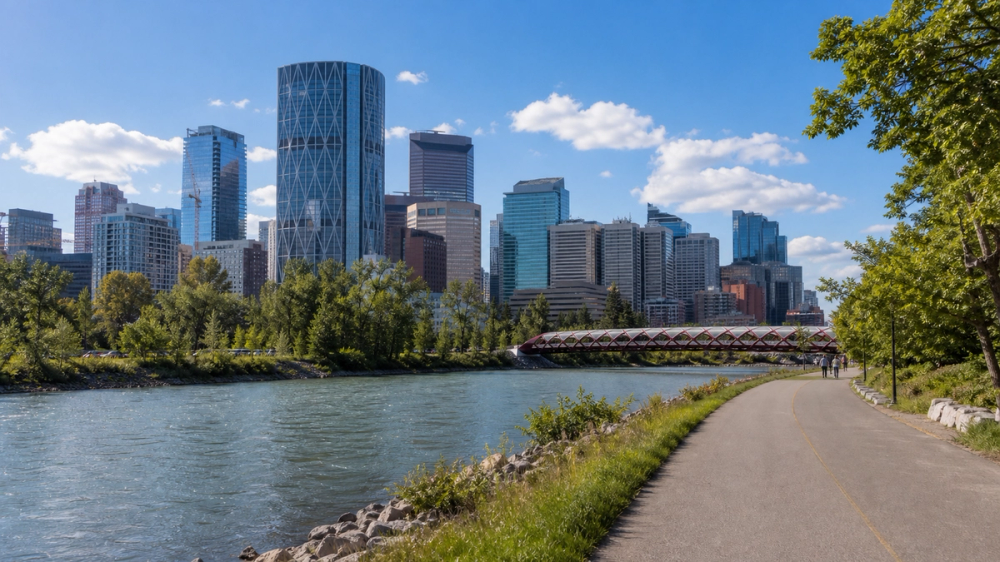
Calgary is far more than a place to grab a rental car. It bridges prairie and mountains with a downtown packed with restaurants, a river valley full of parks and cycle paths, and an annual ten-day party known as the Calgary Stampede. The Stampede, held each July, blends pro rodeo events, chuckwagon races, big-name concerts, and a very enthusiastic midway into one loud, dusty celebration of Western culture. If you time it right, you can get a full hit of cowboy energy before fleeing peacefully to the mountains.
The rest of the year, Calgary is all about neighbourhoods. Heritage Park Historical Village on the Glenmore Reservoir is a huge living history museum with a working steam train, paddlewheeler, and costumed interpreters walking you through prairie life in the 19th and early 20th centuries. In the city centre, Stephen Avenue and the Bow River pathway link public art, restaurants, parks and photogenic bridges like the bright red Peace Bridge. Areas like Inglewood and the Beltline add independent shops, craft breweries, and live-music venues to the mix.
Calgary takes its coffee seriously. Qamaria Yemeni Coffee on 17th Avenue SW is frequently singled out for richly spiced Yemeni-style drinks and pastries in a bright Beltline space, a good place to people-watch and pretend you live there. Other local favourites and roasters, including Higher Ground and friends, dot the central neighbourhoods and make it easy to turn a simple walk into a café crawl.
Calgary cheat sheet
- Orientation view: Bow River pathways and Prince’s Island Park, with the skyline rising right from the water’s edge.
- Stampede tip: If you are visiting during the Stampede, book accommodation and key events well in advance; the city fills up fast.
- Neighbourhood to linger in: Beltline and 17th Avenue SW for coffee, bars, and an evening wander.
Follow the river through Edmonton’s green spine
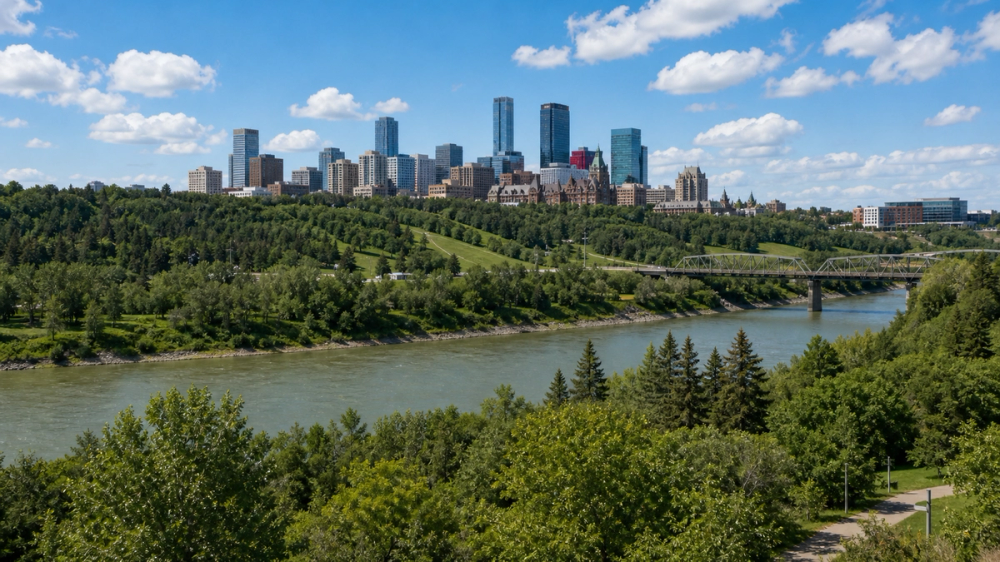
Edmonton, Alberta’s capital, spreads along the North Saskatchewan River and hides one of the largest urban park systems in North America in its river valley. Trails criss-cross the slopes and riverbanks, climbing in and out of forest and connecting parks, footbridges, and viewpoints where the downtown skyline pops into view like it is photobombing the wilderness. The city’s festivals, theatre, and music scenes add personality on top of the geography, especially in summer.
The standout cultural stop is the Indigenous Peoples Experience at Fort Edmonton Park, a multi-media exhibition developed with Indigenous communities that presents stories, histories and contemporary life in an immersive, thoughtful way. Across the river, the Muttart Conservatory’s glass pyramids shelter plants from multiple climate zones and give you a different, more geometric take on Edmonton’s architecture. If you crave full-tilt spectacle, West Edmonton Mall still offers one of the largest mall experiences on the continent, complete with indoor amusement park and huge waterpark.
Edmonton’s cafés are conveniently scattered near valley access points. Little Brick Café in a historic house close to the river is ideal for pre- or post-walk breakfast, while spots highlighted along the valley like Roam Café, Ch Cafeteria and Mill Creek Café serve as tasty bribes for tackling another staircase or hill. Transcend Coffee roasts beans for many of the city’s serious coffee drinkers and runs its own cafés, making it an easy go-to for a mid-day refuel.
River city highlights
- Best stroll: Any loop that combines a valley trail, a pedestrian bridge over the river, and a climb back up to Old Strathcona or downtown for food.
- Culture stop: Indigenous Peoples Experience at Fort Edmonton Park, best tackled with enough time to linger.
- Coffee circuit: Little Brick for breakfast, valley walk, then Transcend or Mill Creek Café for a second round.
Step into deep time at Head-Smashed-In Buffalo Jump
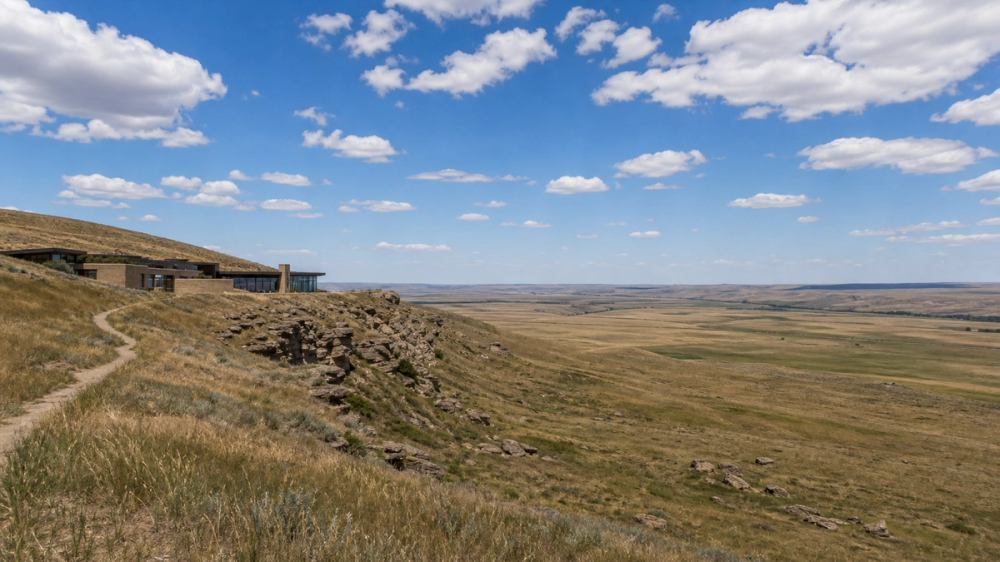
Head-Smashed-In Buffalo Jump, about 19 km west of Fort Macleod, is one of Alberta’s most significant historic sites and a powerful counterpoint to the province’s mountain-and-lake postcards. For thousands of years, Plains peoples used this long escarpment as a buffalo jump, carefully coordinating hunts that drove herds over the cliff, providing food, tools, and materials for entire communities. Today, the site is both a Provincial Historic Site and a UNESCO World Heritage Site, recognized as one of the oldest and best-preserved buffalo jumps in North America.
The visitor centre is cleverly built into the cliff and contains multiple levels of exhibits covering hunting techniques, seasonal patterns, spiritual connections, and how these practices tie into living cultures today. From the rooftop and cliff-edge trails, you look out over a vast sweep of prairie that makes the logistics of a buffalo jump easier to imagine: drive lanes, gathering points, and the sheer scale of the animals and people involved. It is a quietly intense place, and many travellers spend longer here than they expect, pulled in by films, displays and the simple act of standing at the edge looking down.
Most itineraries link Head-Smashed-In with a loop that includes Waterton, Lethbridge, or the badlands around Drumheller, but it also works as a day trip from Calgary if you are comfortable with a few hours of prairie driving. Fort Macleod and nearby towns offer straightforward cafés and diners, which you will appreciate after a few hours of museum time and open skies. Give the site at least half a day so you can move slowly through the exhibits and outside trails rather than rushing back to the parking lot.
Big-picture notes
- Most affecting view: Cliff-edge trail above the jump, looking across the plains that once channelled bison herds.
- Context: Exhibits developed with Indigenous knowledge holders make this one of the most insightful stops for understanding the human history of the prairie.
- Travel pairing: Combine with Waterton for a “prairie-meets-peaks” southern Alberta loop that balances natural and cultural highlights.
Alberta bundles glacial lakes, hot springs, dinosaur badlands, buffalo jumps, and two lively cities into one province that rewards both ambitious road-trippers and leisurely wanderers. Pick a couple of these stops for a short trip, or string several together into a loop; either way, the problem won’t be finding views, it will be convincing yourself to go home.
Related travel guides:
Page details
Author: Thomas Tremblay
Updated: June 19, 2026
Last reviewed: June 19, 2026
Sources verified: June 19, 2026
Cite this page: Canooq.ca, Alberta Bucket List: 10 Unmissable Things to Do, https://www.canooq.ca/travel/alberta-bucket-list
Canooq content is educational and may include affiliate or referral links. It is not financial, tax, legal, immigration, employment, mortgage, real estate, or healthcare advice. Verify official sources and provider terms before acting.
Enjoy Canooq? Let us keep helping you — make Canooq a preferred source on Google.