British Columbia Bucket List: 10 Unmissable Things to Do

June 18, 2026
Ten unmissable British Columbia experiences with practical advice on seasons, access, reservations, costs and trip timing.
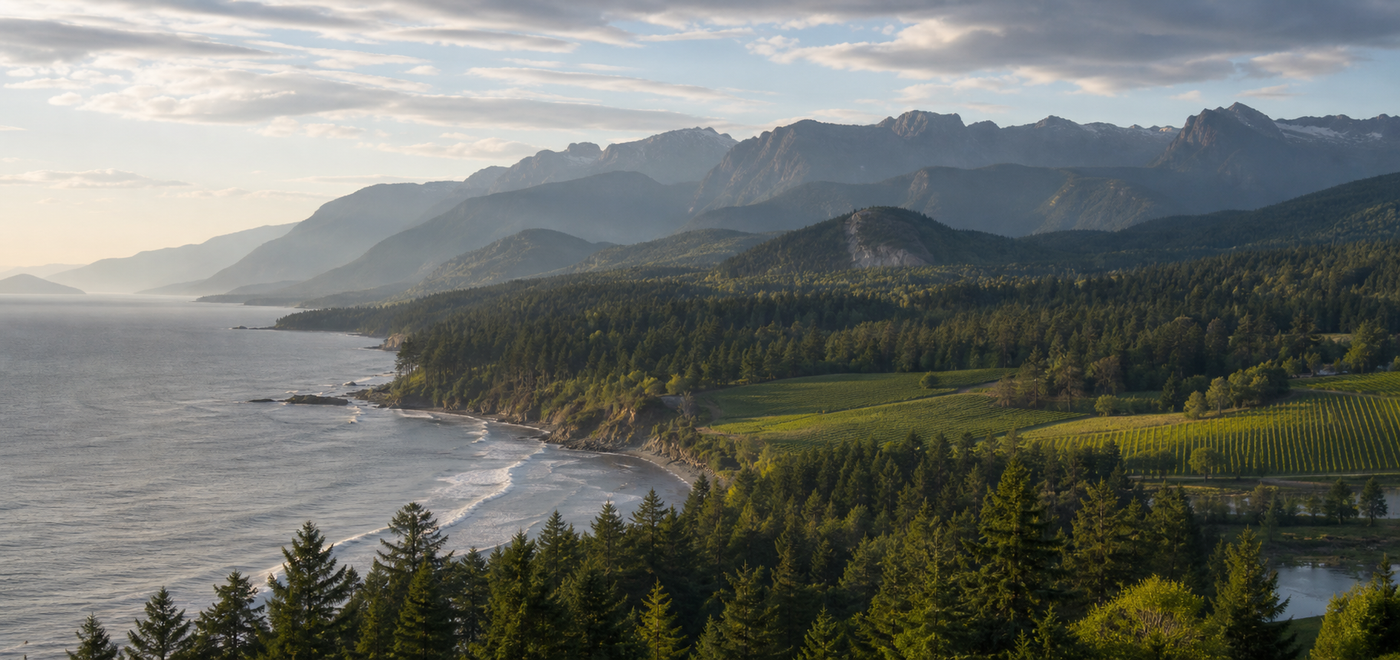
What's on this page
An unranked British Columbia bucket list built around ten trips worth planning for, from headline sights to remote landscapes.
British Columbia rewards travellers who choose a region instead of trying to cross the whole province in one hurried loop. The coast, islands, rainforest, wine country and mountain parks sit far apart, and ferries or small aircraft shape several of the best trips. Build one journey around Vancouver and Vancouver Island, the Okanagan, the Rockies, or the remote north coast.
The ten experiences below are unranked. Each one can carry a trip on its own, and each offers a side of the province that travellers would miss on a quick capital-city stop. Use the season and access notes to group compatible places instead of forcing distant regions into one itinerary.
A strong route also leaves time for meals, weather changes and the small roadside stops that make each region distinct. Keep one half-day unclaimed; it can absorb a delayed ferry or become the best unscripted part of the trip.
1. Explore Vancouver, Stanley Park and Granville Island
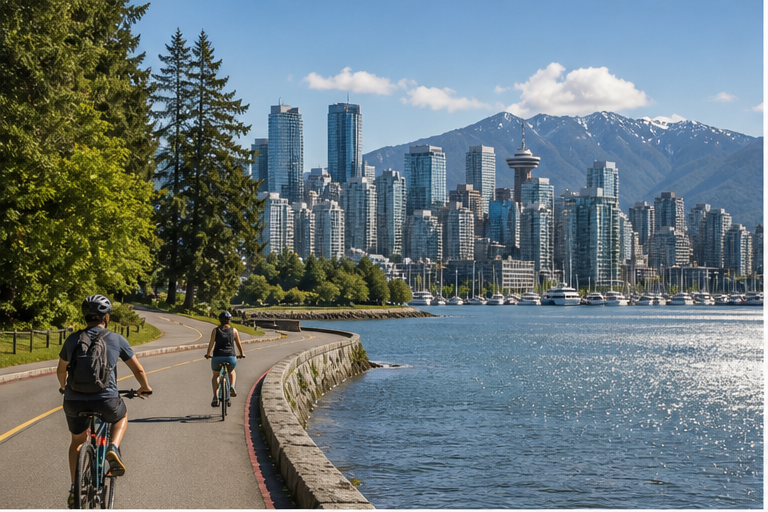
Vancouver compresses seawall, rainforest, beaches, food markets and mountain views into one urban stay. Cycle or walk part of the Stanley Park Seawall, browse Granville Island Public Market, then use the SeaBus or False Creek ferries to see the city from the water.
Plan 2 to 4 days for this experience. The strongest window is Year-round; May to September for long days. Transit, walking and cycling work well; a car can be a burden downtown.
Reserve popular restaurants and summer accommodation. Stanley Park and Granville Island themselves do not require admission. Free sights dominate; budget for food, bike rental, museums and harbour activities. Prices, schedules and operating dates can change between seasons, so use the linked official page before paying for transport or accommodation.
Practical details
- Best season: Year-round; May to September for long days
- Time required: 2 to 4 days
- Access: Transit, walking and cycling work well; a car can be a burden downtown.
- Booking: Reserve popular restaurants and summer accommodation. Stanley Park and Granville Island themselves do not require admission.
- Cost: Free sights dominate; budget for food, bike rental, museums and harbour activities.
Official planning source: destinationvancouver.com.
Check the forecast again on the morning of departure. Mountain, marine and prairie conditions can shift faster than a city forecast suggests. Carry water and layers, download the route before leaving service, and follow closures even when an older trip report shows the road or trail open.
2. Drive the Sea-to-Sky Highway to Whistler
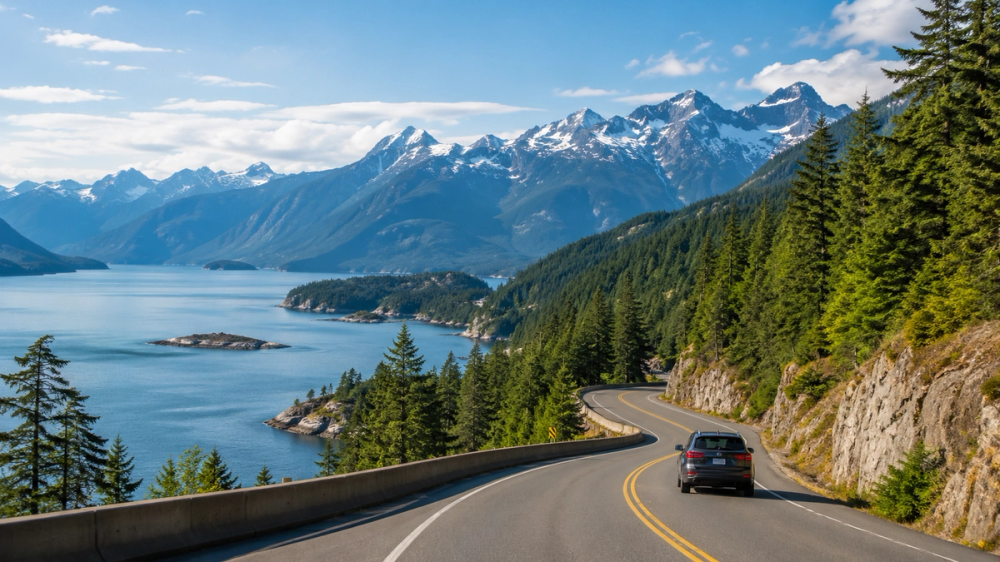
Highway 99 follows Howe Sound past Shannon Falls and Squamish before climbing into Whistler. The road earns a full day when you add a waterfall walk, a viewpoint and time in Whistler Village instead of treating the route as a transfer.
Plan 1 to 3 days for this experience. The strongest window is June to October; winter for skiing. Drive Highway 99 or book a coach from Vancouver. Stop only at signed pullouts.
Book Whistler lodging, gondolas and peak-season activities ahead. Winter drivers must meet tire requirements. The highway is free; fuel, parking, gondolas and activities raise the total. Prices, schedules and operating dates can change between seasons, so use the linked official page before paying for transport or accommodation.
Practical details
- Best season: June to October; winter for skiing
- Time required: 1 to 3 days
- Access: Drive Highway 99 or book a coach from Vancouver. Stop only at signed pullouts.
- Booking: Book Whistler lodging, gondolas and peak-season activities ahead. Winter drivers must meet tire requirements.
- Cost: The highway is free; fuel, parking, gondolas and activities raise the total.
Official planning source: hellobc.com.
Leave an unscheduled hour in the day. Ferry loading, road work, wildlife on the road and crowded trailhead parking can erase a tight connection. Keep food and a charged phone in the vehicle, and avoid placing a non-refundable booking directly after a long rural drive.
3. Visit Tofino and Pacific Rim National Park Reserve
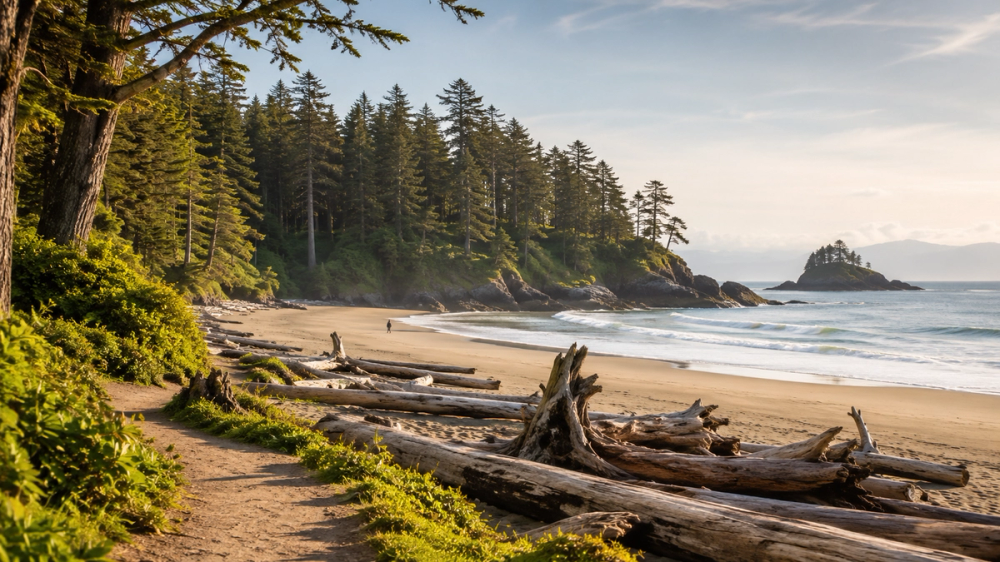
Long Beach, rainforest trails and the surf towns of Tofino and Ucluelet show the exposed Pacific coast at full scale. Split the trip between beach walks, the Rainforest Trail and one water-based outing, then leave room for fog or rain to change the plan.
Plan 3 to 5 days for this experience. The strongest window is May to October; November to March for storm watching. Drive from Nanaimo or Victoria after a ferry crossing, or fly. Highway closures and construction can affect the route.
Reserve lodging, campsites, surf lessons and wildlife tours months ahead for summer. Park entry, lodging and tours make this a mid-range to expensive coastal trip. Prices, schedules and operating dates can change between seasons, so use the linked official page before paying for transport or accommodation.
Practical details
- Best season: May to October; November to March for storm watching
- Time required: 3 to 5 days
- Access: Drive from Nanaimo or Victoria after a ferry crossing, or fly. Highway closures and construction can affect the route.
- Booking: Reserve lodging, campsites, surf lessons and wildlife tours months ahead for summer.
- Cost: Park entry, lodging and tours make this a mid-range to expensive coastal trip.
Official planning source: parks.canada.ca.
Local staff provide the best same-day information. Ask about smoke, tides, washouts, wildlife and the return journey before setting out. A map saved offline helps when cell coverage ends, but posted signs and current closure notices take priority over downloaded tracks.
4. Explore Victoria and Butchart Gardens
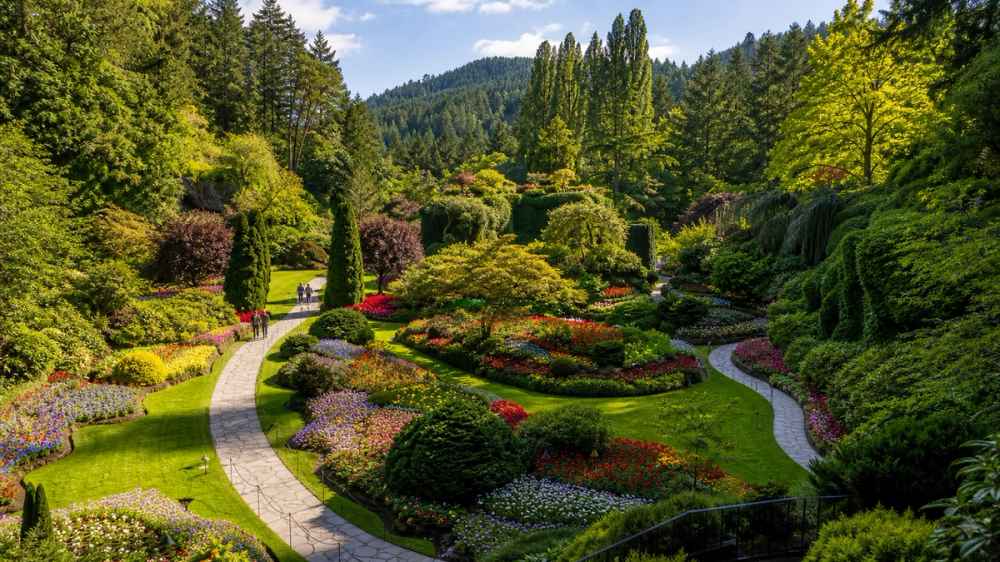
Victoria pairs an easy Inner Harbour walk with museums, neighbourhoods and one of Canada’s best-known gardens. Give the city a night so you can see the harbour after day-trippers leave, then allow half a day for Butchart’s Sunken Garden and seasonal displays.
Plan 2 to 3 days for this experience. The strongest window is April to October; December for holiday lights. Reach Victoria by ferry, floatplane or air. Local buses serve central sights and Butchart Gardens.
Reserve the ferry if taking a vehicle and buy timed garden admission during busy periods. Walking the harbour is free; gardens, museums and transport add moderate costs. Prices, schedules and operating dates can change between seasons, so use the linked official page before paying for transport or accommodation.
Practical details
- Best season: April to October; December for holiday lights
- Time required: 2 to 3 days
- Access: Reach Victoria by ferry, floatplane or air. Local buses serve central sights and Butchart Gardens.
- Booking: Reserve the ferry if taking a vehicle and buy timed garden admission during busy periods.
- Cost: Walking the harbour is free; gardens, museums and transport add moderate costs.
Official planning source: tourismvictoria.com.
Remote services run on a different scale from city travel. Fuel before the gauge looks urgent, carry food beyond the planned meal, and confirm the final check-in time with the accommodation. Tell someone the route when hiking, paddling or driving beyond regular traffic.
5. Tour the Okanagan’s lakes and wine country
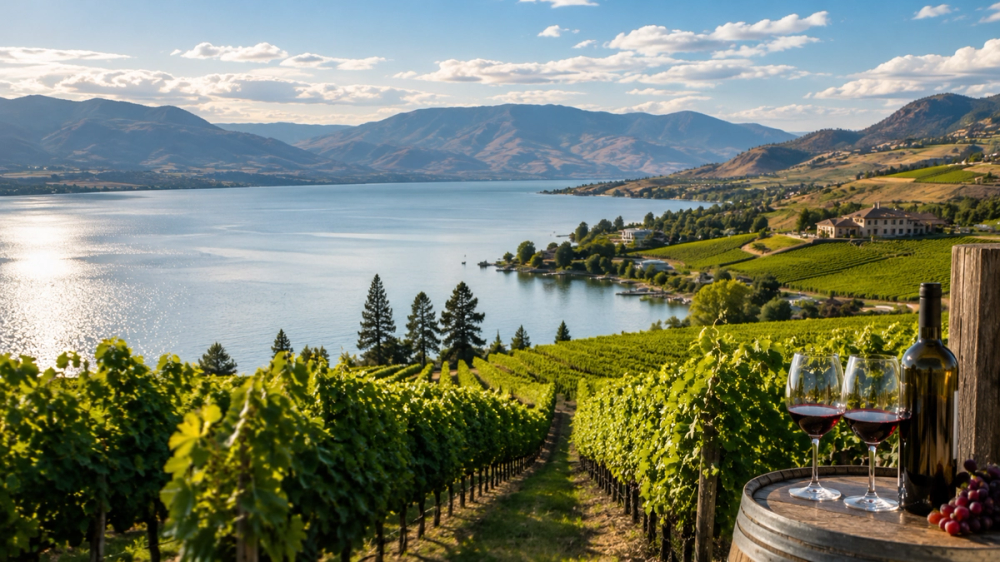
The Okanagan works best as a lake trip with wine, not a race through tasting rooms. Choose one or two subregions, add a beach or rail-trail morning, and keep afternoons flexible for orchards, patios and the heat that settles over the valley in midsummer.
Plan 3 to 5 days for this experience. The strongest window is May to October. A car helps between Kelowna, Penticton, Naramata and smaller winery districts. Use a tour if tasting.
Many wineries request reservations. Book summer rooms and restaurant tables early. Beaches are free; tastings, tours and lakefront lodging vary from moderate to expensive. Prices, schedules and operating dates can change between seasons, so use the linked official page before paying for transport or accommodation.
Practical details
- Best season: May to October
- Time required: 3 to 5 days
- Access: A car helps between Kelowna, Penticton, Naramata and smaller winery districts. Use a tour if tasting.
- Booking: Many wineries request reservations. Book summer rooms and restaurant tables early.
- Cost: Beaches are free; tastings, tours and lakefront lodging vary from moderate to expensive.
Official planning source: destinationbc.ca.
Protect the place that brought you here. Stay on durable surfaces, pack out food and waste, keep drones out of restricted areas and give wildlife space. Roadside animals can draw unsafe crowds, so continue to the next legal pullout instead of stopping in a traffic lane.
6. Visit Haida Gwaii and Gwaii Haanas
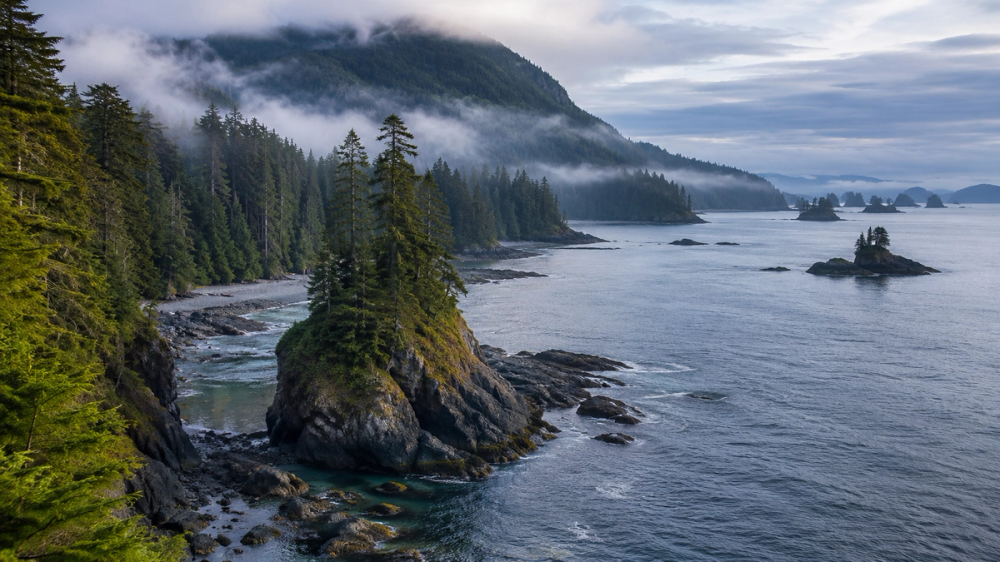
Haida Gwaii asks for time, respect and advance work. Haida culture, coastal forest, beaches and village sites carry the trip, while a Gwaii Haanas expedition reaches protected islands and cultural places that have no road access.
Plan 5 to 8 days for this experience. The strongest window is May to September. Fly to Haida Gwaii or take the ferry from Prince Rupert. Gwaii Haanas requires boat or aircraft access with an authorized operator.
Complete required orientation and reserve operators, accommodation and transport well ahead. Remote transport and guided access make this an expensive trip. Prices, schedules and operating dates can change between seasons, so use the linked official page before paying for transport or accommodation.
Practical details
- Best season: May to September
- Time required: 5 to 8 days
- Access: Fly to Haida Gwaii or take the ferry from Prince Rupert. Gwaii Haanas requires boat or aircraft access with an authorized operator.
- Booking: Complete required orientation and reserve operators, accommodation and transport well ahead.
- Cost: Remote transport and guided access make this an expensive trip.
Official planning source: parks.canada.ca.
Cold water changes the risk on beaches, boats and paddling routes, even during a hot afternoon. Use the operator’s safety equipment, keep children within reach and skip exposed water when wind rises. Marine forecasts matter more than the temperature shown for the nearest town.
7. See wildlife in the Great Bear Rainforest
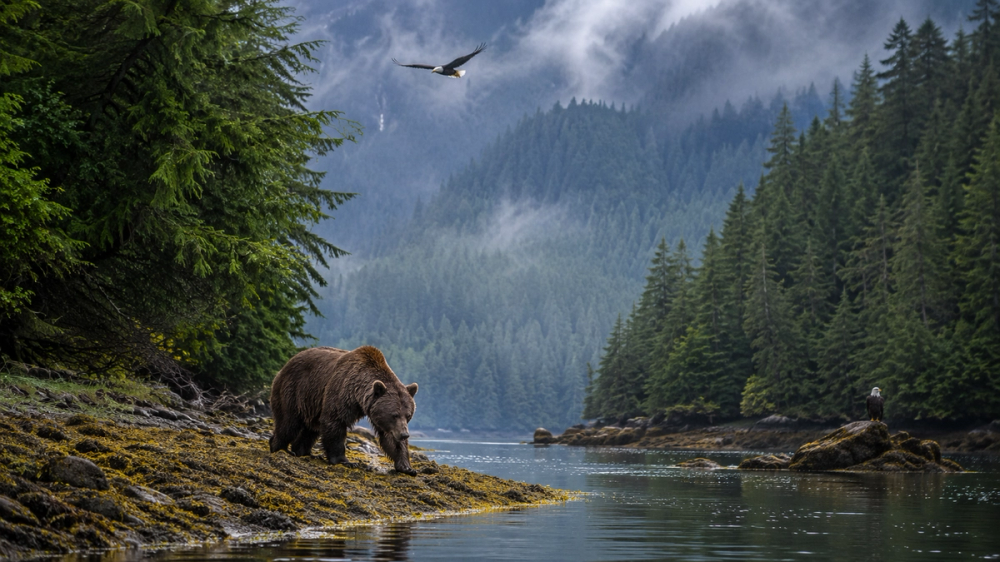
The Great Bear Rainforest protects a vast coast of islands, fjords and old-growth forest. A guided stay gives you a realistic chance to watch bears, whales and other wildlife while trained staff manage tides, distance and animal behaviour.
Plan 4 to 7 days for this experience. The strongest window is May to October; species windows vary. Most wildlife lodges and tours use boats or floatplanes from coastal gateways.
Reserve a licensed operator far ahead and choose dates around the species you hope to see. Remote lodges and transport put this among Canada’s most expensive wildlife trips. Prices, schedules and operating dates can change between seasons, so use the linked official page before paying for transport or accommodation.
Practical details
- Best season: May to October; species windows vary
- Time required: 4 to 7 days
- Access: Most wildlife lodges and tours use boats or floatplanes from coastal gateways.
- Booking: Reserve a licensed operator far ahead and choose dates around the species you hope to see.
- Cost: Remote lodges and transport put this among Canada’s most expensive wildlife trips.
Official planning source: hellobc.com.
Heat and sun can turn a short open trail into a hard outing. Start early, carry more water than the distance seems to require and use shade when it exists. Thunderstorms, wildfire smoke and extreme-heat warnings provide sound reasons to replace the plan with a museum or town day.
8. Visit Yoho National Park
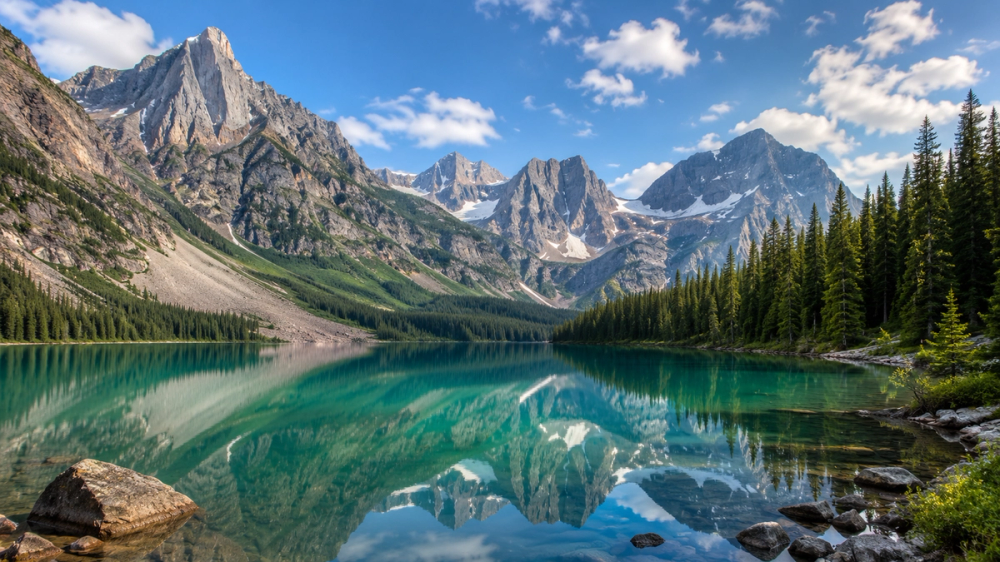
Yoho packs Emerald Lake, Takakkaw Falls, railway history and steep mountain terrain into a compact park. Stay nearby, start early, and check seasonal road openings before building a day around Takakkaw Falls or Lake O’Hara.
Plan 2 to 3 days for this experience. The strongest window is June to September. Drive the Trans-Canada Highway from Golden or Lake Louise. Some roads and trails open late after snow.
Lake O’Hara access uses a reservation or shuttle system with limited capacity. Book camping early. A Parks Canada pass applies; most viewpoints and trails have no separate fee. Prices, schedules and operating dates can change between seasons, so use the linked official page before paying for transport or accommodation.
Practical details
- Best season: June to September
- Time required: 2 to 3 days
- Access: Drive the Trans-Canada Highway from Golden or Lake Louise. Some roads and trails open late after snow.
- Booking: Lake O’Hara access uses a reservation or shuttle system with limited capacity. Book camping early.
- Cost: A Parks Canada pass applies; most viewpoints and trails have no separate fee.
Official planning source: parks.canada.ca.
Treat reservation times as part of the route. Arrive early enough for parking, check-in and washrooms, then keep confirmation details available offline. If a shuttle, ferry or tour controls access, missing it may remove the experience from the day rather than delay it by a few minutes.
9. Sail BC’s Inside Passage
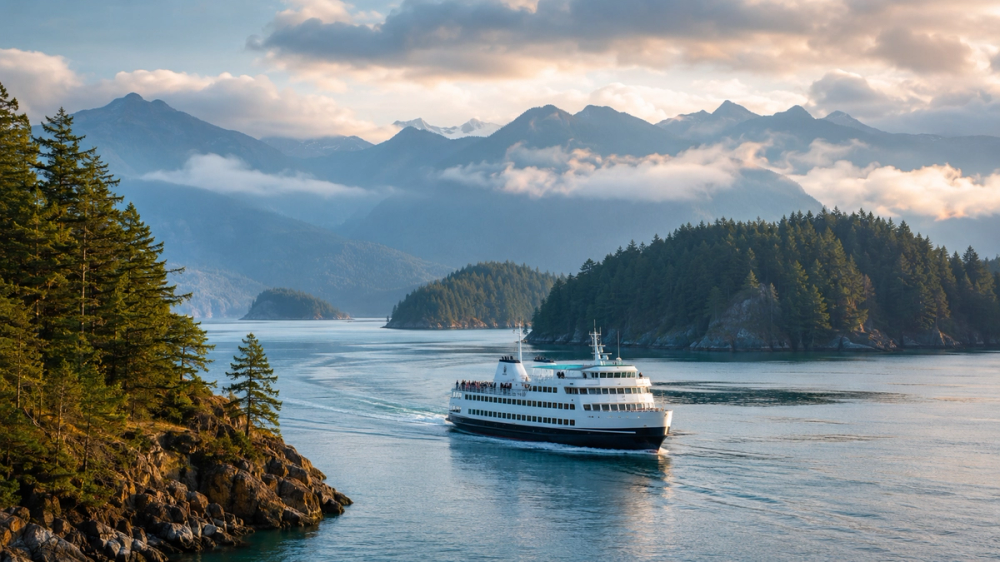
The Inside Passage sailing replaces highway miles with a full day of islands, narrow channels and coastal mountains. Bring layers and binoculars, spend time on deck, and treat the sailing as the centre of the trip rather than transport to rush through.
Plan 2 days plus connections for this experience. The strongest window is May to September. BC Ferries operates the long northern route between Port Hardy and Prince Rupert on select schedules.
Reserve passenger and vehicle space, confirm sailing dates, and plan accommodation around the timetable. Fares, cabins, food and the drive to each terminal make this a substantial transport day. Prices, schedules and operating dates can change between seasons, so use the linked official page before paying for transport or accommodation.
Practical details
- Best season: May to September
- Time required: 2 days plus connections
- Access: BC Ferries operates the long northern route between Port Hardy and Prince Rupert on select schedules.
- Booking: Reserve passenger and vehicle space, confirm sailing dates, and plan accommodation around the timetable.
- Cost: Fares, cabins, food and the drive to each terminal make this a substantial transport day.
Official planning source: bcferries.com.
Respect communities as places where people live. Park only where permitted, keep noise down near homes and buy food or guiding from local operators when possible. Indigenous cultural experiences deserve advance booking, attentive participation and the same photography rules the host sets for every visitor.
10. Cycle Myra Canyon and the Kettle Valley Rail Trail
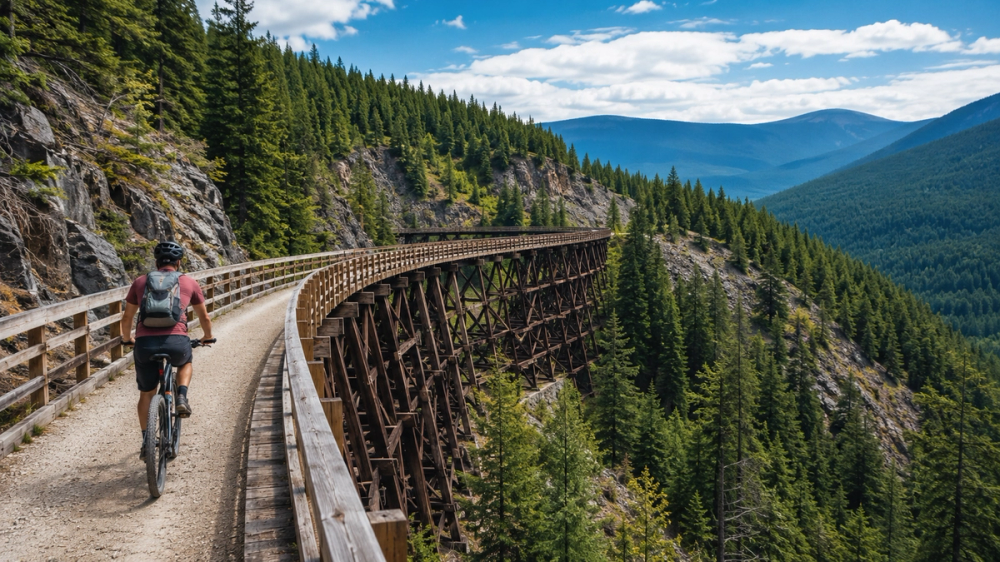
Myra Canyon’s trestles and tunnels give casual riders a dramatic introduction to the Kettle Valley Rail Trail. The gentle rail grade helps, but loose gravel, exposure and distance still reward a suitable bike, water and a repair kit.
Plan Half day to 3 days for this experience. The strongest window is June to October. Drive or shuttle to Myra Station near Kelowna; longer trail trips need transport planning.
Reserve rental bikes or shuttles in summer. Check wildfire, washout and trail reports. A day ride is affordable; supported multi-day trips cost more. Prices, schedules and operating dates can change between seasons, so use the linked official page before paying for transport or accommodation.
Practical details
- Best season: June to October
- Time required: Half day to 3 days
- Access: Drive or shuttle to Myra Station near Kelowna; longer trail trips need transport planning.
- Booking: Reserve rental bikes or shuttles in summer. Check wildfire, washout and trail reports.
- Cost: A day ride is affordable; supported multi-day trips cost more.
Official planning source: bcparks.ca.
Build a safe return into the plan before leaving. Daylight, fatigue and weather matter as much as distance. Set a turnaround time for hikes and paddles, carry a light, and do not rely on finding an open restaurant, fuel station or taxi late in a small community.
How to plan a British Columbia bucket-list trip
Start with the experience that has the narrowest season or hardest reservation. Wildlife departures, ferries, backcountry permits and remote lodges should fix the trip dates. Add cities and flexible road stops around that anchor. A provincial trip rarely improves when you add one more distant region at the cost of two long driving days.
Reserve accommodation before transport only when the room supply is the true constraint. In national parks and small coastal communities, book both pieces together. Read cancellation terms, buy travel insurance for expensive remote packages, and keep one flexible block for weather. Travellers entering parks need the applicable federal or provincial pass even when a separate tour or shuttle has already been paid.
Pack for local conditions rather than the season printed on a calendar. Coastal wind, mountain snow, prairie heat and northern cold can appear in the same week. Carry offline maps, charging power and any medication you cannot replace in a small community. Wildlife needs distance; drones, food and roadside stopping rules protect both animals and visitors.
Frequently asked questions
How many days do you need for British Columbia?
A focused first trip needs about seven to ten days. Choose one region or a tight road-trip corridor. Remote islands, northern wildlife and long wilderness routes can consume the full trip because transport runs on limited schedules.
Do you need a car in British Columbia?
A car helps for most parks and coastal routes. Major cities can work without one, and remote destinations may require a train, ferry, charter flight or guided transfer instead. Check rental restrictions before taking a vehicle onto gravel roads.
What should you book first?
Book the least flexible piece first: wildlife packages, ferries, park shuttles, backcountry permits or limited rural accommodation. Then fit flights and city nights around it. Keep screenshots or offline copies of confirmations where cell service is weak.
Are these experiences suitable for children?
Many city, beach and short-trail experiences suit families, while exposed hikes, cold-water trips and fly-in wilderness routes require age limits, skill and specialized gear. Ask the official operator about minimum ages and mobility needs before booking.
Continue planning with Canooq’s Canada travel bucket list or return to the Travel hub.
Sources and fact-checking
Canooq checked this British Columbia guide against official tourism, park, municipal, Indigenous community and attraction sources on 2026-06-18. Access, fees, reservations, wildlife seasons, ferries and road conditions can change. Recheck the relevant official page before booking.
Explore Vancouver, Stanley Park and Granville Island
Drive the Sea-to-Sky Highway to Whistler
Visit Tofino and Pacific Rim National Park Reserve
Explore Victoria and Butchart Gardens
Tour the Okanagan’s lakes and wine country
Visit Haida Gwaii and Gwaii Haanas
Related travel guides:
Page details
Author: Canooq Editorial
Updated: June 18, 2026
Last reviewed: June 18, 2026
Cite this page: Canooq.ca, British Columbia Bucket List: 10 Unmissable Things to Do, https://www.canooq.ca/travel/british-columbia-bucket-list
Canooq content is educational and may include affiliate or referral links. It is not financial, tax, legal, immigration, employment, mortgage, real estate, or healthcare advice. Verify official sources and provider terms before acting.