Quebec Bucket List: 10 Unmissable Things to Do

June 19, 2026
A practical Quebec bucket list covering Old Québec, Montréal, Tadoussac, Gaspésie, Charlevoix, Mont-Tremblant, the Eastern Townships, La Mauricie, Carnaval and Wendake.
What's on this page
Ten Quebec experiences worth planning around, from fortified cities, food neighbourhoods and wine routes to whale watching, coastal road trips, winter festivals and Huron-Wendat culture.
Quebec is where Europe sneaks into North America: stone-walled old towns, sidewalk cafés, whale-filled fjords, and more cheese, cider, and smoked meat than is strictly reasonable. Distances are short, but the mood swings wildly: busy Montréal terraces, fortified Québec City, quiet vineyards in the Eastern Townships, fishing villages in Gaspésie, and whales surfacing in front of pine-covered cliffs on the North Shore.
Here’s a Quebec bucket list of 10 unmissable experiences, written so you can read it on your phone mid-road-trip and actually use it.
Get lost in Old Québec City and eat around Île d’Orléans
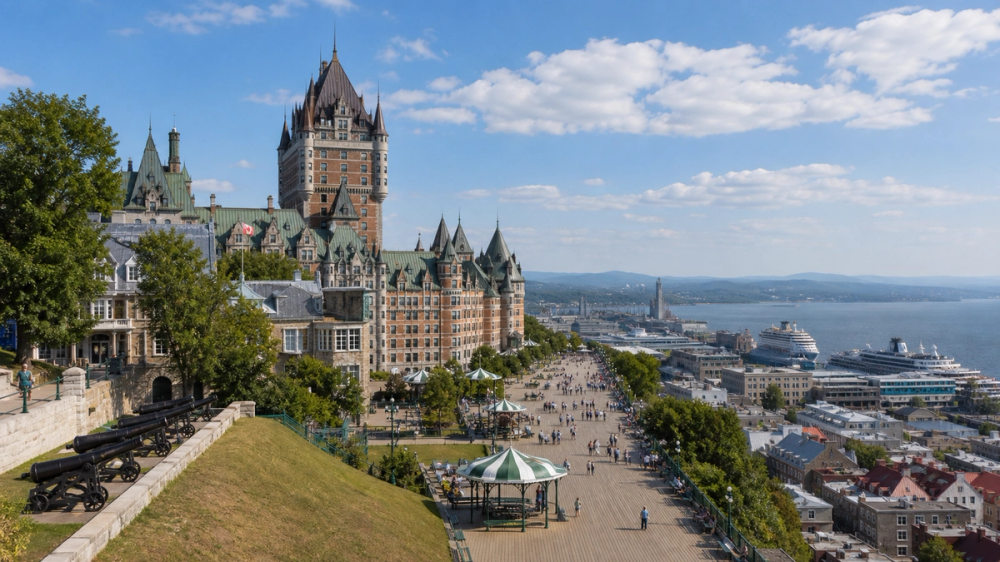
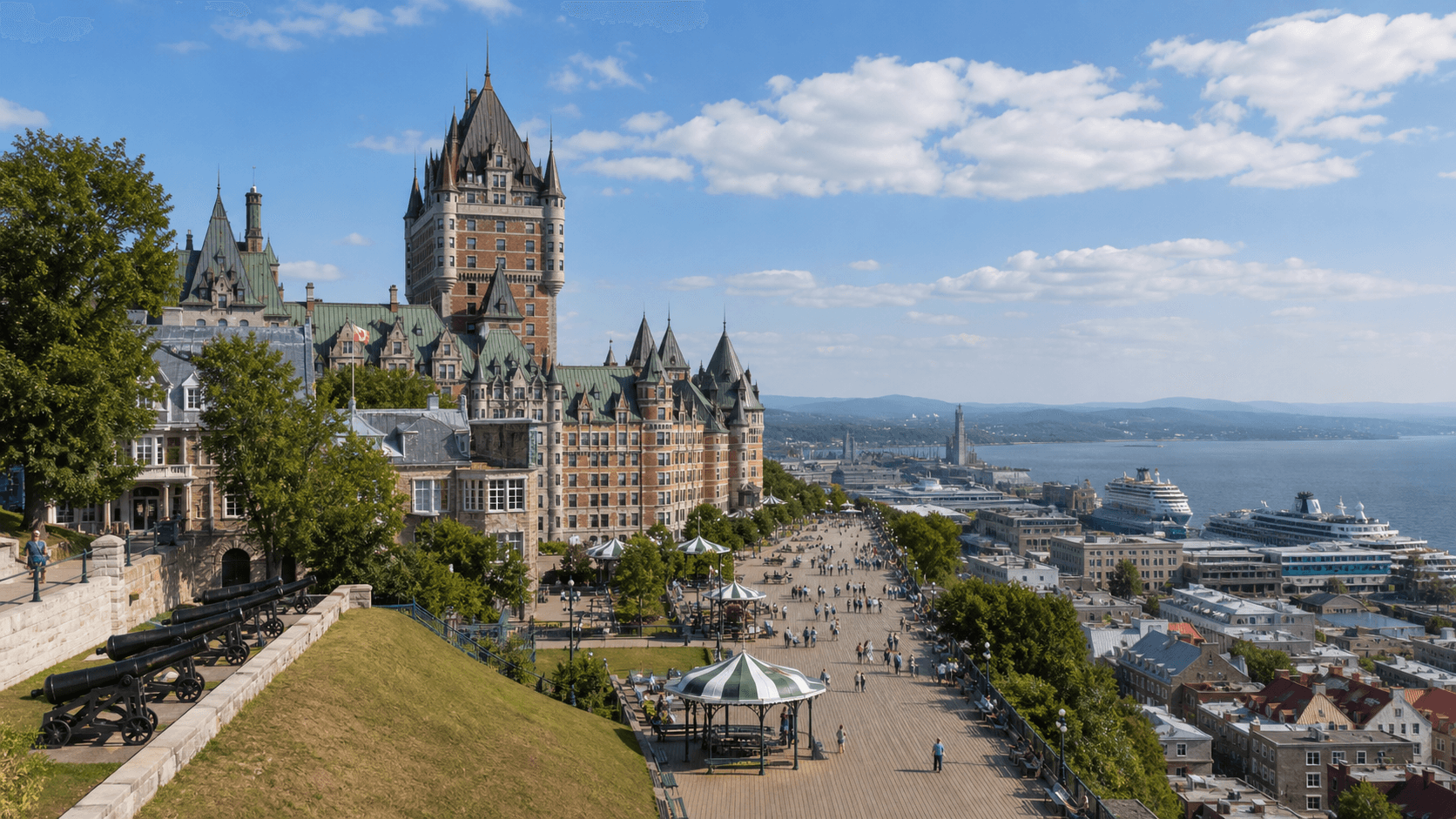
Old Québec City is the province’s calling card: cobblestone streets, stone houses, and church spires perched on a bluff above the St. Lawrence River. The Upper Town is crowned by Fairmont Le Château Frontenac, the turreted hotel you’ve seen in every photo, while the Lower Town tumbles down to the river around Place Royale, where Samuel de Champlain founded New France in 1608. Walking the city walls and the Dufferin Terrace boardwalk gives you an overview; diving into backstreets gives you the real charm.
Just outside the city, Île d’Orléans is your countryside tasting room. A 15–20 minute drive across the bridge drops you into a ring road of orchards, cideries, farm stands, and river views. Producers such as Cidrerie Bilodeau, Domaine Orleans, Polyculture Plante, Verger Joe Giguère, and Domaine Steinbach line the Chemin Royal, offering tastings of ice cider, sparkling cider, and other local products often served right beside the orchards. It’s absurdly easy to turn “a quick spin around the island” into an all-day graze.
On-the-ground tips
- Best view: The Dufferin Terrace in front of Château Frontenac at sunset, with the St. Lawrence, Lévis, and the Lower Town spread out below.
- Food & drink: Spend one day doing the city’s bistros and another focused on Île d’Orléans tastings (Bilodeau, Domaine Orleans, Steinbach, etc.).
- Getting there: Québec City is about 2 h 45 min / 253 km from Montréal by car, mostly along Highway 20.
- Half-day plan: Morning walk on the fortifications and through Place Royale, lunch in the Lower Town, then an afternoon loop around Île d’Orléans for cider and farm stops.
Eat your way through Montréal’s neighbourhoods
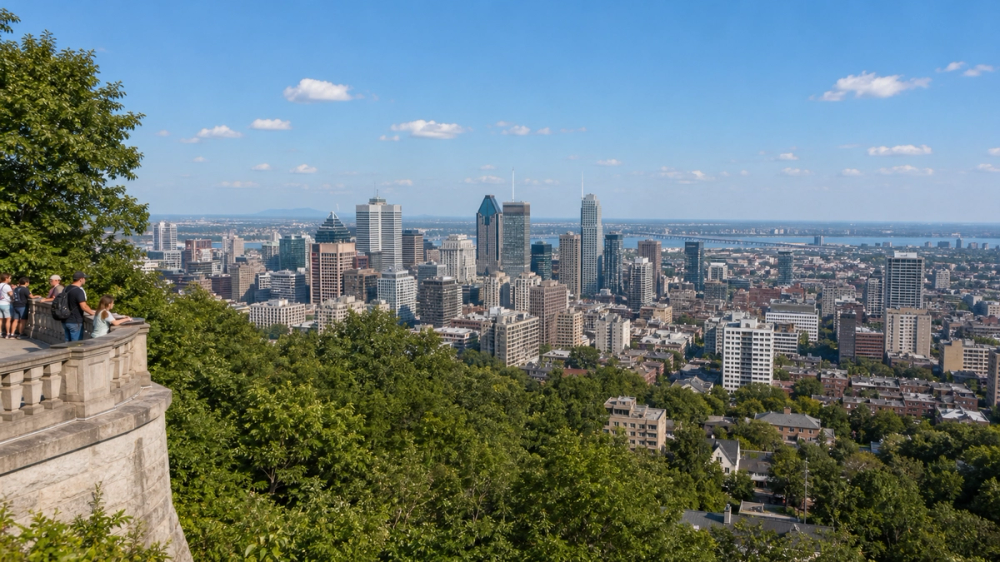
Montréal is the province’s big, bilingual playground: murals, old stone warehouses, leafy parks, and enough food that “I’ll just have a snack” becomes a lie within 48 hours. Vieux-Montréal has cobbled streets, the Old Port, and the Grande roue de Montréal Ferris wheel, plus landmarks like Notre-Dame Basilica and the Pointe-à-Callière museum. Climb or drive up Mont-Royal for the Belvédère Kondiaronk viewpoint over the skyline, then head back down into the Plateau and Mile End for the real fun.
The food clichés are clichés because they’re good. Schwartz’s Deli on Boulevard Saint-Laurent has been serving smoked meat sandwiches since 1928 and still pulls crowds for huge stacks of brisket on rye with yellow mustard. For bagels, the age-old rivalry between St-Viateur Bagel and Fairmount Bagel is worth investigating in person; both boil their bagels in honey water and bake them in wood-fired ovens, and both are firmly part of the city’s identity. Add a few third-wave coffee stops and you’ve essentially earned the right to eat more.
On-the-ground tips
- Best view: Mont-Royal lookout (Belvédère Kondiaronk) at sunset, with downtown skyscrapers and the river in the distance.
- Essential eats: Smoked meat at Schwartz’s, bagels from St-Viateur or Fairmount, plus at least one evening of terrace-hopping in the Plateau.
- Getting around: Montréal’s metro and Bixi bike-share make it easy to hop between Vieux-Montréal, the Plateau, Mile End, and the riverfront.
- Easy day: Morning in Old Montréal, afternoon on Mont-Royal and the Plateau, bagel snack in Mile End, smoked meat or trendy bistro for dinner.
Watch whales surface off Tadoussac and the Saguenay Fjord
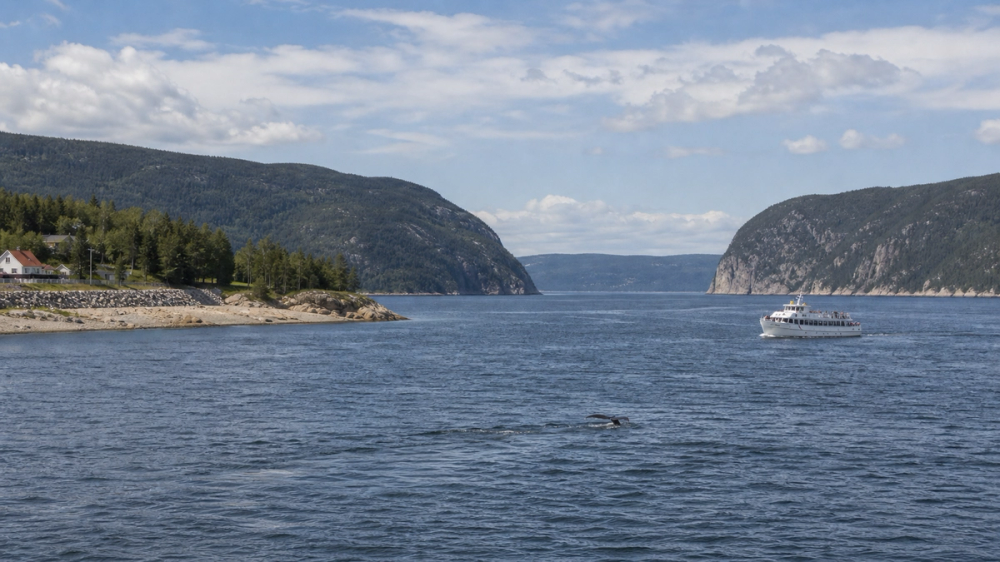
Tadoussac sits where the deep, dark Saguenay Fjord meets the St. Lawrence River, and this convergence of cold, nutrient-rich waters turns the area into one of the world’s best whale-watching spots. From late spring to autumn, humpbacks, minkes, fin whales, and sometimes blue whales feed here alongside year-round belugas, making boat decks and shorelines equally exciting places to loiter with binoculars. The village itself is small and walkable, perched on a curve of sandy beach next to a red-roofed historic hotel.
You can go out on large, stable boats or fast zodiac inflatables; the latter feel closer to the action, while the former are better for photography and seasickness. For something quieter and more immersive, guided sea-kayak trips put you low to the water with strict approach distances; it’s not unusual to hear whales breathe before you see them. Even if you never step on a boat, land-based lookouts and simple wandering along the shore often deliver surprise sightings.
On-the-ground tips
- Best view: Clifftop viewpoints and shoreline around Tadoussac looking toward the Saguenay mouth; whales regularly surface within sight of shore.
- Season: Whale season typically runs May to late October, with September–October often strongest for sightings and calm, crisp weather.
- Distance check: Tadoussac is roughly 215 km / just over 3 hours from Québec City via Route 138, including a short, free ferry across the Saguenay at Baie-Sainte-Catherine.
- Stay length: Aim for 1–2 days so you can do at least one boat or zodiac trip, maybe a kayak outing, and have backup time if weather cancels a departure.
Drive to the end of the road in Gaspésie: Percé and Forillon
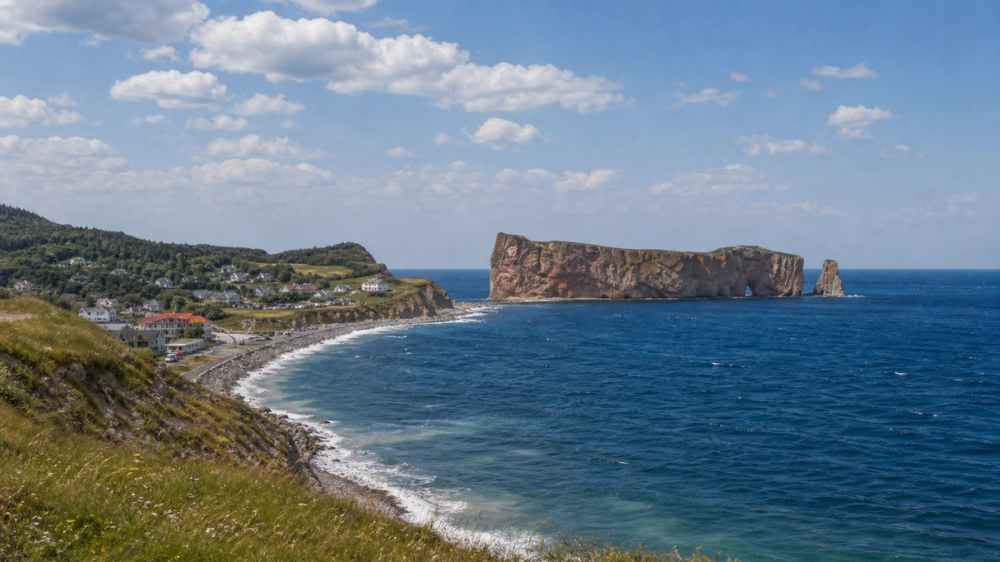
Gaspésie is Quebec in wide-angle: cliffs dropping into the Gulf of St. Lawrence, fishing villages, lighthouses, and long views where the road feels like it might just vanish into the sea. At the eastern tip, Forillon National Park protects a chunk of the Appalachian Mountains as they plunge into the Atlantic, combining steep cliffs, forest trails, beaches, and restored historic fishing buildings. Trails like the Mont-Saint-Alban loop reward your climb with coastal panoramas and an observation tower view that makes the effort more than worth it.
Further south, the town of Percé and the famous Percé Rock give you one of Quebec’s most dramatic seaside scenes. The rock, a massive pierced cliff just offshore, glows orange in the right light; boat tours get you closer and also visit Bonaventure Island, where thousands of gannets nest on the cliffs. Gaspésie is big-sky and big-wind country: pack layers, accept that your hair will have its own plans, and lean into the wildness.
On-the-ground tips
- Best view: Cap-Bon-Ami in Forillon at sunrise or late day, where orange cliffs drop straight into the sea and you can sometimes spot whales offshore.
- Don’t skip: A hike to the Cape Gaspé lighthouse, a boat around Percé Rock and Bonaventure Island, and at least one seafood dinner in Percé.
- Driving reality: The full Gaspésie loop is a multi-day road trip; don’t try to “sprint” it in one or two days unless you like punishing yourself.
- Season: Late June to September gives the best mix of open services, milder weather, and boat operations.
Follow cliffs and rivers in Charlevoix and Hautes-Gorges
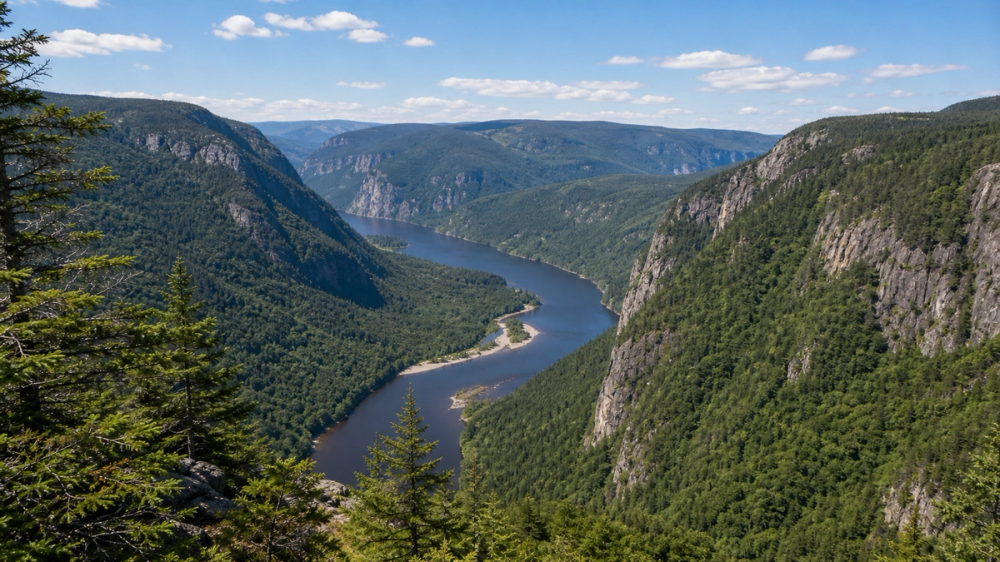
Northeast of Québec City, Charlevoix is a rolling, mountainous region carved by a meteorite and polished by the St. Lawrence River, full of small villages, farm-to-table restaurants, and big viewpoints. Route 138 offers balcony-level glimpses of the river, passing through towns like Baie-Saint-Paul and La Malbaie, where you can stroll past cafés and galleries before heading inland.
The real showstopper inland is Parc national des Hautes-Gorges-de-la-Rivière-Malbaie. Here the Malbaie River runs between some of the highest rock walls in the Laurentians, and trails like Acropole des Draveurs climb to jaw-dropping, bird’s-eye views of the valley. The hike is steep and demanding, but the payoff is huge: layered mountains, a ribbon of river far below, and a real sense of being above almost everything else in eastern Quebec. For gentler days, you can take river cruises, rent bikes, or just lounge on the shore and watch the light move across the cliffs.
On-the-ground tips
- Best view: Summit of Acropole des Draveurs on a clear day, looking straight down on the river and cliff walls of Hautes-Gorges.
- Base towns: Baie-Saint-Paul for artsy vibe and restaurants; La Malbaie for a calmer riverfront base closer to Hautes-Gorges.
- Timing: Reserve park access and shuttles for Acropole on busy summer weekends; the trail is popular and capacity can be controlled.
- Road-trip combo: Pair Charlevoix with Tadoussac and the Saguenay for a spectacular St. Lawrence northern shore loop from Québec City.
Play in all seasons at Mont-Tremblant and the Laurentians
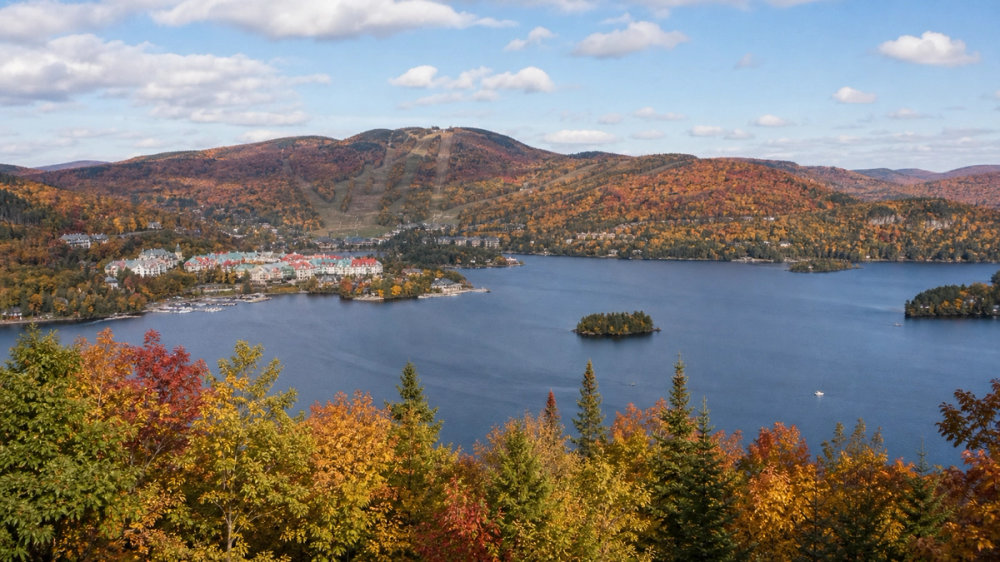
Northwest of Montréal, the Laurentians are a patchwork of lakes, hills, ski resorts, and chalet villages that function as the city’s four-season playground. The resort town of Mont-Tremblant is the most famous, with a colourful pedestrian village at the base of the mountain and a national park full of lakes and forest nearby. Summer brings hiking, lake swims, and biking; autumn piles on fiery colours; winter turns everything into a ski-and-snowshoe postcard.
On the mountain itself, you can hike or take the gondola for wide views over Lac Tremblant and the Laurentian hills. Fun extras include the Skyline Luge – a 1.4 km gravity kart track twisting through the forest with views of the village – plus ziplines and mountain biking. In Parc national du Mont-Tremblant, you get quieter trails, canoe-camping routes, and classic Quebec lake country: rocky shores, loons calling at night, and mist lifting off the water at dawn.
On-the-ground tips
- Best view: Top of Tremblant via gondola or hiking trail, looking out over the resort village, Lac Tremblant, and rolling Laurentian hills.
- Distances: Mont-Tremblant is roughly 130–145 km from Montréal, about 1.5–2 hours by car, depending on traffic.
- What to do: Skiing and snowboarding in winter; hiking, paddling, and the Skyline Luge in summer; leaf-peeping and spa visits in autumn.
- Lazy day formula: Morning gondola and short hike, long lunch in the pedestrian village, lake time or spa in the afternoon, and a slow wander through the village in the evening.
Sip your way along the Eastern Townships Wine Route
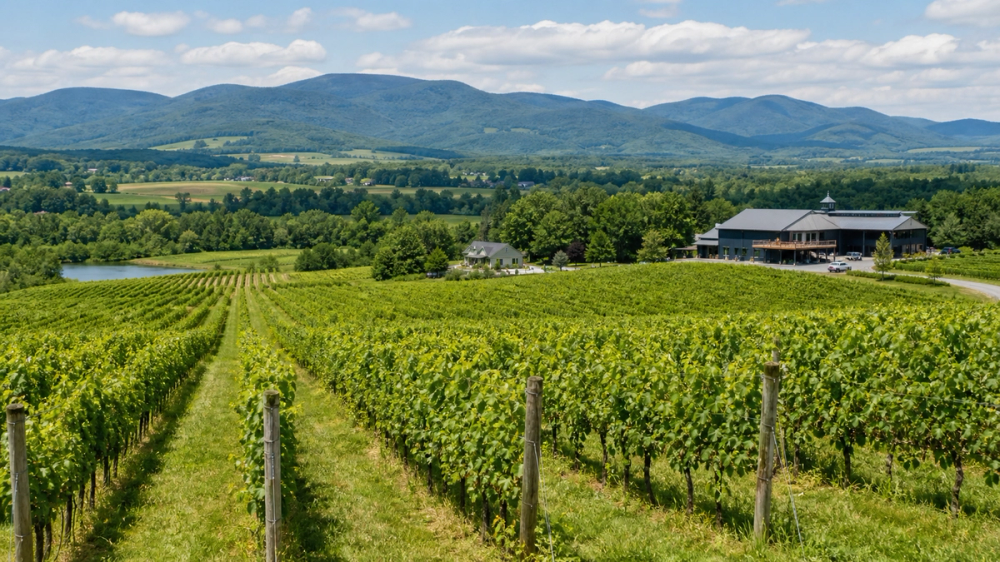
South of Montréal, close to the Vermont and New Hampshire borders, the Eastern Townships mix rolling hills, old villages, and a growing wine scene that is very easy to turn into a weekend habit. The Brome-Missisquoi Wine Route is a marked 140–160 km circuit linking around two dozen vineyards across seven of Quebec’s prettiest villages and hamlets, including Frelighsburg, Dunham, and Sutton. Roughly one-third to 60% of Quebec’s wine production comes from this region, so you are not exactly wasting your time.
You can follow the route by car or, if you like hills and pretending you’re in France, by bike. Many wineries offer tastings, patios with views over vines and fields, local cheese plates, and sometimes small events or live music in summer. Villages along the way add cafés, bakeries, and B&Bs so you can stitch together an itinerary that alternates vineyards with lake swims and strolls around pretty main streets.
On-the-ground tips
- Best view: Vineyards rolling down toward the Appalachian foothills along the Brome-Missisquoi Wine Route, especially around Frelighsburg and Dunham.
- Practicalities: Official route is about 140–160 km; allow 2–3 days if you want to stop often and still drive safely.
- Pairings: Combine tastings with farm shops, microbreweries, and lakes like Memphrémagog for swims and picnics.
- Season: Late spring to fall is best; some wineries reduce hours or close in winter, though a few stay open for ice-wine and snowy tasting-room vibes.
Paddle and hike across lakes in La Mauricie National Park
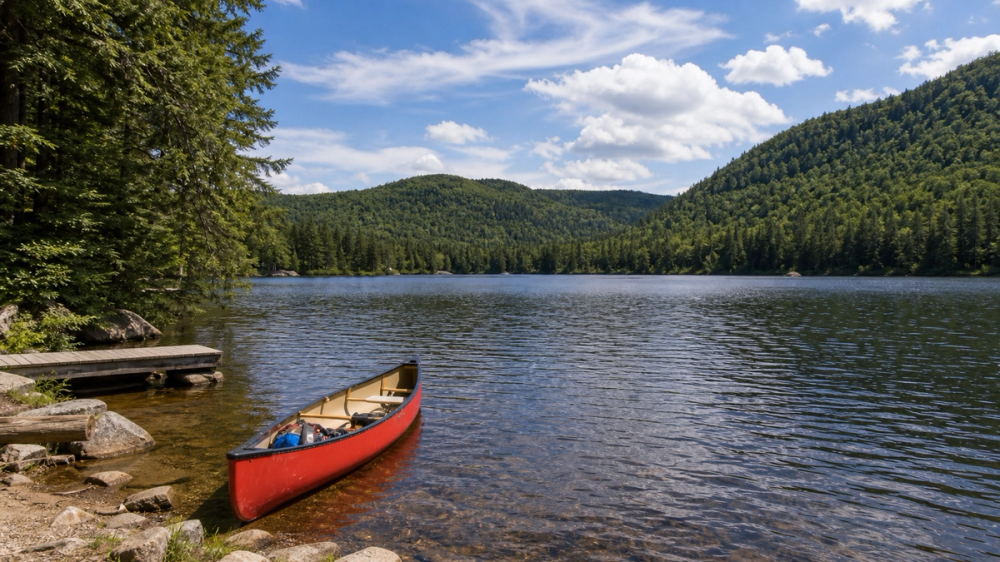
Roughly halfway between Montréal and Québec City, La Mauricie National Park is an underappreciated gem: 150 lakes, rolling hills, and forests tailored for canoe trips, hiking, and quiet cabin stays. The park’s parkway road gives easy access to viewpoints, day-use areas, and trailheads, but much of the magic sits just a short paddle or hike away from your car.
La Mauricie is a dream for anyone who secretly wants to live in a canoe brochure. Around thirty lakes are accessible from the parkway and through linked canoe routes, and Parks Canada offers canoe and kayak rentals plus classic canoe-camping options if you want to stay out overnight. On foot, you’ll find trails of varying lengths to lookouts, waterfalls, and lakeside beaches where you can swim in summer or snowshoe past in winter.
On-the-ground tips
- Best view: One of the parkway lookouts over chains of forested lakes at sunset, or any high point reached by a short viewpoint trail.
- Activities: Canoeing, kayaking, canoe-camping, swimming, hiking, cross-country skiing, and snowshoeing are all on the menu, depending on season.
- Access: Easy detour if you’re driving between Montréal and Québec City; base yourself in Trois-Rivières or Shawinigan if you do not want to camp.
- Good day out: Morning paddle on one of the easily accessed lakes, picnic lunch, then an afternoon hike to a viewpoint or waterfall.
Freeze happily at the Québec Winter Carnival
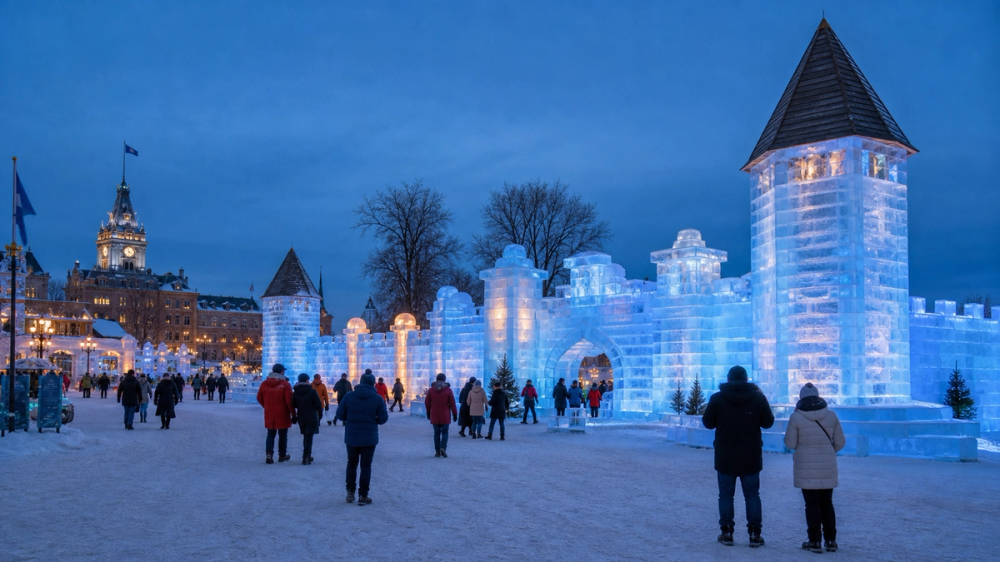
If you want to understand how Quebec handles winter, the Québec Winter Carnival (Carnaval de Québec) is the crash course. Usually held in late January or early February, the festival transforms the city into a cold-weather playground centred around Bonhomme’s Ice Palace, the Plains of Abraham, and various neighbourhood events. Expect ice sculptures, night parades, outdoor concerts, and no shortage of people drinking caribou (a warm, boozy punch) out of hollow plastic canes.
Classic events include ice canoe races across the St. Lawrence, snow sculpture competitions on the Plains of Abraham, and a masquerade ball at the Château Frontenac or other grand venues. There’s also a winter amusement park on the Plains with slides, games, and activities like snow-baths (yes, people in swimsuits rolling in snow) for those who think merely standing around at -20°C is a bit too easy. Between activities, you can duck into cafés, pubs, and restaurants in Old Québec to warm up, then plunge back into the festivities.
On-the-ground tips
- Best atmosphere: Night parades and the illuminated Ice Palace, when music, lights, and frosty air combine into peak winter-fairytale energy.
- What to wear: Layers, proper winter boots, and anything windproof; Carnaval is fun, hypothermia is not.
- Tickets & logistics: Some areas are free, but special events and zones require passes; public transit and shuttle services are ramped up for the festival period.
- Combo idea: Pair Carnaval with a side-trip to Valcartier for tubing and winter slides, or a spa day at a Nordic spa to thaw out afterwards.
Experience Wendake and Huron-Wendat culture near Québec City
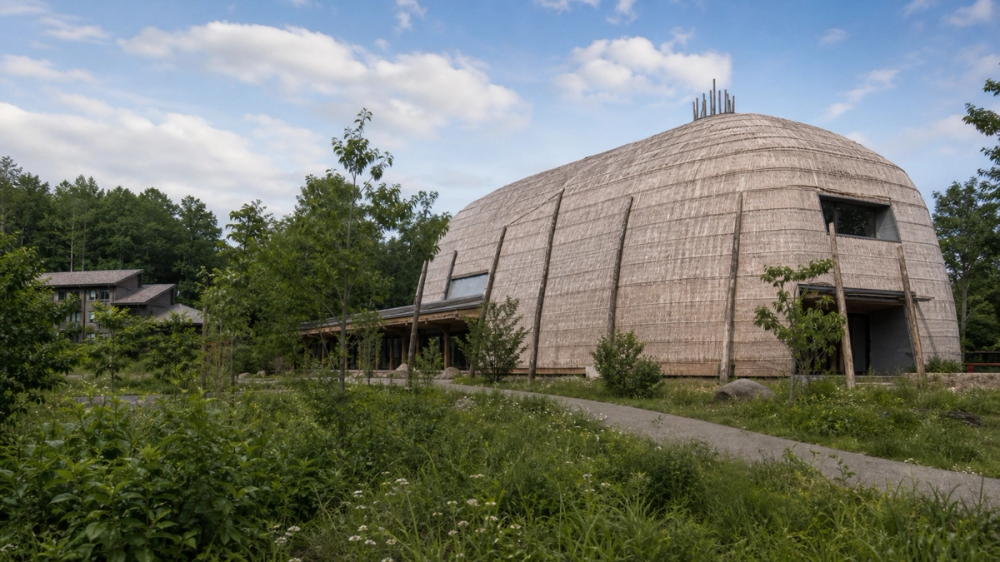
Just 20 minutes north of Old Québec, Wendake gives a Quebec City trip a deeper cultural layer: Huron-Wendat history, contemporary art, forest trails, food, and evening storytelling close enough to fit into a half day but worthwhile as an overnight.
Start at the Musée Huron-Wendat and the Hôtel-Musée Premières Nations complex, then build the visit around a guided cultural experience, the Kabir Kouba waterfall area, and dinner at La Traite. In the evening, Onhwa' Lumina turns the forest into a multimedia night walk rooted in Huron-Wendat stories, with light, sound, and projection used as a gentle way into the place rather than a theme-park shortcut.
On-the-ground tips
- Best first stop: The Musée Huron-Wendat and hotel site give helpful context before you add the forest walk, restaurant, or guided experiences.
- Evening plan: Book Onhwa' Lumina ahead in season and leave enough time to arrive before your timed entry.
- Food stop: La Traite is the memorable meal to build around if you want the stop to feel like more than a quick museum visit.
- Getting there: Wendake is close to Québec City, but a car or taxi is the simplest option for most visitors.
Chase whales, cliffs, food, and festivals across La Belle Province
Taken together, these ten experiences sketch the best of Quebec: fortified cities, food-obsessed neighbourhoods, wine routes, canoe-perfect lakes, meteor-carved mountains, and coasts that just keep going. You can focus on one cluster – say Montréal, Tremblant, and the Eastern Townships – or stitch several into a loop that runs from Québec City to Charlevoix, Tadoussac, and Gaspésie before swinging back inland.
Either way, you won’t run out of views or excuses to stop “just for a taste” long before you run out of road.
Related travel guides:
Page details
Author: Thomas Tremblay
Updated: June 19, 2026
Last reviewed: June 19, 2026
Sources verified: June 19, 2026
Cite this page: Canooq.ca, Quebec Bucket List: 10 Unmissable Things to Do, https://www.canooq.ca/travel/quebec-bucket-list
Canooq content is educational and may include affiliate or referral links. It is not financial, tax, legal, immigration, employment, mortgage, real estate, or healthcare advice. Verify official sources and provider terms before acting.
Enjoy Canooq? Let us keep helping you — make Canooq a preferred source on Google.