Lean FIRE, Barista FIRE, Coast FIRE and Fat FIRE in Canada: Can You Retire Early Too?

June 18, 2026
A Canadian guide to Lean FIRE, Barista FIRE, Coast FIRE and Fat FIRE, with practical account, tax, CPP, OAS, housing, healthcare and retirement-planning tradeoffs.

RETIREMENT PLANNING
FIRE is less about never working again and more about buying options.
A Canadian guide to FIRE, including the popular variants, the real tradeoffs, and the tools that turn the idea into numbers.
- FIRE means building enough wealth that paid work becomes optional, not necessarily quitting forever.
- Lean, Barista, Coast, and Fat FIRE use different levels of spending, work, and risk.
- In Canada, TFSA, RRSP, taxable accounts, CPP, OAS, housing, and benefits make the math more specific than the slogan.
Check your own FIRE math
Test the income, spending, and investment assumptions before copying anyone's FIRE target.
What's on this page
FIRE means making work optional. This Canadian guide compares Lean, Barista, Coast and Fat FIRE, then shows how taxes, registered accounts, CPP, OAS, housing and benefits change the math.
FIRE stands for financial independence, retire early. The useful part is financial independence: saving and investing enough that work becomes optional before the standard retirement timeline. Early retirement can mean quitting a job at 40, working part time at 50, changing careers without panic, or taking a lower-paid role because the portfolio already carries part of the load.
In Canada, FIRE sounds simple until the tax system, registered accounts, healthcare coverage, housing costs, and public pension timing enter the spreadsheet. A person retiring at 45 has to bridge about 15 years before CPP can start and about 20 years before OAS begins. That does not make FIRE impossible. It means the plan needs Canadian numbers, not only a viral savings-rate screenshot.
Run the numbers before choosing a FIRE label
Use the idea as a starting point, then test the Canadian cash flow.
What is FIRE?
FIRE is a personal finance strategy built around a high savings rate, long-term investing, and lower dependence on employment income. The basic version says you track annual spending, build a portfolio large enough to fund that spending, then withdraw from the portfolio at a rate that has a reasonable chance of lasting.
The shorthand target often starts at 25 times annual expenses. If you spend $50,000 a year, 25x points to $1.25 million. If you spend $80,000, it points to $2 million. Many Canadian early retirees should also test 30x or 33x annual expenses because a long retirement, high rent, uneven markets, tax drag, and surprise health costs can make the classic 25x target feel thin.
That target is not a promise. It is a pressure test. A 25x target assumes a withdrawal rate near 4 percent before tax. A 33x target assumes a withdrawal rate closer to 3 percent. A younger retiree, a renter, a household with children, or a person with uneven freelance income may prefer the larger target or some paid work. Someone retiring at 58 with a pension and a paid-off home may not need the same cushion.
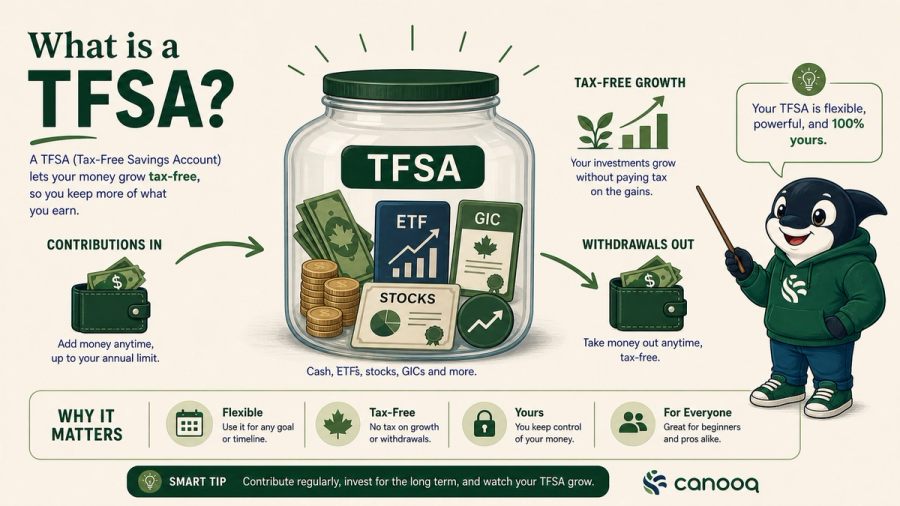
Account order matters. A TFSA can create tax-free eligible withdrawals. An RRSP can create a tax deduction now and taxable income later. A non-registered account gives flexibility but creates tax reporting. If you need the account-order basics first, read the Canooq guide to TFSA vs RRSP vs FHSA.
The latest FIRE trend in Canada
The trend is not only extreme early retirement. More Canadians now use FIRE language to describe flexibility: leaving a draining job, moving to part-time work, taking a sabbatical, changing industries, or giving themselves enough savings that a layoff does not wreck the household. The classic FIRE story still exists, but the practical conversation has widened.
That shift makes sense in a country where housing can dominate the budget, daycare can compete with a mortgage payment, and many workplace benefits disappear when you leave a job. A Canadian FIRE plan often has to answer a boring question before it answers the exciting one: how will you pay for housing, insurance, prescriptions, dental care, tax, and market downturns when a salary stops?
The trend also appeals to people who do not hate work. Plenty of Canadians like their field but want more control over the terms: fewer hours, fewer meetings, more time with family, more travel, or the ability to leave a manager without waiting for another offer. FIRE language gives them a framework for that middle ground.
The four FIRE types compared
FIRE types in Canada
The names are useful shorthand, but the spending, work, and risk assumptions matter more than the label.
| Type | Core idea | Canadian pressure point |
|---|---|---|
| Lean FIRE | Retire or semi-retire on low annual spending. | Housing, inflation, healthcare gaps, and little room for surprises. |
| Barista FIRE | Use part-time work to cover some costs or benefits. | Job availability, benefit coverage, and income tax coordination. |
| Coast FIRE | Invest enough early that the portfolio can grow toward retirement with smaller future contributions. | Requires time, stable assumptions, and patience during market drops. |
| Fat FIRE | Build a larger portfolio for a higher-spending retirement. | High target, tax planning, lifestyle creep, and larger market swings in dollar terms. |
Lean FIRE in Canada
Lean FIRE means aiming for financial independence with a lower annual spending target. Someone might design a life around a paid-off condo, modest travel, public transit, home cooking, and a portfolio that covers the basics. The appeal is speed. Lower spending means a lower FIRE number, and a lower FIRE number can bring independence closer.
The Canadian risk is that lean budgets have less shock absorption. Rent can rise, a condo can need a special assessment, a car can become necessary after a move, or a health expense can land outside provincial coverage. Lean FIRE works best when the person has flexible spending, a paid-off or stable housing plan, an emergency reserve, and a willingness to earn money again if the numbers get tight.
Lean FIRE fits people who already enjoy a lower-cost lifestyle. It fits poorly when the plan depends on permanent deprivation, risky roommates, skipping insurance, or pretending that family needs will never change. A lean plan should include a backup income path, not only a smaller grocery bill.
A Canadian Lean FIRE plan should separate fixed and flexible expenses. Fixed costs include rent, mortgage payments, property tax, insurance, basic utilities, phone, medication, and minimum transportation. Flexible costs include travel, restaurants, hobbies, subscriptions, gifts, and extra home upgrades. Lean FIRE gets dangerous when the fixed costs already eat most of the withdrawal amount because there is little left to cut in a bad market year.
Barista FIRE in Canada
Barista FIRE means your portfolio covers part of your life while part-time or lower-stress work covers the rest. The name comes from the idea of taking a job with benefits, but in Canada it can mean any flexible work: consulting, retail, seasonal work, a union part-time role, a small business, teaching, bookkeeping, freelancing, or a lower-paid job you can tolerate for years.
The advantage is psychological and financial. You need a smaller portfolio than full FIRE because work still pays some bills. You may also keep drug, dental, disability, or health-spending benefits that an early retiree would otherwise replace out of pocket. If the work creates CPP pensionable earnings, it can also support future CPP calculations, though the details depend on income and years of contribution.
The issue is that Barista FIRE can become a prettier name for needing a job. Part-time roles may not offer benefits, hours can change, and older workers can face a tougher labour market than a spreadsheet assumes. This version suits someone who wants work optionality, not someone who needs a guaranteed paycheque but calls the plan retirement.
The cleanest Barista FIRE plan names the job income before retirement begins. For example, a household spending $65,000 might aim for a portfolio that covers $40,000 and part-time income that covers $25,000. That is different from retiring first and hoping a pleasant part-time job appears later. The plan should also say what happens if the work disappears: spend less, withdraw more, return to full-time work, or delay the FIRE date.
Coast FIRE in Canada
Coast FIRE means you invest enough early that, if you leave the portfolio alone, it may grow to a traditional retirement target by your 60s. After that point, you still cover current expenses with work, but you may no longer need aggressive retirement contributions. You can coast toward the future because the early compounding does part of the work.
This version is attractive for Canadians who feel trapped by high fixed costs but have already built a strong TFSA, RRSP, workplace pension, or taxable portfolio. Coast FIRE can let you change careers, reduce hours, start a business, take parental time, or save less during expensive family years without abandoning retirement planning.
The risk is assumption creep. A Coast FIRE calculation depends on return assumptions, inflation, retirement age, contribution room, pension value, and future spending. A person who says they have reached Coast FIRE at 32 still has decades of market returns to live through. It works best when you revisit the math each year instead of treating one projection as a lifetime permission slip.
Coast FIRE also changes how you think about raises. Instead of assuming every raise must go into retirement accounts, you may direct some money to childcare, a sabbatical fund, eldercare, training, or a safer job transition. That flexibility is the point. You still need to protect the old portfolio from panic selling and avoid raiding it every time a short-term goal appears.
Fat FIRE in Canada
Fat FIRE means building enough wealth to retire early while keeping a higher-spending lifestyle. The target might include a detached home, frequent travel, private insurance, helping adult children, a cottage, restaurant spending, or a large buffer for care needs. The number can be several million dollars, especially in Toronto, Vancouver, or any household with high housing expectations.
Fat FIRE gives more comfort, but it also requires more capital and better tax planning. Larger RRSP balances create larger taxable withdrawals later. Non-registered accounts create dividend, interest, and capital gains reporting. OAS recovery tax can matter at higher taxable incomes after age 65. Business owners and executives may need corporate, estate, and insurance advice before calling the plan finished.
This path fits high earners who want independence without cutting life to the bone. It does not protect you from sloppy assumptions. A high-spending household can still overspend a large portfolio if markets fall early, housing costs jump, or lifestyle inflation keeps moving the finish line.
Fat FIRE also needs clearer professional advice than the lighter versions. A household with rental property, a corporation, stock options, cross-border assets, or a large non-registered portfolio should not rely only on a calculator. Tax planning, insurance, wills, beneficiaries, and withdrawal sequencing can affect how much of the portfolio turns into usable spending.
Canadian advantages for FIRE
- TFSA flexibility: Eligible TFSA withdrawals are generally tax free, which can help bridge early retirement years without increasing taxable income. Contribution room still matters, and overcontributions can be expensive.
- RRSP tax planning: RRSP deductions can help during high-income years. Early retirement may create lower-income years where strategic withdrawals make sense before CPP and OAS begin.
- Public pensions later: CPP and OAS can reduce the portfolio income needed after age 65, but early retirees need a bridge plan before those programs start. CPP can start as early as 60 or be delayed, while OAS generally starts at 65 and can be delayed.
- Provincial healthcare: Basic physician and hospital coverage helps compared with countries where early retirees must buy full private health insurance. That does not cover everything.
- Pensions and workplace plans: A defined benefit pension, group RRSP, DPSP, or employer match can change the FIRE math. Do not ignore workplace plans just because FIRE culture loves self-directed portfolios.
Canada also gives early retirees room to design withdrawal years. A person with low taxable income before CPP and OAS may draw some RRSP money earlier, use TFSA withdrawals for flexibility, or realize capital gains in controlled amounts. The exact sequence depends on province, income, partner income, benefits, age, and future plans, which is why a tax-aware plan beats a single portfolio number.
Canadian issues that can break a FIRE plan
- Housing: Rent, mortgage payments, property tax, condo fees, maintenance, and moving costs can make the spending number unstable. A paid-off home lowers cash flow needs but ties wealth to one asset.
- Drug and dental coverage: Provincial healthcare does not replace a strong workplace benefits plan. Prescriptions, dental, glasses, therapy, private rooms, and travel medical insurance need their own line in the budget.
- Taxes: A FIRE plan that ignores account type can create surprises. TFSA withdrawals, RRSP withdrawals, capital gains, dividends, interest, CPP, OAS, and part-time income all land differently.
- Sequence risk: A market crash early in retirement can hurt more than the same crash later. Cash buffers, lower withdrawals, part-time income, or flexible spending can reduce pressure.
- Inflation: A plan built on today's rent, groceries, insurance, and travel costs may age badly. Use real spending history and test higher-cost scenarios.
- Family duties: Children, divorce, aging parents, disability, and immigration sponsorship responsibilities can change the plan faster than an investment return assumption.
The biggest mistake is treating FIRE as a personality test. A good plan can survive boring life events: a roof repair, a dental bill, a bear market, a parent needing help, a partner taking leave, a move, or a career change that earns less for a while. If one surprise breaks the whole structure, the FIRE date is probably too early.
Can you retire early too?
Start with annual spending, not income. If your household spends $60,000 a year, a rough 25x target is $1.5 million. A more cautious 33x target is about $1.98 million. If you spend $100,000, those targets become $2.5 million and $3.3 million. The range matters because a 35-year-old early retiree has a much longer bridge than someone retiring at 58.
Next, split the target by account type. A $1 million TFSA balance would behave differently from a $1 million RRSP balance because the withdrawal tax treatment is different. Most Canadians will have a mix: TFSA for flexible tax-free withdrawals, RRSP or pension money for taxable retirement income, and non-registered investments for extra flexibility.
Then run the numbers. Use Canooq's retirement calculator for the broad plan, the compound interest calculator for contribution growth, and the monthly budget planner to make the spending estimate less imaginary.
The honest answer for many Canadians is that full FIRE may be hard, but partial FIRE can still be useful. A person who never retires at 40 can still build enough wealth to quit a bad job, take parental leave with less stress, change industries, move cities, or work four days a week. That is a real win even if it does not look dramatic online.
A simple Canadian FIRE example
Say a 35-year-old renter spends $58,000 a year and wants work optional by 50. A 25x target points to $1.45 million. A 33x target points to about $1.91 million. If that person expects to keep renting, buy private health and dental coverage, and delay CPP until later, the higher end deserves attention. If they plan to work two days a week in Barista FIRE, the portfolio target may drop because employment income covers part of the spending.
Now change one detail: the same person buys a condo with a mortgage that will be paid off by 50. Annual spending might drop after the mortgage disappears, but property tax, condo fees, insurance, repairs, and special assessments remain. The FIRE target may improve, but the plan still needs cash flow for housing. Paid-off does not mean free.
Change another detail: the person has a defined benefit pension beginning at 60. The FIRE bridge now runs from 50 to 60, then the pension helps. That can make early retirement more realistic than a simple 25x calculation suggests. This is why Canadian FIRE should include CPP, OAS, workplace pensions, registered accounts, and tax treatment in one view.
Canadian FIRE checklist
- Calculate your real annual spending from the last 12 months, not your ideal budget.
- Test both 25x and 33x annual spending as rough portfolio targets.
- Separate TFSA, RRSP, pension, and non-registered money in your projection.
- Plan bridge years before CPP and OAS, especially if you want to leave full-time work before 60.
- Add drug, dental, disability, life, and travel medical insurance where relevant.
- Stress test a poor first five years of market returns.
- Keep a backup income plan, even if you hope you never need it.
- Update the plan when housing, family, tax rules, benefits, or health changes.
FAQ
What does FIRE mean in Canada?
FIRE means financial independence, retire early. In Canada, it usually means using savings, investments, registered accounts, pensions, and sometimes part-time income to make paid work optional before a standard retirement age.
How much money do you need for FIRE in Canada?
A rough starting range is 25 to 33 times annual spending, adjusted for taxes, account type, age, CPP, OAS, housing, benefits, and risk. A household spending $70,000 a year might test targets from $1.75 million to about $2.31 million before public pension income.
Is Lean FIRE realistic in Canada?
Lean FIRE can work for people with stable low spending and flexible lifestyles. It becomes risky when housing, healthcare, family support, or inflation assumptions are too tight.
Is Coast FIRE the easiest version?
Coast FIRE can feel more reachable because it does not require quitting work soon. You still need enough invested early, a realistic return assumption, and a plan to cover current expenses without raiding the portfolio.
Which FIRE type is best?
The best type depends on spending, income, housing, health, family obligations, work tolerance, and risk. Lean FIRE prioritizes speed, Barista FIRE uses some work, Coast FIRE uses time, and Fat FIRE prioritizes comfort.
Should you use RRSP or TFSA for FIRE?
Most Canadian FIRE plans use both when room is available. RRSPs can help during high-income years and may be useful for lower-income withdrawal years. TFSAs give tax-free eligible withdrawals and flexibility. The right order depends on income, benefits, pension, home plans, and tax rate.
Related articles:
Page details
Author: Canooq Editorial
Updated: June 18, 2026
Cite this page: Canooq.ca, Lean FIRE, Barista FIRE, Coast FIRE and Fat FIRE in Canada: Can You Retire Early Too?, https://www.canooq.ca/blog/lean-barista-coast-fat-fire-canada
Canooq content is educational and may include affiliate or referral links. It is not financial, tax, legal, immigration, employment, mortgage, real estate, or healthcare advice. Verify official sources and provider terms before acting.