When Do Lake Louise and Moraine Lake Thaw? Average Ice-Off Dates and Summer Access

June 18, 2026
Average Lake Louise and Moraine Lake thaw dates, the best time for turquoise water, and current Moraine Lake shuttle access.
What's on this page
Lake Louise averages an ice-off date near June 1. Moraine Lake's practical estimate is June 8, with mid-June offering better odds of open turquoise water.
Lake Louise average thaw date: June 1
Moraine Lake estimated average thaw date: June 8
Lake Louise and Moraine Lake are two of the most photographed places in Canada. Their turquoise water, steep mountain walls and glacier-fed basins draw visitors from around the world. The postcard view has a season, though. Both lakes spend much of the year under ice, and spring visitors can arrive to find a pale frozen surface where they expected blue water.
The dates above give you a planning anchor. Lake Louise has enough recorded observations for a useful average. Moraine Lake does not have a reliable public year-by-year ice-off record, so its June 8 date is an estimate based on the midpoint of an early-to-mid-June thaw window.
Lake Louise and Moraine Lake from a visitor's perspective
Lake Louise sits about 55 km west of the town of Banff. Victoria Glacier rises beyond the far end of the lake, while Fairmont Chateau Lake Louise anchors the busy eastern shore. Visitors come for the lakeside view, canoe rentals, the Lake Louise Lakeshore trail and hikes toward Lake Agnes, the Plain of Six Glaciers and surrounding viewpoints.
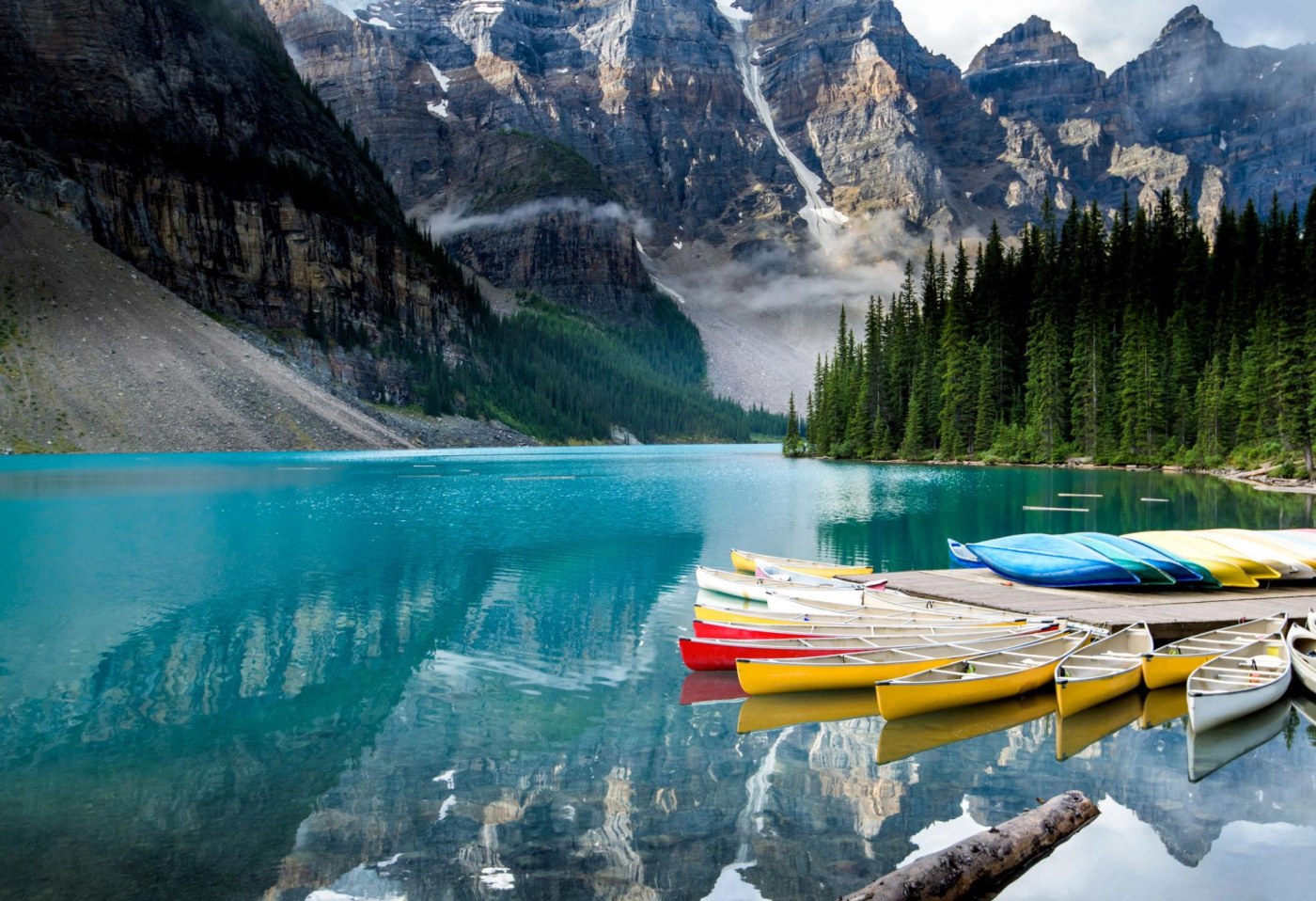
Moraine Lake lies about 14 km from the community of Lake Louise in the Valley of the Ten Peaks. Its best-known viewpoint sits above the shore on the short Rockpile Trail. From there, the lake fills the foreground and the Ten Peaks form the mountain wall behind it. Visitors also walk the lakeshore, rent canoes in season and use the area as a starting point for routes such as Larch Valley and Sentinel Pass.
Why the lakes freeze and thaw each year
Cold nights begin rebuilding shore ice in autumn. As winter settles over the Canadian Rockies, the lake surfaces freeze and snow covers the ice. The mountain basins hold cold air, while the high elevation delays spring warming. Moraine Lake sits higher than Lake Louise and often keeps its winter character later.
Spring sun and warmer air weaken the ice from the shore inward. Cracks widen, dark water appears near inflows and wind breaks the remaining sheets apart. Canooq treats the thaw date as the day observers report the lake ice-free, rather than the first day a patch of open water appears.
The turquoise colour also depends on the season. Glacial meltwater carries fine rock particles called rock flour into the lakes. Those particles scatter light and help create the blue-green colour. Moraine Lake can look low and muted near the start of June, then gain water and colour as snow and glacier melt increase.
Average thaw dates and the best planning window
Lake Louise and Moraine Lake average thaw dates
Lake Louise uses 20 compiled ice-off observations. Moraine Lake uses a planning estimate because no reliable public year-by-year dataset was found.
| Lake | Average date | Basis | Range | Confidence | Planning date |
|---|---|---|---|---|---|
| Lake Louise | June 1 | Mean of 20 observations from 2001 and 2008–2026 | May 9 to June 13 | Good for trip planning; observation list is unofficial | June 7 or later for stronger odds |
| Moraine Lake | June 8 estimate | Midpoint of the reported June 1–15 window | Early to mid-June | Medium to low; no public historical table | Mid-June for open water and better colour |
Weather can move either date by days or weeks. A warm spring can expose open water in May. A cool, snowy spring can leave ice into June. Treat the averages as booking guidance, then check current conditions near your visit.
Lake Louise: the historical average is June 1
The Lake Louise calculation uses 20 observed ice-off dates: 2001, then each year from 2008 through 2026. After normalizing leap years, the dates average to day 152.05 of the calendar year, which lands on June 1. The median is day 154, or June 3.
The earliest observation in the list is May 9, 2016. The latest is June 13, 2001. Seventeen of the 20 observations reached ice-off by June 7. That makes the first week of June a reasonable boundary for planning, though no date can guarantee open water in a future year.
The observation years and dates are: June 13, 2001; June 5, 2008; June 2, 2009; May 31, 2010; June 9, 2011; June 6, 2012; May 28, 2013; June 10, 2014; May 29, 2015; May 9, 2016; June 4, 2017; May 28, 2018; June 4, 2019; June 5, 2020; June 5, 2021; June 7, 2022; May 21, 2023; May 31, 2024; May 25, 2025; and May 28, 2026.
Check the Lake Louise live webcam before your trip. It gives you a direct look at the surface, shoreline snow and current visibility.
Moraine Lake: June 8 is a planning estimate
Moraine Lake needs a different calculation. Public visitor guidance places the full thaw in early to mid-June, but Canooq could not find a reliable year-by-year ice-off table. June 8 represents the midpoint of June 1 through June 15. It should not be read as a measured historical average.
A visit in the first days of June can still show floating ice, snow along the shore or a lower water level. Mid-June gives you better odds of open water and the saturated turquoise view associated with summer photographs. July and August offer the most dependable open-water conditions, along with the largest crowds.
The picturesque view has a limited window
Lake Louise stays accessible through the year, so winter visitors can enjoy the frozen lake and snow-covered mountains. Travellers seeking open turquoise water should focus on June through September. Early June carries some thaw risk, while October can bring fresh snow and the start of freeze-up.
Moraine Lake has a narrower practical season because road access depends on snow and avalanche conditions. The lake remains frozen through winter, the access road closes, and the area sits beyond ordinary winter sightseeing infrastructure. For the familiar blue-water view, plan from mid-June through September.
- Best balance of open water and access: mid-June through late September.
- Lowest thaw risk: July and August, with peak crowds and high demand for transport.
- Early-season gamble: late May at Lake Louise or the first half of June at Moraine Lake.
You cannot drive a personal vehicle to Moraine Lake
Parks Canada keeps Moraine Lake Road closed to personal vehicles year-round. Most visitors reach the lake on a reserved Parks Canada shuttle or with a licensed commercial operator. Registered guests of Moraine Lake Lodge can access the lodge under its rules. Experienced cyclists can ride the road, but they share a narrow mountain route with steady commercial traffic during the operating season.
For 2026, Parks Canada lists the Moraine Lake shuttle season as June 1 through October 12, weather permitting. Shuttle reservations are required. A shuttle ticket does not include admission to Banff National Park, so each visitor also needs valid national park entry.
The Parks Canada shuttle starts and ends at the Lake Louise Park and Ride at Lake Louise Ski Resort. A reservation can include access to both lakes through the Lake Connector. Visitors staying in Banff can also use eligible Roam Transit options and connect under the current Parks Canada rules.
Review Parks Canada's current Lake Louise and Moraine Lake access page before booking. Operating dates, fares, release times and transport rules can change.
How to choose your travel date
Choose the first week of June if Lake Louise is your priority and you can accept some uncertainty. Move the trip to mid-June if Moraine Lake matters as much as Lake Louise. Choose July or August when open water matters more than avoiding crowds.
Build one flexible day into a Banff itinerary when possible. Cloud, smoke, wind and snow can affect the view even after the ice has gone. Reserve Moraine Lake transport before shaping the rest of the day, and use the Lake Louise webcam near departure to confirm the spring transition for yourself.
Related travel guides:
- Costco Rotisserie Chicken Lawsuit: What Canadian Shoppers Should Know
- Disability Tax Credit Application Changes: CRA Dates and What to Do in 2026
- Lean FIRE, Barista FIRE, Coast FIRE and Fat FIRE in Canada: Can You Retire Early Too?
- Kettle Valley Rail Trail: The Ultimate Guide to Enjoy BC's most famous wine road
Page details
Author: Canooq Editorial
Updated: June 18, 2026
Cite this page: Canooq.ca, When Do Lake Louise and Moraine Lake Thaw? Average Ice-Off Dates and Summer Access, https://www.canooq.ca/travel/lake-louise-moraine-lake-thaw-dates
Canooq content is educational and may include affiliate or referral links. It is not financial, tax, legal, immigration, employment, mortgage, real estate, or healthcare advice. Verify official sources and provider terms before acting.