AI in Canada in 2026: Companies, Strengths and Weaknesses
Canada helped create modern AI. Here’s where its AI industry stands in 2026, from Cohere and Waabi to data centres, investment and the race with OpenAI.

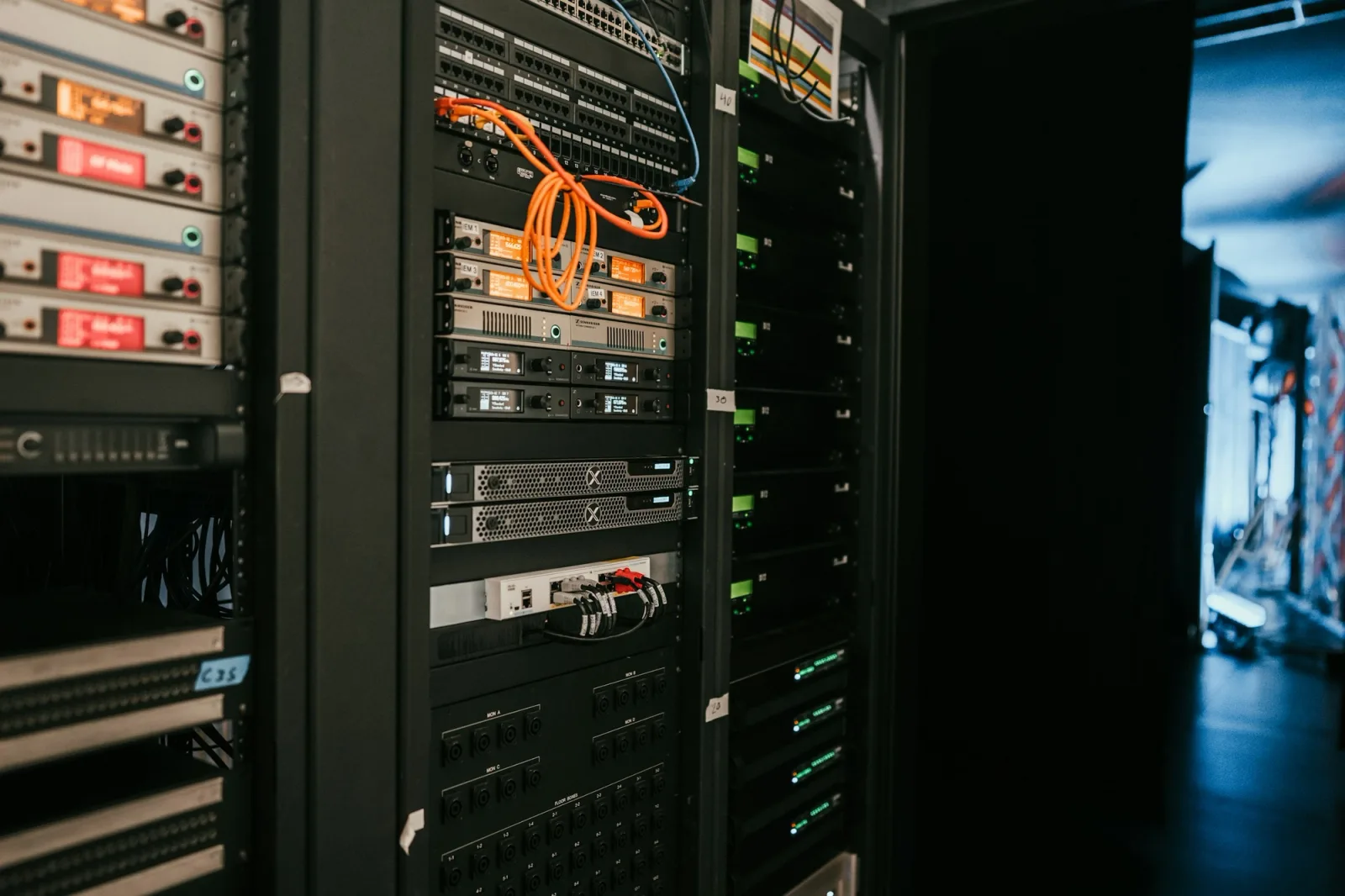
Canada has one of the stranger positions in the global artificial intelligence industry.
Some of the research behind modern AI came from Toronto, Montréal and Edmonton. Canada still has world-class researchers, one of the few companies outside the United States building its own major language models, several strong AI startups and a rapidly growing collection of enormous data-centre projects.
But if you open an AI chatbot in Canada today, you’re probably using ChatGPT, Claude, Gemini or another system built by an American company.
That gap between helping invent modern AI and owning the companies commercializing it explains a lot about where Canada stands in 2026.
Canada attracted US$4.28 billion in private AI investment in 2025, according to Stanford’s AI Index, putting it fifth globally behind the United States, China, the United Kingdom and France. It also produced 79 newly funded AI companies that year.
Those are strong numbers for a country of roughly 40 million people. They also show how concentrated the AI race has become. Private AI investment in the United States reached US$285.9 billion in 2025.
Canada has the research talent and an increasingly serious group of companies. It is now trying to add the other things modern AI requires: enormous amounts of capital, computing power, electricity and infrastructure.
Canada helped create modern AI
Long before ChatGPT, Canada had become one of the centres of artificial intelligence research.
Geoffrey Hinton spent decades at the University of Toronto working on neural networks, computer systems loosely inspired by the way interconnected neurons process information. His research helped establish techniques that eventually made modern image recognition and generative AI possible.
Montréal developed another major research cluster around Yoshua Bengio and Mila, now one of the world’s best-known AI research institutes.
Edmonton became particularly important in reinforcement learning, a form of AI in which a system learns by taking actions and receiving feedback. Richard Sutton, one of the field’s foundational researchers, spent much of his career at the University of Alberta.
Canada then made an unusually early national bet on AI.
In 2017, the federal government launched the Pan-Canadian Artificial Intelligence Strategy and backed three major research institutes:
- Mila in Montréal
- the Vector Institute in Toronto
- Amii in Edmonton
That helped Canada attract researchers, train graduate students and build AI clusters years before generative AI became a mainstream technology.
The research side of that strategy worked. The harder part has been keeping the economic value created by that research in Canada.
Canada’s 2026 national AI strategy now acknowledges the problem fairly directly. Canadian researchers often depend on foreign cloud infrastructure, Canadian companies face pressure to scale elsewhere, and top Canadian talent is constantly recruited by larger international companies.
That is why so much of Canada's AI policy has shifted from simply funding research toward building companies, computing infrastructure and domestic ownership.
The main Canadian AI companies
Canada does not have a direct equivalent of the American cluster containing OpenAI, Anthropic, Google DeepMind, Meta and xAI.
It does have several companies competing seriously in different parts of AI.
| Company | Main Canadian base | What it does |
|---|---|---|
| Cohere | Toronto | Large language models and enterprise AI |
| Waabi | Toronto | AI for self-driving trucks and robotaxis |
| Ideogram | Toronto | AI image generation |
| Sanctuary AI | Vancouver | AI for industrial robotics |
| Ada | Toronto | AI customer-service agents |
| Coveo | Quebec | AI search and recommendations for businesses |
| LawZero | Montréal | Non-profit research into advanced, safer AI systems |
| Thomson Reuters | Toronto/global | Specialized AI for legal, tax and professional work |
The most important company in the discussion about a Canadian OpenAI competitor is Cohere.
Cohere builds large language models, or LLMs. These are the underlying AI systems capable of understanding and generating text, writing code, analyzing documents and increasingly working with images and other forms of information.
ChatGPT is an application built around OpenAI’s models. Claude is built around Anthropic’s. Cohere develops models of its own.
Its business is different, though.
Cohere has concentrated much more heavily on companies and governments than on creating a mass-market chatbot. Its models can be deployed in controlled corporate environments, including situations where an organization does not want sensitive information passing through a normal public AI service.
That makes Cohere particularly relevant for banks, governments and large companies concerned about security and control of their data.
Cohere also became considerably larger in 2026. In September, it signed an agreement to combine with German AI company Aleph Alpha. The combined business will retain the Cohere name and operate with headquarters in Toronto and Berlin. Reuters reported an implied valuation of about $20 billion, although the transaction still requires regulatory approval.
That is a substantial AI company by almost any standard.
It still operates at a very different scale from OpenAI, Anthropic, Google or Meta.
Could Canada realistically build an OpenAI or Claude competitor?
Yes, but the answer depends on what counts as a competitor.
Canada can clearly build advanced AI models. Cohere already does.
Building a company that develops one of the world's best general-purpose models while simultaneously operating a consumer chatbot used by hundreds of millions of people is a much more difficult challenge.
Modern AI requires extraordinary amounts of computing power.
Before an AI model can answer questions, it has to be trained. Thousands of specialized computer chips process enormous amounts of information repeatedly, gradually adjusting billions of numerical parameters inside the model.
Those chips are generally GPUs, or graphics processing units. They were originally developed largely for computer graphics but turned out to be extremely good at the kind of parallel calculations needed by artificial intelligence.
Training is only the first expense.
Every time someone asks ChatGPT or Claude a question, computers have to run the model again to generate an answer. That is called inference. A chatbot with hundreds of millions of users therefore needs huge amounts of computing capacity every day even after its model has already been trained.
OpenAI, Google, Meta and Anthropic operate inside an American technology ecosystem capable of financing this.
The difference in capital alone is enormous. The United States attracted about US$285.9 billion in private AI investment in 2025 compared with Canada's US$4.28 billion. Stanford counted 1,953 newly funded American AI companies that year versus 79 in Canada.
Then there is distribution.
Google can put AI into Search, Android, Gmail, YouTube and Workspace. Microsoft controls Windows, Office, Azure and GitHub. Meta has Facebook, Instagram and WhatsApp. Amazon owns the world's largest cloud-computing platform.
A Canadian AI startup has to develop excellent technology and then find millions of customers for it.
Cohere's enterprise strategy makes more sense in that context. It doesn't need to persuade everyone using ChatGPT to switch to a Canadian chatbot. It can compete for large corporate and government contracts where security, customization and data control matter.
Canada could therefore produce a major global AI company without producing a Canadian version of ChatGPT.
Building every AI model from scratch may not make sense either
There is another way to compete.
Instead of spending billions building the largest possible general-purpose model, a company can start with an existing model and make it exceptionally good at a narrower type of work.
Thomson Reuters is a good Canadian example.
In August 2026, the Toronto-based company announced Thomson, its own large language model for legal, tax and professional work. It started from an open-source model and then trained it using Thomson Reuters' own data and expertise.
The company says the project cost about US$40 million for talent and computing.
That is still an enormous investment, but it is radically different from trying to match OpenAI or Google dollar for dollar.
A legal AI system doesn't necessarily need to be the world's greatest AI poet, image creator or general chatbot. It needs to be exceptionally good at legal work and have access to reliable legal information.
Canada may have more opportunities like this in banking, mining, energy, healthcare, insurance and other industries where the country already has large companies, expertise and specialized data.
Some of Canada's strongest AI companies don't make chatbots
Waabi may be one of the clearest examples.
The Toronto-founded company develops AI for autonomous vehicles. Its technology is initially aimed at trucks, with robotaxis now being developed as well.
Instead of predicting the next word in a sentence, Waabi's AI has to understand roads, other vehicles, pedestrians and constantly changing physical environments.
In January 2026, Waabi raised US$750 million in a Series C funding round. It also secured a milestone-based future investment from Uber that could bring the package to US$1 billion as the companies work toward deploying Waabi-powered robotaxis through Uber.
Uber's agreement contemplates the eventual deployment of at least 25,000 Waabi-powered robotaxis.
That's a different AI race from ChatGPT, but potentially an enormous one.
Toronto's Ideogram is competing in image generation. Its Ideogram 4.0 model, released in June 2026, uses open weights, meaning companies and developers can download the model rather than being required to access it exclusively through Ideogram's servers.
Vancouver's Sanctuary AI is working on what is often called physical AI: getting artificial intelligence to control machines interacting with real objects.
In 2026, Sanctuary reported achieving a 99.5%+ success rate on an industrial wire-plugging task performed at production speed for an automotive supplier. Its current strategy involves putting its AI into industrial robotic systems rather than trying to build every piece of hardware itself.
Toronto-based Ada applies AI to customer service. The company said in March that its agentic AI annual recurring revenue had more than doubled year over year and that more than 550 enterprise AI agents had been deployed globally.
These companies make Canada's AI industry broader than a simple comparison of Canadian chatbots against ChatGPT.
Canada is also making a large bet on AI safety
Montréal has another unusual AI organization.
Yoshua Bengio founded LawZero as a non-profit research organization working on advanced AI systems designed differently from today's autonomous AI agents.
Its main research project is called Scientist AI. The idea is to develop an AI system focused on producing evidence-based predictions rather than independently pursuing its own goals.
In September 2026, Canada and Germany announced planned public funding of C$150 million and €100 million respectively for LawZero, or roughly C$300 million combined. Canada says the project will create 360 full-time jobs here and include dedicated Canadian computing infrastructure.
It isn't a consumer product Canadians can use instead of Claude today. It is an attempt to develop a different architecture for increasingly capable AI.
That gives Canada a position in another part of the industry: research into how very advanced AI systems can be made safer and easier to control.
AI is becoming an electricity and infrastructure industry
The software gets most of the attention, but the physical infrastructure underneath AI is becoming just as important.
An AI data centre is essentially a very large building full of computer servers. Those servers contain thousands of GPUs and other specialized chips performing enormous numbers of calculations.
That requires electricity.
A lot of it.
It also requires high-capacity internet connections, cooling equipment and billions of dollars of physical infrastructure.
Canada has several advantages here.
Quebec, Manitoba and British Columbia have large hydroelectric systems. Ontario has a major nuclear power industry. Alberta and Saskatchewan have the potential to construct large amounts of new generation. Canada's relatively cool climate can also make data-centre cooling easier than in hotter regions.
Canada's problem has been access to computing capacity under Canadian control.
The federal government's 2026 AI strategy says much of Canada's existing AI data-centre and cloud infrastructure remains foreign owned and controlled. Canadian researchers and companies often depend on foreign cloud providers to train and operate their AI systems.
That is beginning to change.
TELUS and Bell are building Canadian AI infrastructure
TELUS opened what it describes as Canada's first fully sovereign AI factory in Rimouski, Quebec, in September 2025.
In this context, sovereign AI infrastructure means computing systems physically and operationally controlled in Canada, subject to Canadian law, rather than infrastructure that ultimately depends on a foreign provider or jurisdiction.
The Rimouski facility uses Nvidia GPUs and is operated by TELUS in Canada. TELUS said in May 2026 that its available capacity had already sold out.
TELUS is now developing three additional facilities in British Columbia. Its proposed cluster could eventually exceed 60,000 GPUs and 150 megawatts of power capacity by 2032.
Bell is going larger.
Its Bell AI Fabric project began with plans for six facilities in British Columbia providing more than 500 MW of AI computing capacity.
In September 2026, Bell and Saskatchewan announced a non-binding agreement that could add another 900 MW of capacity to an already planned 300 MW Saskatchewan project. If fully developed, the Saskatchewan hub alone could reach 1.2 gigawatts.
One gigawatt is 1,000 megawatts. These projects consume electricity on a scale normally discussed when talking about cities, power plants and heavy industry.
Alberta shows just how large the demand is becoming
Alberta has quickly become one of Canada's largest proposed data-centre markets.
Meta broke ground in July 2026 on its first Canadian data centre, a planned AI-optimized campus in Sturgeon County north of Edmonton. Alberta lists Meta's investment in the facility at more than $13 billion, excluding the AI chips inside the centre and the associated power plant.
The more revealing number may be the queue behind it.
As of July 30, 2026, proposed data centres were seeking approximately 19,565 MW of new connections to Alberta's electricity system.
The highest electricity demand Alberta had ever recorded across the entire province was 12,785 MW.
Those connection requests are proposals rather than approved projects, so 19,565 MW isn't about to appear on the grid. Alberta has initially limited large new grid connections to 1,200 MW.
It still shows how different the scale of the AI industry has become. Technology companies are no longer just leasing offices and hiring programmers. The largest AI projects now have to think about power generation, transmission lines, water, construction and land.
A data centre in Canada isn't automatically Canadian AI
This distinction matters.
A foreign technology company can spend billions building a data centre in Alberta while continuing to own all of the valuable AI models, software and intellectual property somewhere else.
The centre creates construction work, permanent operating jobs, electricity demand and tax revenue. Canadian businesses may also benefit from having more computing capacity nearby.
But hosting servers is different from owning the technology running on them.
Canada gets considerably more long-term value if Canadian researchers and companies can use the infrastructure to develop models, software and businesses that they own.
That is one reason the federal government is investing directly in compute.
Canada's Sovereign AI Compute Strategy includes support for large commercial AI data centres, public computing infrastructure and access to computing capacity for Canadian companies. The 2026 national strategy says existing federal AI-compute commitments exceed $2 billion.
The government estimates commercial AI companies operating in Canada could require around 5.5 GW of AI computing capacity by 2030.
Proposed partnerships for sovereign Canadian infrastructure could provide approximately 850 MW by 2030, with the ability to expand as high as 2.3 GW.
A large portion of that infrastructure still has to be financed, approved and built. The plans are much larger than the sovereign computing capacity Canada actually has operating today.
Canadian businesses are adopting AI quickly
Canada doesn't only need companies producing AI. The rest of the economy has to learn how to use it.
Statistics Canada found that 19.2% of Canadian businesses had used AI to produce goods or deliver services during the 12 months leading into its second-quarter 2026 survey.
That was 12.2% a year earlier and just 6.1% in 2024.
The differences between industries are large.
| Industry | Businesses using AI |
|---|---|
| Information and cultural industries | 42.3% |
| Finance and insurance | 40.4% |
| Professional, scientific and technical services | 32.4% |
| Construction | 9.2% |
| Agriculture, forestry, fishing and hunting | 4.5% |
Among businesses already using AI, the most common applications included data analytics, text analysis and chatbots.
The Bank of Canada has found an even more interesting gap. AI use by individuals inside companies is common, but deep integration into the business is still relatively rare.
Only 8% of businesses in one Bank of Canada survey reported using AI significantly in their core operations.
Using an AI assistant to summarize a document can save an employee some time. Redesigning an insurance claims process, automating parts of a factory or using AI to optimize an entire logistics network can change the productivity of the company.
Much of Canada is still somewhere between those two stages.
Where Canada is genuinely strong
Canada's biggest advantage remains its research and talent base.
Toronto, Montréal and Edmonton were major AI centres before the current investment boom began. The universities, researchers and institutions built around them are difficult to reproduce quickly.
Canada has also started producing companies that matter internationally. Cohere is a credible large-model developer. Waabi has raised one of the largest venture rounds in Canadian history. Ideogram competes in frontier image generation. Sanctuary is working on industrial robotics. Ada and Coveo have built substantial enterprise AI businesses.
Energy may become another advantage.
AI infrastructure requires enormous and relatively reliable electricity supplies. Canada has large hydroelectric, nuclear and natural-gas resources and considerably more space than many competing technology hubs.
The country also has a relatively stable legal and political environment for international companies making investments expected to operate for decades.
And Canada doesn't need to lead every category of AI to benefit from the industry. A globally successful Canadian autonomous-driving company or industrial robotics company could be extremely valuable even if ChatGPT remained the country's most popular chatbot.
Canada's weaknesses are harder to solve
The first is capital.
US$4.28 billion of annual private AI investment puts Canada near the top globally. It remains tiny beside the amount available in the United States.
The second is compute. Training advanced AI models increasingly requires access to massive clusters of expensive GPUs. Canada is finally building far more of that infrastructure, but many of the biggest projects are plans for later this decade rather than capacity available to startups today.
Canada also depends heavily on foreign technology at almost every layer.
Nvidia, an American company, dominates high-end AI processors. Amazon, Microsoft and Google dominate cloud computing. The world's largest general-purpose AI models are mainly controlled by American companies. Even a Canadian sovereign data centre will generally be filled with foreign-designed chips.
Distribution is another weakness. Canada has no consumer technology company comparable in reach to Google, Microsoft, Apple, Meta or Amazon.
A new Canadian AI company therefore has to compete internationally very early in its life.
And then there is Canada's old commercialization problem: developing valuable research here but allowing much of the business, intellectual property and talent built from it to migrate elsewhere.
The federal government's new strategy focuses explicitly on scaling Canadian AI companies and retaining domestic ownership because research leadership alone hasn't solved that problem.
Does Canada need its own ChatGPT?
A Canadian company capable of competing directly with OpenAI and Anthropic would clearly be valuable. Cohere is currently Canada's best candidate, particularly in enterprise AI.
But copying OpenAI probably isn't the only realistic path.
Canada has companies competing in autonomous vehicles, robotics, image generation, enterprise AI and specialized professional models. Those markets could produce very large businesses of their own.
Thomson Reuters' $40-million model is an interesting example of another approach. Rather than spending billions trying to create the smartest AI at every possible task, a Canadian company can combine existing AI research with data or industry expertise that competitors don't have.
The same logic could apply to mining, banking, energy, engineering, healthcare, insurance and other areas where Canada already has deep expertise.
The infrastructure underneath those companies is also finally getting larger. TELUS, Bell, Meta and others are building or proposing AI facilities measured in hundreds of megawatts, while Ottawa is trying to ensure at least part of that computing capacity stays under Canadian control.
Canada helped produce the science behind the first modern AI boom. The more difficult test is happening now: whether it can turn that research, talent, electricity and computing infrastructure into companies and technology that remain Canadian as the industry becomes vastly more expensive.
By 2030, counting Canadian chatbots probably won't tell us much. The more useful question will be how many important AI models, products and companies are being built here — and how much of them Canada still owns.
Sources
- Stanford Institute for Human-Centered AI, AI Index Report 2026
- Innovation, Science and Economic Development Canada, Canada's National Artificial Intelligence Strategy: AI for All
- Statistics Canada, Analysis on artificial intelligence use by businesses in Canada, second quarter of 2026
- Bank of Canada, Canadian businesses' use of AI: What the evidence shows
- Reuters, September 16, 2026 — Cohere/Aleph Alpha transaction
- Waabi — January 2026 Series C and Uber partnership
- TELUS — sovereign AI infrastructure in Quebec and British Columbia
- Bell and Government of Saskatchewan — Bell AI Fabric expansion
- Government of Alberta — data-centre projects and electricity connection demand
- Government of Canada — Canada/Germany investment in LawZero
Page details
- Written by
- Thomas Tremblay
- Last updated
- September 20, 2026
Sources
Official source pages checked September 20, 2026. Provider terms, government programs, legal rules, dates, and eligibility requirements can change; verify the linked source at the next review.
- Stanford Institute for Human-Centered Artificial Intelligence: AI Index 2026 reportotherChecked 2026-09-20
- Government of Canada: Canada's National AI Strategy: AI for AllfederalChecked 2026-09-20
- Statistics Canada: Canadian businesses' use of artificial intelligencefederalChecked 2026-09-20
- Bank of Canada: Artificial intelligence and the Canadian economyfederalChecked 2026-09-20
- Waabi: Waabi funding announcementproviderChecked 2026-09-20
- Government of Canada: Sovereign AI infrastructure with TELUSfederalChecked 2026-09-20
- Bell: Bell AI Fabric expansionproviderChecked 2026-09-20
- Government of Canada: Canada and Germany invest in LawZerofederalChecked 2026-09-20
- Government of Canada: Data centres powering Canada's digital futurefederalChecked 2026-09-20
Cite this page: Canooq.ca, AI in Canada in 2026: Companies, Strengths and Weaknesses, https://www.canooq.ca/blog/ai-in-canada-2026
Canooq content is educational and may include affiliate or referral links. It is not financial, tax, legal, immigration, employment, mortgage, real estate, or healthcare advice. Verify official sources and provider terms before acting.