Fogo Island travel guide: how to plan Canada's most remote escape
Plan a Fogo Island trip with ferry logistics, where to stay, the best hikes, Tilting, Joe Batt's Arm, iceberg season and a realistic three-to-four-day itinerary.

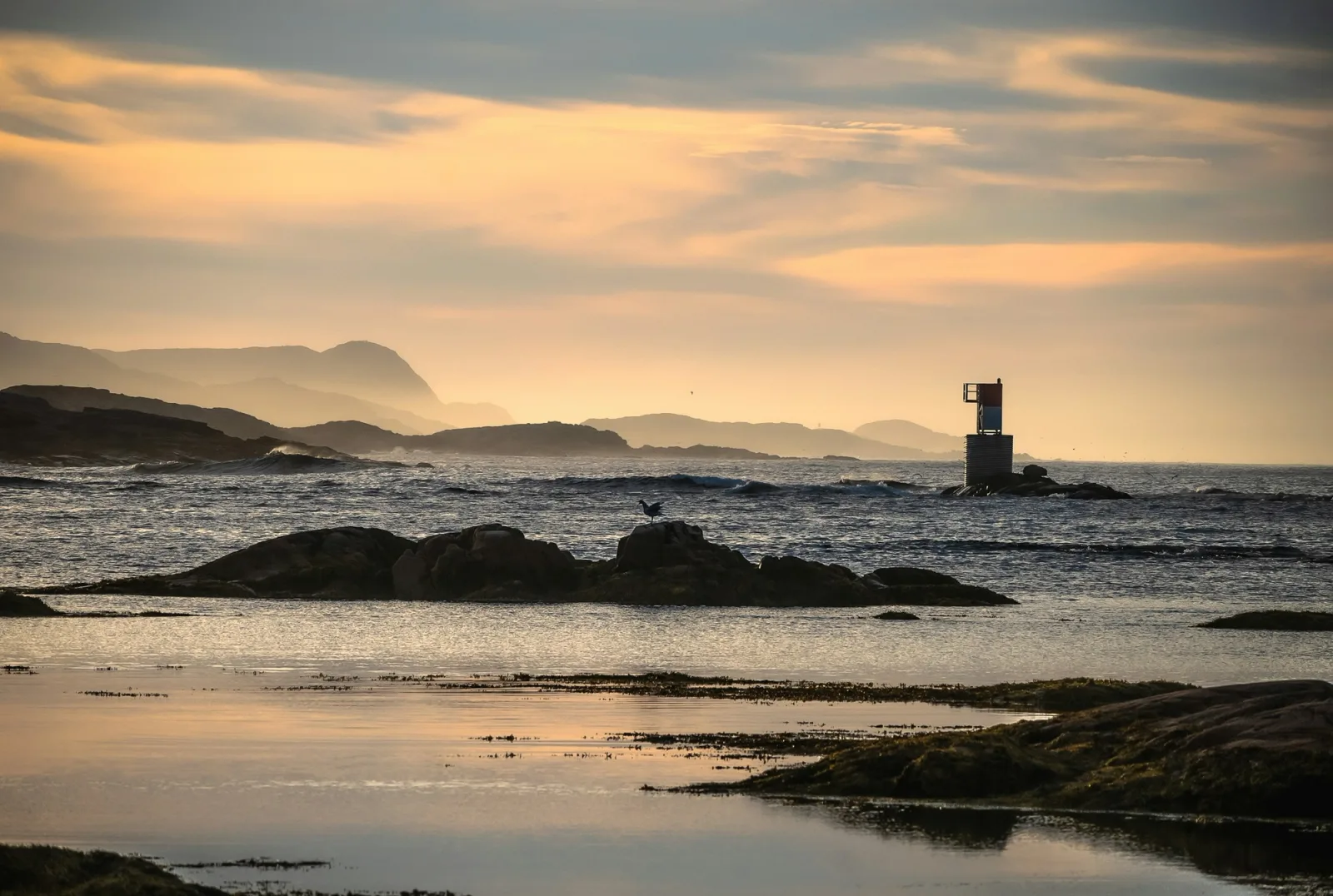
Fogo Island feels farther away than it actually is.
You fly or drive into central Newfoundland, follow a road north through small communities and forest, wait at the edge of Hamilton Sound for a ferry, then cross to an island of exposed rock, fishing stages, low houses and open North Atlantic. There are no grand entrance gates and no single attraction that explains why people make the trip. The appeal comes gradually, as you drive between communities, walk out toward the sea and realize how little there is between you and the horizon.
That remoteness is also what makes Fogo Island a trip you should plan properly. The ferry cannot simply be treated like a bridge, restaurants and museums are limited and seasonal, and trying to visit for one rushed night misses most of the reason to come.
For a first trip, three nights is the minimum I would consider and four is better. That gives you time for Joe Batt's Arm, Tilting, the community of Fogo, a couple of coastal walks and at least one day that can bend around fog, wind or a delayed ferry.
| Question | Practical answer |
|---|---|
| How long should you stay? | 3 nights minimum; 4 gives you a much better pace |
| Do you need a car? | Strongly recommended unless your accommodation arranges transportation |
| Closest major airport | Gander (YQX) |
| How do you reach the island? | Provincial vehicle ferry from Farewell |
| Ferry crossing | About 45 minutes direct; around 1 hour 15 minutes when combined with Change Islands |
| Best time for icebergs | Late May and early June give you the strongest odds |
| Best time for a first summer trip | June through September |
| Best known stay | Fogo Island Inn in Joe Batt's Arm |
| Best-known short hike | Brimstone Head |
| Best community to wander slowly | Tilting |
Getting to Fogo Island is part of the trip
For most visitors flying into Newfoundland specifically for Fogo Island, Gander International Airport is the practical gateway.
From Gander, drive north on Route 330, then Routes 331 and 335 toward the Farewell ferry terminal. The road distance is about 85 kilometres. It is not a difficult drive, but you should leave considerably more time than the map's pure driving estimate because the ferry is the part of the journey you cannot improvise around.
The provincial ferry connects Farewell, Change Islands and Fogo Island. The Government of Newfoundland and Labrador currently lists a direct Farewell-to-Fogo crossing at about 45 minutes; sailings that also serve Change Islands take about 1 hour and 15 minutes.
The important detail is that this is not a BC Ferries-style trip where most tourists reserve a specific vehicle space weeks ahead. Most provincial ferry service here operates first come, first served, so arriving early matters, particularly in summer. Schedules also change between seasons and can be affected by weather or operational issues.
Check the official Fogo Island–Change Islands–Farewell ferry page shortly before the trip and again on the day you travel. Do not rely on a screenshot of a schedule you saved two months earlier.
If you are flying into Gander, I would also book the rental car before the flight. Rental supply in Newfoundland can become tight in summer, and having your own vehicle makes Fogo Island dramatically easier to explore once you arrive.
Can you visit without a car?
Yes, but it changes the trip.
Guests at Fogo Island Inn have access to on-island shuttle service as part of the stay, and some accommodations or local operators may be able to help arrange transportation. If you are staying independently, a car gives you far more freedom because the communities, trailheads and heritage sites are spread around the island.
Fogo is not a place where you want to discover at 4 p.m. that the sunset viewpoint you had in mind is 25 kilometres away and there is no easy way to get there.
Where to stay on Fogo Island
There are two very different ways to do this trip.
The first is to make the accommodation itself one of the main reasons you came. The second is to rent a cottage, stay in a small inn or B&B and spend most of your days exploring independently.
Both work.
Fogo Island Inn is the full splurge
The Fogo Island Inn sits on the rocky coast at Joe Batt's Arm, raised partly on stilts with huge windows facing the North Atlantic. It has 29 rooms and suites and is one of the most distinctive hotels in Canada.
A stay is much more inclusive than a conventional luxury hotel rate. Breakfast, lunch and supper are included, along with non-alcoholic drinks, gratuities, many land-based experiences, an island orientation, bikes, hiking equipment and on-island transportation. The Inn currently requires a minimum stay of three nights and recommends four.
That is useful context when looking at the price. You are not paying only for a room, although this is still unquestionably an expensive trip.
The Inn also operates as a social business through Shorefast, with operating surpluses reinvested into the community. If you have wanted to stay here for years and can afford it, I would build the trip around the Inn rather than spending one night there merely to say you did.
You absolutely do not need to stay at the Inn
Fogo Island has cottages, guesthouses and small accommodations in Joe Batt's Arm, Fogo, Tilting, Seldom and other communities.
The Town of Fogo Island maintains a current accommodation directory, and there are some particularly appealing full-home rentals around Joe Batt's Arm and the community of Fogo. This can be a much better fit if you want a kitchen, more independence or simply cannot justify the cost of Fogo Island Inn.
For a first visit, Joe Batt's Arm is a very convenient base because you are close to the Joe Batt's Point walk and the island's best-known architecture. Staying in Fogo puts you near Brimstone Head and several heritage sites. Tilting is quieter and feels especially atmospheric if the historic outport character is the part of the island that interests you most.
Whichever you choose, book early for summer. This is a small island with a finite number of beds.
Start with Joe Batt's Arm
Joe Batt's Arm is the Fogo Island many people recognize before they know its name.
Traditional homes and fishing structures line the coast, while the sharp white geometry of Fogo Island Inn and the island's contemporary art studios sit against bare rock and ocean. The contrast should look strange, but somehow it does not.
The best introduction is the Joe Batt's Point Walking Trail.
The official route is about 4.6 kilometres return, beginning around Etheridge's Point Park and following the North Atlantic coastline. Along the way you pass gardens, the Long Studio and the Great Auk memorial at Joe Batt's Point. It is not a difficult mountain hike, but proper footwear is still useful because this is exposed coastal terrain rather than a paved promenade.
Do not rush it because the distance is modest. The views are the reason to stop repeatedly, and if whales or icebergs happen to be offshore, the walk can easily occupy most of a morning.
Even if you are not staying at Fogo Island Inn, this part of the island deserves time. Walk the coast first, then drive slowly through the community rather than treating the Inn as a building to photograph before moving on.
Climb Brimstone Head near sunset
The community of Fogo sits on the island's northwestern side, and the short climb up Brimstone Head gives you one of the best broad views of the trip.
The trail is about 2 kilometres return and climbs by stairs and rocky sections to the top of the headland. Local lore, helped along enthusiastically by the Flat Earth Society, has promoted Brimstone Head as one of the "four corners of the Earth."
You do not need to take that seriously to understand why the story stuck.
From the top, the ocean wraps around the exposed headland while the community of Fogo spreads below. It is particularly good late in the day, when the rock and water pick up softer light.
The climb is short enough to fit almost anywhere in the itinerary, but I would save it for a clear evening rather than ticking it off in fog simply because it was on the schedule.
If the weather cooperates, this is one of the places where Fogo Island's isolation becomes visually obvious. There is a lot of horizon.
Give Tilting half a day, not twenty minutes
Tilting is one of the places where the island's history is easiest to read in the landscape.
It is a historic Irish-Newfoundland fishing community on the eastern side of Fogo Island, with traditional houses, fishing premises, stages and lanes arranged around the harbour. It is both a Registered Heritage District and a National Historic Site landscape, and it feels very different from driving through a preserved museum village because people still live here.
Come without an aggressive checklist.
Walk the community, look at the fishing stages, visit the seasonal heritage properties if they are open and give yourself enough time for the place to become more than a photo stop.
From roughly June through September, the island's heritage network opens a collection of small museums and historic buildings across Fogo, Joe Batt's Arm, Tilting and Seldom. The Town of Fogo Island currently offers individual admissions as well as multi-site museum passes, which makes sense if you plan to visit several.
Hike Turpin's Trail if you want a longer coastal walk
Near Tilting, Turpin's Hiking Trail is one of the island's more substantial walks.
The loop is about 7.2 kilometres and is rated moderate to difficult despite relatively gentle elevation changes. The challenge comes more from the varied coastal footing and exposure than from a major climb.
The trail crosses barrens and rugged shoreline, with opportunities for berry picking later in summer and occasional caribou sightings. Give it a few hours and bring proper footwear.
If you only want one longer hike on Fogo Island, this would be high on the list.
Fogo Head is excellent during iceberg season
Another worthwhile walk near the community of Fogo is the Fogo Head Trail, a 3.6-kilometre loop with boardwalk, stairs and exposed rock barrens.
The trail is particularly appealing when icebergs are moving through the waters offshore. Fogo Island sits along Iceberg Alley, the route followed by icebergs drifting south from Greenland and the Canadian Arctic.
No one can promise you an iceberg on a specific date.
Newfoundland and Labrador Tourism says icebergs are generally most plentiful in April and May, but sea ice can make access and boat operations difficult. For many travellers, late May and early June provide the best compromise between seeing icebergs and actually being able to travel around comfortably.
Even without ice, Fogo Head is worth walking for the elevated coastal views.
Do not come only for the scenery
It is tempting to describe Fogo Island entirely through rock, ocean, icebergs and architecture. That leaves out the reason the island feels different from many remote scenic destinations.
Fogo is a collection of living communities with a very strong connection to the cod fishery, co-operative history, craft and outport culture.
In Seldom, the seasonal Fogo Island Marine Interpretation Centre includes the F.U. Trading Company Museum, a cod liver oil factory exhibit and interpretation around the island's marine history. In Fogo, the Marconi Wireless Interpretation Centre explains the role early wireless communication played in isolated coastal communities.
None of these requires half a day. A few small heritage stops between hikes make the island considerably more interesting because they explain why the settlements look the way they do and how people have actually made a life here.
The contemporary side of Fogo Island is equally important. The famous artist studios scattered around the landscape are part of a residency program developed through Shorefast and Fogo Island Arts. Their severe, modern shapes have become visual symbols of the island, but they are working spaces rather than a collection of conventional tourist attractions. Enjoy them in the landscape and respect access restrictions.
Where to eat on Fogo Island
This is not a destination where I would arrive with the assumption that you can find dinner whenever you feel hungry.
Restaurants are limited and opening days change seasonally, so check what will actually be open during your stay and reserve when reservations are offered.
Bangbelly Bistro in the community of Fogo is one of the island's best-known independent restaurants. For the 2026 season it operates from Mother's Day through Canadian Thanksgiving, with current summer dinner service Thursday through Monday.
If you are staying at Fogo Island Inn, meals are already built into the experience and the kitchen is a major part of the stay.
For a cottage trip, having basic breakfast food, snacks and something easy to cook is sensible. Fogo Island has food, but a remote community with a small population does not operate like downtown St. John's. A little planning makes the trip much more relaxed.
When to visit Fogo Island
There is no single perfect month because the island changes substantially through the year.
Late May and June: come for icebergs
This is the most exciting period if seeing icebergs is high on your list.
Late May and early June usually offer the best combination of iceberg probability and practical travel conditions. The weather can still be cold, raw and unpredictable, so this is not a trip for someone imagining warm summer coastal walks.
The upside is extraordinary. Seeing an iceberg drift past a small Newfoundland community is one of those experiences that looks implausible even while it is happening.
July and August: easiest for a first visit
Summer gives you the simplest version of Fogo Island.
Days are long, the heritage sites are operating, hiking is easier to plan and restaurants and accommodations are in their main season. This is also when demand is highest, so accommodation and rental cars should be booked well ahead.
Do not interpret "summer" as guaranteed warmth. Pack layers and a waterproof shell even in July.
September: quieter and still very good
September is a strong choice if you care more about walking and atmosphere than icebergs.
The island begins to quiet down, summer crowds ease and the barrens can be beautiful. Some seasonal businesses reduce hours as autumn approaches, so the trade-off for fewer visitors is that you need to check opening days more carefully.
A realistic four-day Fogo Island itinerary
Day 1: ferry, Joe Batt's Arm and your first coastal walk
Take a morning or midday ferry from Farewell, stop at the visitor information centre shortly after arriving if it is open, then continue to your accommodation.
Use the first afternoon for Joe Batt's Arm and the Joe Batt's Point Walking Trail. There is no need to cross the entire island immediately. Finish with dinner nearby and an early night if the journey from Gander started before breakfast.
Day 2: Tilting and the east side of the island
Spend the morning wandering Tilting, then visit any heritage properties that interest you while they are open.
If you want a substantial hike, make Turpin's Trail the main event of the afternoon. If not, spend longer around the community and drive the eastern roads slowly.
This is a good evening to leave unscheduled. If the weather clears beautifully, go somewhere with an open ocean view rather than forcing yourself into whatever you planned at home.
Day 3: Fogo, Fogo Head and Brimstone Head
Explore the community of Fogo, visit one or two small heritage sites and walk the Fogo Head Trail if conditions are good.
Have dinner in Fogo, then climb Brimstone Head toward the end of the day. Waiting for a clear evening gives the view a much better chance of becoming one of the memories you came here for.
Day 4: use the weather
Your final full day is deliberately loose.
Take a boat or wildlife excursion if one is operating and conditions are good, return to the coast around Joe Batt's Arm, visit Seldom's marine interpretation centre, or choose whichever walk you skipped earlier because the weather was poor.
This is also why four nights are better than two. On an exposed North Atlantic island, flexibility is not wasted time. It is part of sensible planning.
Should you add Change Islands?
Yes, if you have enough time.
Change Islands sits between Farewell and Fogo Island on the ferry route and has its own small communities, coastal walking and traditional architecture. It is also known for the Newfoundland Pony Sanctuary.
What I would not do is squeeze it into a three-night Fogo trip simply because the ferry passes nearby.
If you have five or six nights for the area, spending a night on Change Islands can make sense. If you have three or four, let Fogo Island breathe and save Change Islands for another trip.
What to pack for Fogo Island
Pack for weather, not for the season printed on the calendar.
A waterproof outer layer is useful year-round. Bring warm layers, shoes that can handle wet rock and uneven coastal paths, and a hat that will not disappear the first time the North Atlantic wind picks up.
A small pair of binoculars earns its space during iceberg and whale season. If you are staying in a cottage, bring or buy a few snacks before reaching the ferry so a late arrival does not immediately become a hunt for an open kitchen.
And download anything you absolutely need before the trip. Connectivity exists, but Fogo Island is a good place to stop assuming your phone needs to solve every quiet moment.
The planning mistake to avoid
Do not treat Fogo Island as a difficult place to reach that must therefore be conquered efficiently.
Getting there takes effort, but once you arrive, the island rewards the opposite behaviour. The best days are rarely the ones with the most stops. They are the ones where you walk farther because the weather is good, stay in Tilting because someone starts talking to you, wait another twenty minutes on a headland because an iceberg is moving slowly offshore, or abandon an afternoon plan when fog makes another part of the island more interesting.
Book the pieces that genuinely need booking: the flight, rental car, accommodation and any important restaurant or guided experience. Check the ferry carefully.
Then give the island some room.
Page details
- Written by
- Thomas Tremblay · reviewed by Canooq Editorial
- Last updated
- September 11, 2026
Sources
Sources and resources
Check the linked provider and park pages for current access, reservations, fees, road conditions, ferry schedules, and seasonal details before travelling.
- Government of Newfoundland and Labrador: Government of Newfoundland and Labrador: Fogo Island–Change Islands–Farewell ferry serviceprovincialChecked 2026-09-11
- Newfoundland and Labrador Tourism: Newfoundland and Labrador Tourism: Fogo Island and Change IslandsproviderChecked 2026-09-11
- Newfoundland and Labrador Tourism: Newfoundland and Labrador Tourism: iceberg viewingproviderChecked 2026-09-11
- Town of Fogo Island: Town of Fogo Island: visitor information and attractionsproviderChecked 2026-09-11
- Town of Fogo Island: Town of Fogo Island: accommodationsproviderChecked 2026-09-11
- Fogo Island Inn: Fogo Island Inn: rates and inclusionsproviderChecked 2026-09-11
- Newfoundland and Labrador Tourism: Newfoundland and Labrador Tourism: Joe Batt's Point Walking TrailproviderChecked 2026-09-11
- Newfoundland and Labrador Tourism: Newfoundland and Labrador Tourism: Brimstone Head Hiking TrailproviderChecked 2026-09-11
- Newfoundland and Labrador Tourism: Newfoundland and Labrador Tourism: Turpin's Hiking TrailproviderChecked 2026-09-11
- Newfoundland and Labrador Tourism: Newfoundland and Labrador Tourism: Fogo Head TrailproviderChecked 2026-09-11
Cite this page: Canooq.ca, Fogo Island travel guide: how to plan Canada's most remote escape, https://www.canooq.ca/travel/fogo-island-travel-guide
Canooq content is educational and may include affiliate or referral links. It is not financial, tax, legal, immigration, employment, mortgage, real estate, or healthcare advice. Verify official sources and provider terms before acting.