How much cash you can bring into or take out of Canada
You can carry any amount of cash in or out of Canada, but C$10,000 or more has to be reported to the CBSA, and not reporting can cost you 5% to 50% of the money. The reporting lines for the US, Mexico, the EU, the UK and Japan, how much cash to actually carry, and what newcomers should do with their savings.

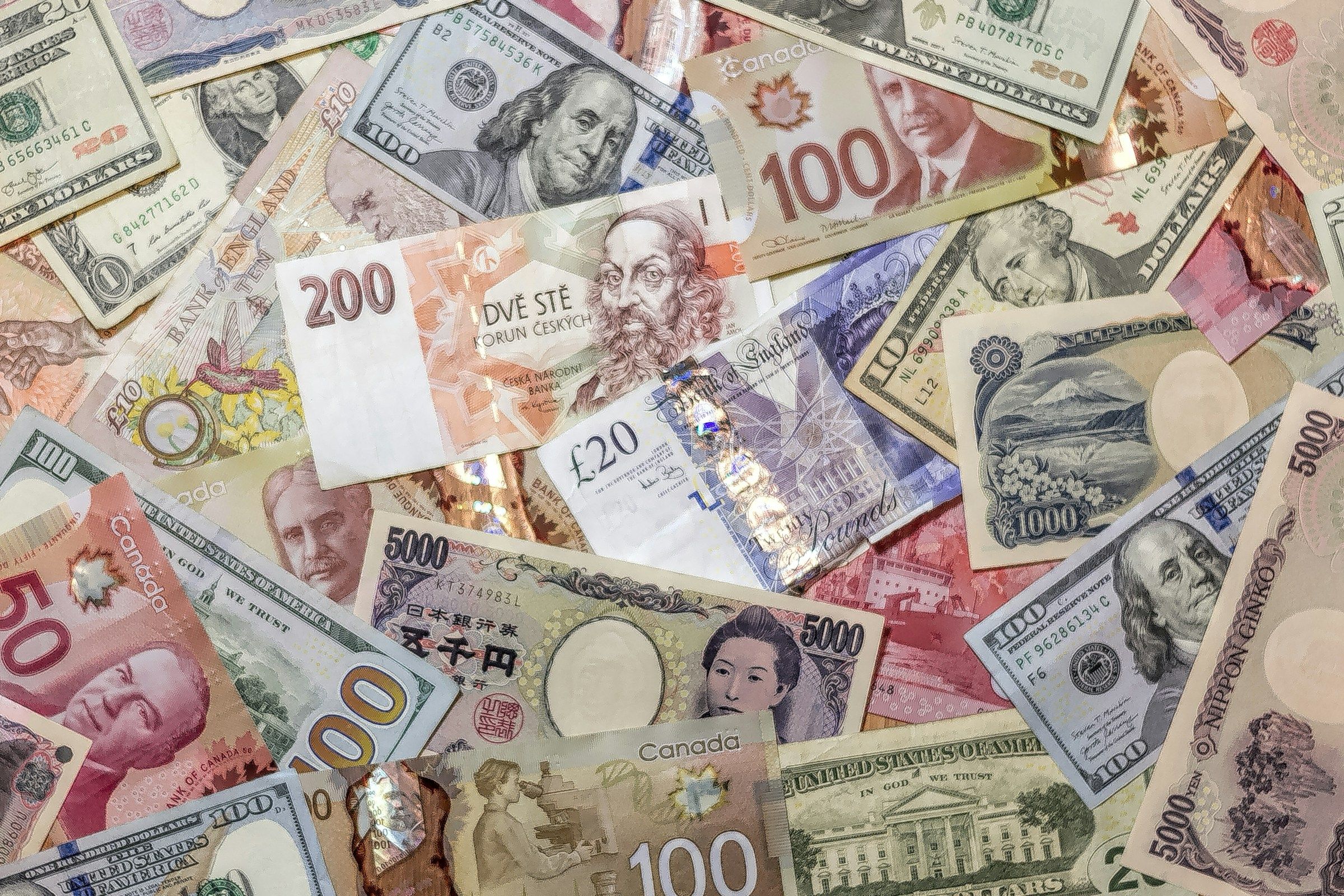
You can carry as much cash as you like into or out of Canada. There is no limit and it isn't illegal. What you have to do is tell the Canada Border Services Agency (CBSA) when you're carrying C$10,000 or more, in Canadian dollars, foreign currency or a mix of the two. Do that and you're fine, whatever the amount. Skip it and the CBSA can seize all of it.
The same idea applies on the other end. The United States, Mexico, the European Union, the United Kingdom and Japan each have their own reporting line, and none of them caps what you can carry either. The table below has all five.
What counts toward the C$10,000
Cash is the obvious part: bills and coins, in any currency, added together. The CBSA also counts "monetary instruments", which is its name for paper that works like cash. That means cheques, money orders, bank drafts, traveller's cheques, and stocks and bonds. The test is whether it's in bearer form, which means whoever holds it can cash it, or ownership passes just by handing it over.
So C$6,000 in bills plus a C$5,000 bank draft is C$11,000, and you report it. The same goes for money you mail or send by courier, which has its own paperwork.
The CBSA counts the money you are carrying and says nothing about pooling a family's cash. The US and the UK do add a family's money together, so if you're travelling as a group, ask a border officer how to report rather than splitting the cash to stay under a line. If you carry money for someone else, the CBSA has a separate form for that.
How to report when you're leaving. Go to the CBSA office before you leave the country. At an international airport that office is on the arrivals level, and you visit it before the security screening on the departures level. Flying from a small airport with no CBSA office means visiting the nearest one before your flight. By land, sea or rail, you stop at a CBSA office on the way out. If you hold a NEXUS card, you can't use the NEXUS lanes or kiosks with C$10,000 or more.
How to report when you're arriving. Use the airport kiosk, your CBSA declaration card, your Advance Declaration, or just tell the border officer. You can also fill out the CBSA's form for individuals ahead of time and hand it over. Your report goes to FINTRAC, the federal agency that tracks money laundering, and fighting money laundering is the CBSA's stated reason for the rule. Carrying the money is fine. Not telling anyone is the problem.
What happens if you don't report
The CBSA can seize all of the undeclared money, not just the amount over C$10,000. You can usually get it back by paying a penalty, which the regulations set at three levels:
- 5% of the amount, capped at C$2,500, if you didn't hide the money, told the officer the full story when it was found, and have no earlier seizures.
- 25% if you hid the money (in a bag lining, say) or made a false statement about it.
- 50% if you hid it in a secret compartment of a vehicle, or you were caught before for concealing or lying.
On C$15,000 you forgot to declare and didn't hide, the penalty is 5%, or C$750. If you hid it, it's 25%, or C$3,750. The C$2,500 cap on the lowest level only starts to matter at C$50,000.
The CBSA won't return the money if it suspects it comes from crime or finances terrorism. If you disagree with a seizure, you can ask for a review.
Reporting lines for popular destinations
Every row is a reporting line, never a cap. If you fly Canada to Japan with 1.5 million yen in your bag, you report twice: once to the CBSA before you leave, and once to Japan Customs when you land.
| Destination | You must declare | Where it comes from | If you don't |
|---|---|---|---|
| Canada | C$10,000 or more | CBSA | Seizure, then a penalty of 5% to 50% |
| United States | More than US$10,000, family or group total | CBP, FinCEN Form 105 (can be filed online) | Seizure and forfeiture, and possible fines or prison |
| Mexico | More than US$10,000 | Mexican customs (ANAM), on the arrival or departure form | A fine of 20% to 40% of the amount over US$10,000 |
| European Union | EUR 10,000 or more | Each country's customs, using the EU cash declaration form | Cash can be held and each country sets its own fines |
| United Kingdom | GBP 10,000 or more, family or group total | HMRC, online or by phone | Seizure and a penalty of up to GBP 5,000 |
| Japan | More than 1 million yen | Japan Customs, on the declaration of carrying means of payment | Not stated on the customs page |
C$10,000 is worth less than US$10,000, so you can owe a report when you leave Canada and none when you land in the US. The EU line applies when you cross the outer border of the EU (landing in Paris from Toronto, for example), not when you drive from France to Spain. Mexico's customs agency asks for an extra declaration form once you pass the US$10,000 mark.
The Government of Canada's own Mexico travel advice repeats the Mexican rule: declare when you arrive and when you leave if you carry more than US$10,000. Driving to the US instead of flying? Canooq's cross-border weekend trips guide has border tips for the road.
How much cash you actually need
For most trips, far less than any of these lines. A few hundred dollars in the local currency covers the taxi from the airport, a market lunch and the odd place that doesn't take cards. Beyond that, cash is a risk: nobody refunds a lost envelope.
Better ways to pay:
- A card with no foreign transaction fee. Many cards add a foreign transaction fee to every purchase abroad, and some don't. The Wealthsimple credit card is one, and it sits in the "Before you go" panel below.
- An ATM at your destination. Pull out a few days' worth in the local currency at a time. The machine's own fee can still apply, so a few larger withdrawals beat many small ones.
- Wise for anything big, like a deposit on a rental or a tuition payment. A transfer between bank accounts isn't money you carry, so there is nothing to declare at the border.
Wise is the first thing to try for a payment that large, and signing up through Canooq's invitation waives its fee on your first transfer of up to $800.
 WiseFeatured partnerSign up through Canooq's link and Wise waives its fee on your first transfer of up to $800.
Use the fee-free transfer within six months of signing up. Wise's normal fees apply to any amount above $800.
Heading to Japan or Mexico? Canooq's guides to what a trip to Japan costs and how to tip in Mexico help you size the cash you'll really spend. And if you do need to convert dollars first, here is the cheapest way to convert USD to CAD.
Moving to Canada with your savings
The rule works the same way in the other direction. If you're a newcomer bringing C$10,000 or more in cash, cheques or bank drafts, you declare it when you arrive, at the kiosk or to the officer. You can bring all of it. Declaring it costs nothing.
The easiest route is not to carry it. The CBSA's page covers cash and instruments you carry, plus mail and courier, so a wire from your bank to a Canadian account never gets to the border. Open a Canadian account before you land, if you can; newcomers can now get a $0 bank account, even at the major banks. If a bank draft is how your savings travel, Canooq's comparison of a bank draft, certified cheque and money order shows which one suits a big payment.
Landing costs add up quickly (a deposit, first month's rent, winter clothes), so a number helps before you decide how much to bring.
Whatever you carry, keep a note of the amount and where it came from. A bank statement or a sale document is the easiest way to answer an officer who asks.
Page details
- Written by
- Thomas Tremblay
- Last updated
- November 10, 2026
Sources
CBSA currency reporting page, the Cross-border Currency and Monetary Instruments Reporting Regulations, CBP, ANAM (Mexico), the European Commission, GOV.UK, Japan Customs and Travel.gc.ca (Mexico) were opened November 6, 2026. The penalty examples (C$750 and C$3,750 on C$15,000, and the C$50,000 point where the C$2,500 cap starts) are Canooq calculations. That a bank transfer is not money carried across the border is Canooq's reading of the CBSA page.
- Canada Border Services Agency: Travelling with CAN$10,000 or more? Sending it by mail or courier? Declare itfederalChecked 2026-11-06
- Canada Border Services Agency: Memorandum D19-14-1: Cross-border currency and monetary instruments reportingfederalChecked 2026-11-06
- Justice Canada: Cross-border Currency and Monetary Instruments Reporting Regulations (SOR/2002-412)federalChecked 2026-11-06
- U.S. Customs and Border Protection: Money and Other Monetary InstrumentsfederalChecked 2026-11-06
- Agencia Nacional de Aduanas de México: Declaración de dinerofederalChecked 2026-11-06
- Government of Canada: Travel advice and advisories: MexicofederalChecked 2026-09-25
- European Commission: EU cash controlsotherChecked 2026-11-06
- GOV.UK (HMRC): Take cash in and out of the UKotherChecked 2026-11-06
- Japan Customs: Passenger customs clearance: means of paymentotherChecked 2026-11-06
Cite this page: Canooq.ca, How much cash you can bring into or take out of Canada, https://www.canooq.ca/travel/how-much-cash-can-you-travel-with-canada
Canooq content is educational and may include affiliate or referral links. It is not financial, tax, legal, immigration, employment, mortgage, real estate, or healthcare advice. Verify official sources and provider terms before acting.