Manitoba Bucket List: 10 Unmissable Things to Do

June 22, 2026
Plan a Manitoba bucket-list trip with 10 memorable places, practical notes, realistic ideas for building a better Canadian road trip.
What's on this page
Plan a Manitoba bucket-list trip with 10 memorable places, practical notes, realistic photos and ideas for building a better Canadian road trip.
Manitoba is where “flat prairie” stereotypes go to die: polar bears pacing the edge of Hudson Bay, sand dunes rising out of spruce forest, waterfalls dropping into northern canyons, and a capital city that turns itself into a two-week world festival every August. It’s a big, quiet province that rewards anyone willing to go a little further, stay up a little later, and follow side roads that don’t look like much on the map.
Here’s a Manitoba bucket list of 10 unmissable things to do, from tundra buggies to Icelandic festivals.
Watch polar bears pace the shore in Churchill
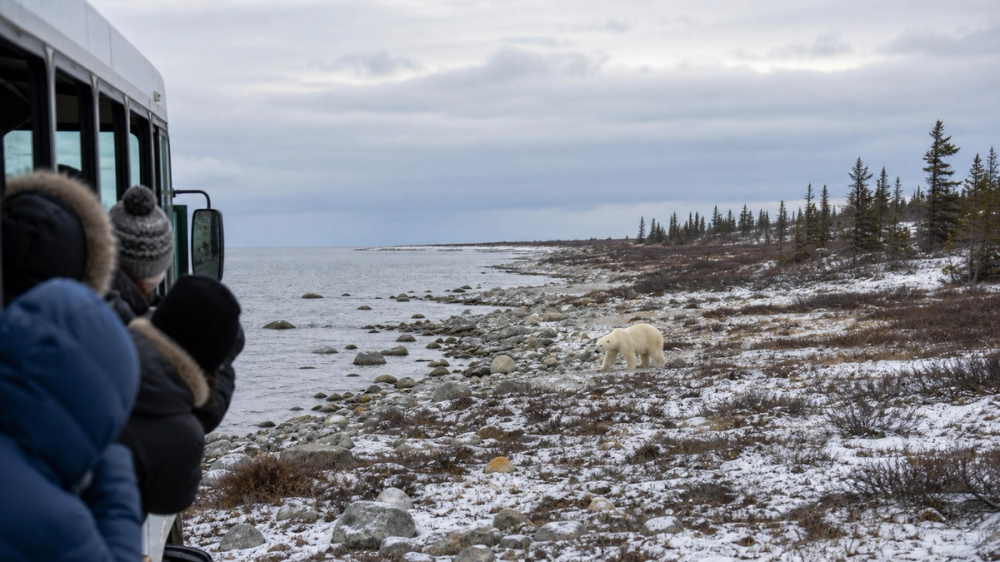
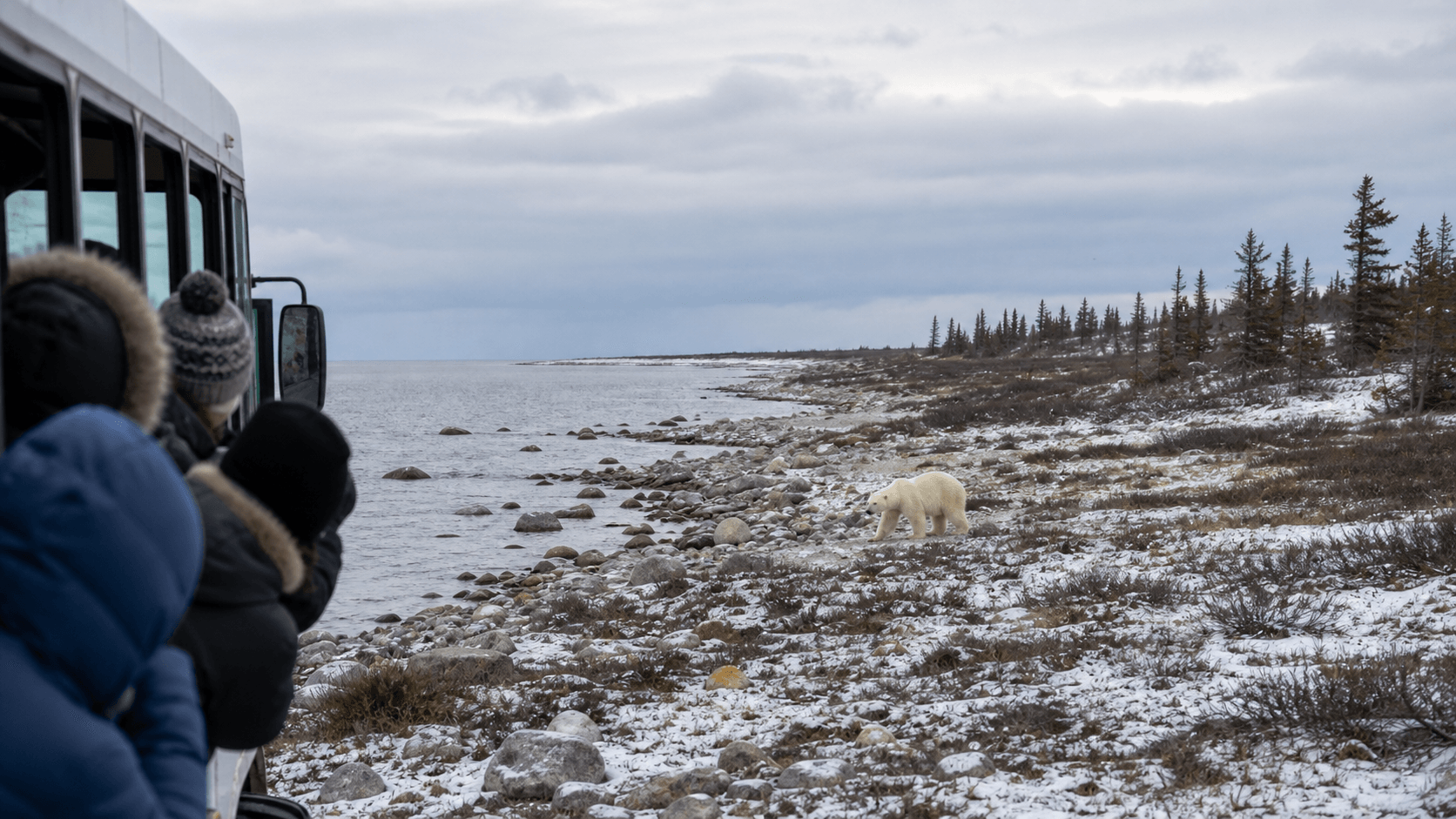
On the edge of Hudson Bay, Churchill is one of the few places on Earth where you can reliably see wild polar bears from the safety of a vehicle or lodge. Every autumn, bears that have spent the ice-free season fasting on land gather near town, waiting for the bay to freeze so they can head back out to hunt seals. The sub-adult males spar and wrestle, mothers with cubs rest near the shore, and bears roam the willow scrub and rocky beaches in a way that makes “polar bear capital of the world” feel like more than a tagline.
Most visitors see the animals from tundra buggies or similar high-clearance vehicles that can traverse the soft ground and let bears walk right up underneath the windows. Peak viewing is typically from late October into early November, when bear numbers around Churchill are at their highest, and it’s common for a good tundra-buggy day to include sightings of 20 or more bears, plus arctic foxes, ptarmigan, and the odd snowy owl. Nights bring a decent chance of northern lights, especially if you stay into November when darkness falls early and the sky is often clear and cold.
Getting here is half the adventure. You can fly from Winnipeg to Churchill in about 4–4½ hours with airlines like Calm Air, or take the VIA Rail train, a two-day, 1,697 km journey that runs twice weekly across the boreal forest and muskeg. Churchill itself is tiny, with a handful of hotels and guesthouses that sell out months in advance during bear season, so this is a trip you plan, not one you improvise.
Churchill Tour (7-Day Tundra Buggy Lodge Polar Bear Point Tour)
Paddle among thousands of beluga whales in Hudson Bay
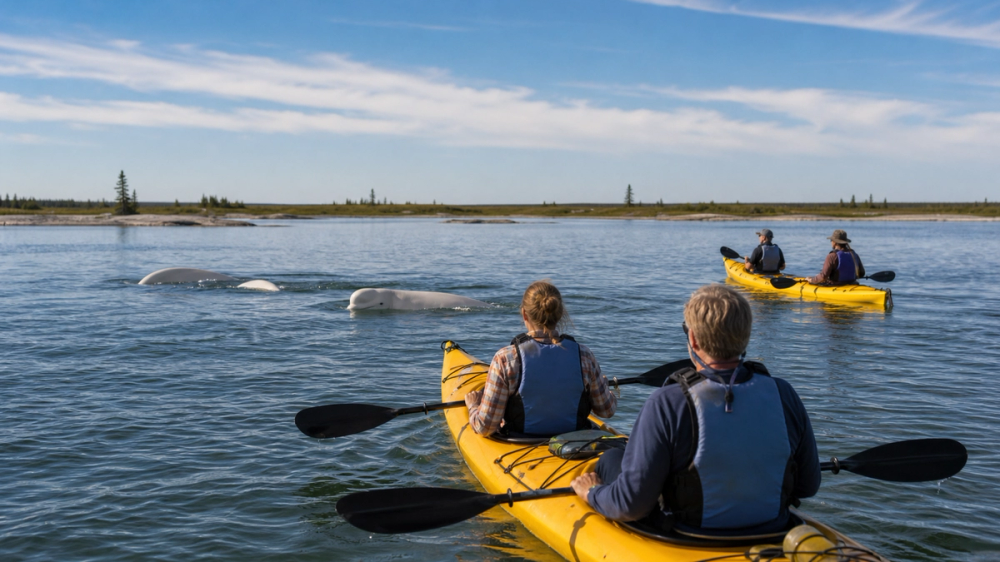
In summer, Churchill turns from white to white-and-glowing-grey as thousands of beluga whales pour into the mouth of the Churchill River. Hudson Bay sees around 60,000 belugas each year, and roughly 3,000 congregate in the Churchill estuary to feed, molt, and raise calves in its shallow, relatively warm waters. From mid-June to mid-August, the river and nearby coast feel alive: you hear their high-pitched calls through boat hulls, see white backs breaking the surface in every direction, and sometimes watch whole families roll against the gravel riverbed as they shed their skin.
Tour operators run zodiac cruises, kayaking trips, and even snorkeling with drysuits alongside the whales, always with guidelines in place to keep encounters on the animals’ terms. Kayaking is particularly memorable: you paddle quietly and the whales often choose to come to you, circling, bumping the hull gently, or surfacing right beside your paddle. On land, you can spot belugas from Cape Merry or along the shore when the estuary is full of animals, and combine whale days with hikes on the tundra and visits to historical sites like the Prince of Wales Fort ruins.
Churchill is also one of the best places on the planet for aurora viewing, with northern lights visible up to 300 nights a year; in late summer you have a real chance of seeing belugas by day and aurora at night if the weather cooperates. The same flight and train options from Winnipeg apply as in polar bear season, and summer trips have the added advantage of milder temperatures and open-water boat access to the whales’ favourite spots.
Swim, walk, and watch bison at Riding Mountain National Park
On the Manitoba Escarpment west of Winnipeg, Riding Mountain National Park rises like a forested island out of the prairie, with lakes, hills, and wildlife that feel more “shield and parkland” than “grain belt.” The hub of the park is the resort village of Wasagaming on the south shore of Clear Lake, one of Canada’s few full-service national park townsites. In summer its boardwalk and sandy beach fill with swimmers, boaters, ice-cream eaters, and people strolling between heritage buildings, cafés, and the park visitor centre.
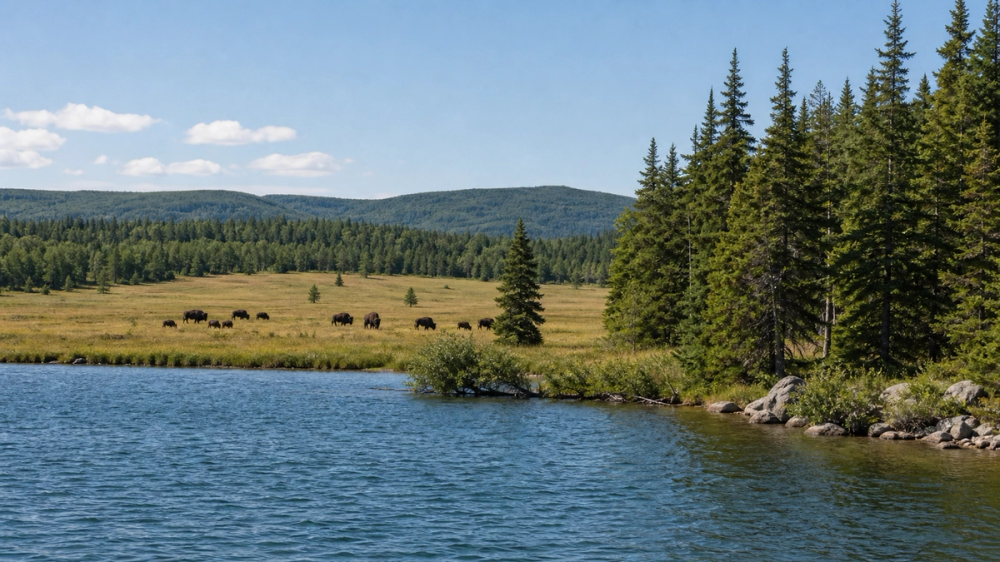
Outside town, networks of trails and gravel roads lead into forest, wetlands, and open grasslands. One of the park’s signature experiences is the Lake Audy Bison Enclosure, a 582-hectare drive-through reserve where a managed herd of about 40 plains bison roams native prairie. You can often watch them from your car or from a viewing area near the lake, their dark shapes moving through tall grass with Clear Lake country as a backdrop. Elsewhere, hiking trails range from short lake loops to longer routes into the backcountry, and the park’s status as part of a UNESCO Biosphere Reserve hints at how much wildlife – from black bears and elk to wolves and owls – hides in the forest.
Wasagaming offers campgrounds, cabins, hotels, and full services, which makes Riding Mountain an easy place to settle in for a few days rather than sprint through. A perfect day might start with coffee and a boardwalk walk, continue with a hike or bike ride into the hills, include an afternoon swim at Clear Lake, and end with a drive out to Lake Audy at golden hour to see bison grazing as the sun drops.
Canoe, hike and visit sacred petroforms in Whiteshell Provincial Park
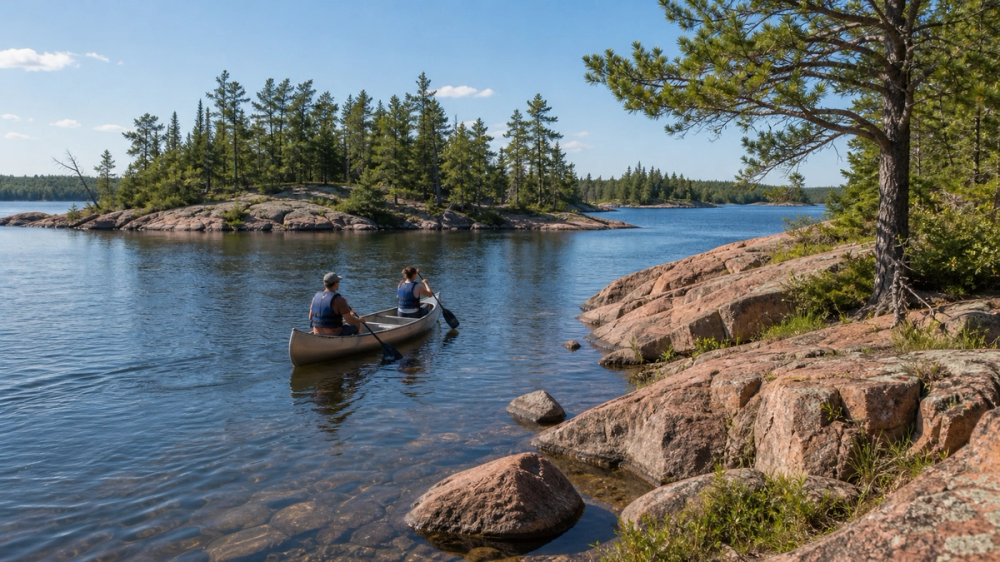
Eastern Manitoba’s Whiteshell Provincial Park is nearly 2,800 km² of Canadian Shield: pink granite ridges, jack pine and spruce forest, bogs, and more than 200 lakes and rivers. It’s the kind of landscape where you can paddle all day and still end up in sight of the same rocky shoreline, or hike out to a lookout and feel like the forest and water go on forever. Classic experiences include swimming or diving in West Hawk Lake, the province’s deepest lake, formed by a meteorite impact, and paddling the Caddy Lake canoe route, where you slip through railway-blasted rock tunnels connecting shield lakes.
For a quieter, more contemplative stop, follow the short forest walk to Bannock Point Petroforms, where stones laid flat on bedrock form outlines of turtles, snakes, humans, and abstract patterns. These petroforms are ancient Indigenous creations, believed to be up to 1,500 years old in Manitoba, and are considered a sacred teaching and healing place by Anishinaabe and other First Nations. Guided walks with park interpreters are often available in summer and help you understand the symbolism and protocols around visiting respectfully.
Further north, near the town of Pinawa on the edge of the park, the Pinawa Suspension Bridge offers an easy mini-adventure: a 54-metre-long, 1-metre-wide pedestrian bridge over the Pinawa Channel, reachable by a short trail from the Alice Chambers Trail system. It’s an easy add-on to a day of paddling or hiking, and gives you classic shield views of water slipping between rocks and forest pressing in from both sides.
Walk Manitoba’s “desert” at Spirit Sands in Spruce Woods
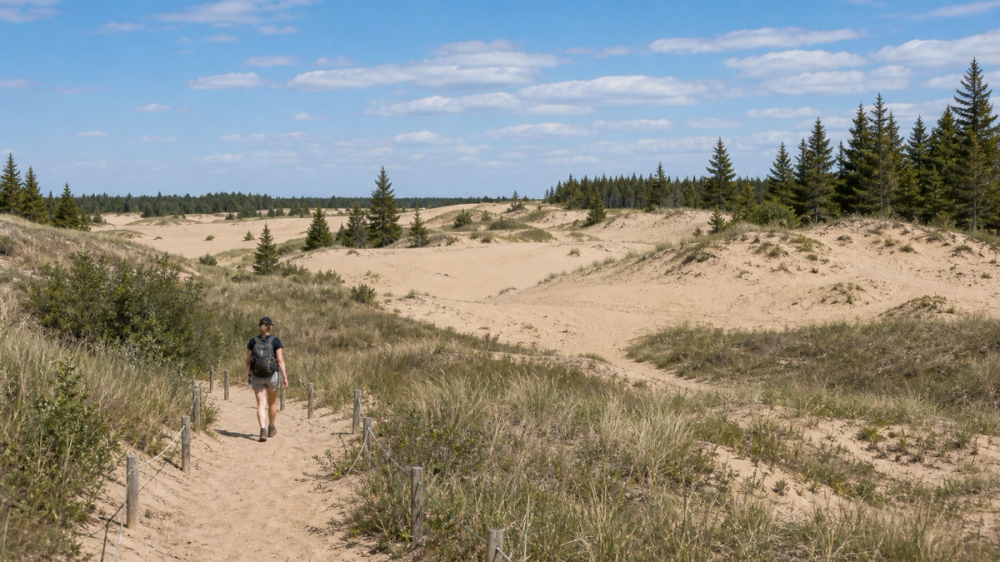
A couple of hours west of Winnipeg, Spruce Woods Provincial Park holds one of Manitoba’s strangest landscapes: the Spirit Sands, a four-square-kilometre area of open sand dunes rising up to 30 metres above the surrounding prairie. These dunes are remnants of an ancient Assiniboine River delta into glacial Lake Agassiz, not a true desert, but wind-patterned sand, hot summer temperatures, and patches of cactus make it feel like you’ve stepped a long way from the nearest grain elevator.
The Spirit Sands self-guiding trail is an easy-to-moderate 6.5 km loop that passes through mixed-grass prairie, parkland forest, and the open dunes, with boardwalks and stairs leading up to viewpoints over rippling sand and scattered jack pines. An offshoot leads to the Devil’s Punch Bowl, a 45-metre-deep, spring-fed depression where blue-green water collects at the bottom of steep sandy slopes, creating a cool little oasis in the middle of the hot sand. The area is home to unusual species for Manitoba, including northern prairie skinks (the province’s only lizard), western hognose snakes, and two species of cactus, all clinging to this pocket of sand and heat.
Spruce Woods is also Manitoba’s first designated Dark-Sky Preserve, meaning night lighting is controlled and stargazing is excellent once the sun drops. The park’s Kiche Manitou campground and yurts, about 180 km from Winnipeg, make it easy to turn a dune hike into a full weekend of camping, river walks along the Assiniboine, fishing, and night-sky watching.
Follow northern rivers between Pisew Falls and Kwasitchewan Falls
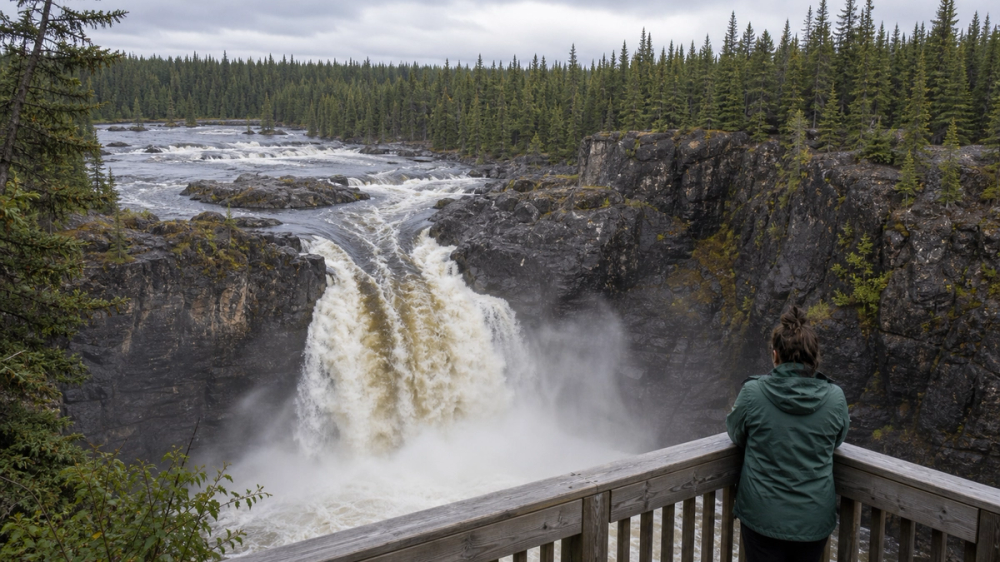
In northern Manitoba, off Highway 6 about 70–75 km south of Thompson, Pisew Falls Provincial Park showcases one of the province’s biggest waterfalls, where the Grass River drops about 13 m into a tight gorge and changes direction. Short boardwalks from the parking lot lead to viewing platforms where you can watch water slam through the gap and feel the spray drifting up on windy days. It is a sharp reminder that Manitoba’s north is anything but flat.
From a nearby trailhead, a more serious route heads downstream to Kwasitchewan Falls, at about 14.2 m the tallest waterfall in the province. The Pisew–Kwasitchewan trail is variously listed as 22–29 km return, depending on route and measurement, but in all cases you are talking about a full day or overnight hike through boreal forest, over roots and rocks, with multiple viewpoints of rapids and the falls themselves. Backcountry campsites at the far end let you split the trip into two easier days and fall asleep to the sound of water pounding over rock.
Getting here is part of the commitment: the trailhead is about seven to eight hours’ drive north of Winnipeg, down a long run of Highway 6, which keeps crowds low and gives the whole area a pleasantly end-of-the-road feel. This is a trail for people who are happy to carry real packs, follow flagging through forest, and accept that their reward will be solitude and a waterfall that feels genuinely earned.
Taste the North and see polar bears underwater in Winnipeg
Winnipeg sits where the Red and Assiniboine Rivers meet, and the city’s best introduction is The Forks, a National Historic Site turned modern gathering place. In the old rail yards and warehouses you now get indoor markets, independent food counters, craft beer, and small shops; outside, riverwalks, skate trails in winter, public art, and patios make it easy to drift between snacks and viewpoints without any kind of plan. It’s been a meeting point for thousands of years, and that sense of people coming and going still lingers when you look out across the confluence.
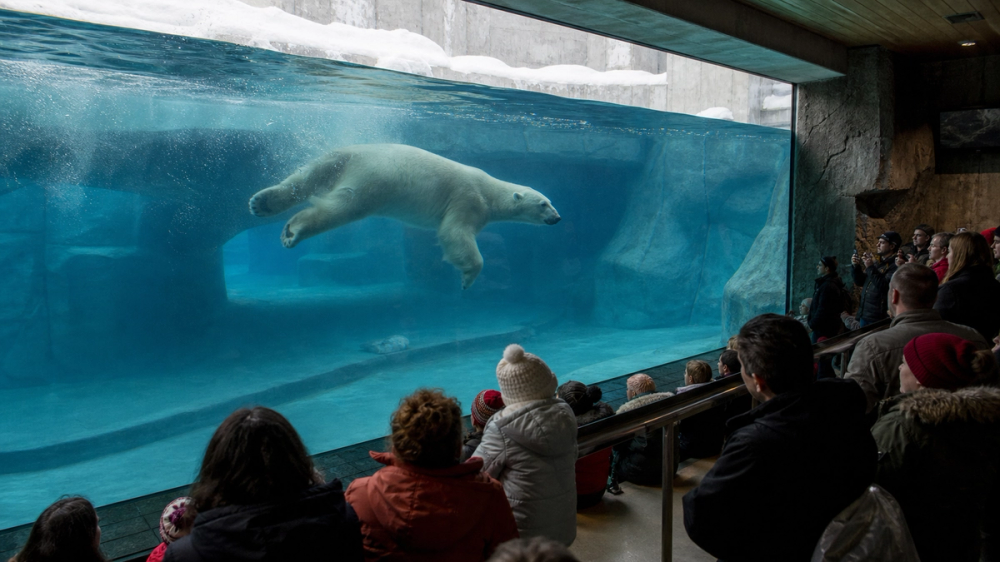
At one end of The Forks rises the glass-and-stone form of the Canadian Museum for Human Rights, Canada’s first national museum outside Ottawa. Inside, 10 core galleries use architecture, multimedia, and interactive displays to explore Indigenous rights, the Holocaust, Canadian and global human rights struggles, and contemporary issues, with a focus on provoking reflection rather than just presenting artifacts. Across the Assiniboine River in Assiniboine Park, the Assiniboine Park Zoo is home to the award-winning Journey to Churchill exhibit, widely described as one of the most comprehensive northern-species zoo exhibits in the world. Here, you can walk through underwater tunnels as polar bears and seals swim above you, wander through habitats for muskoxen, Arctic foxes, wolves, snowy owls and caribou, and sit in a 360-degree Aurora Borealis Theatre that simulates northern lights.
If you want to go deep, the zoo offers a Canadian Signature Experience tour of Journey to Churchill, a 90-minute guided visit that includes behind-the-scenes time with animal-care staff and a closer look at how conservation and climate stories are woven into the exhibit. Between The Forks, the museum, and the zoo, you can easily fill two or three Winnipeg days without ever feeling like you’re “just killing time between nature stops.”
Eat around the world in two weeks at Folklorama

Every August, Winnipeg throws one of the planet’s longest-running multicultural parties: Folklorama. Over two weeks, more than 40 country- or culture-themed pavilions pop up in schools, halls, and community centres across the city, each one offering food, drink, music, dance, and cultural displays specific to a particular heritage community. The festival has been running for over 50 years – the 54th edition featured 43 pavilions – and bills itself as the world’s longest-running multicultural festival.
You might spend one evening at a Ukrainian pavilion eating perogies and listening to folk ensembles, the next at a Caribbean pavilion with jerk chicken and soca, and the night after that at a Filipino, Irish, Indian, or Métis pavilion, each with their own performances and decor. Pavilions are split so that half run in the first week and half in the second, encouraging people to pace themselves and sample widely. Festival passports and bus tours make it easier to hop between venues without worrying about navigation or parking.
Folklorama is more than a collection of food stalls and stages: for many Manitobans it’s a yearly ritual and an expression of how diverse communities have shaped Winnipeg. If your trip coincides with the festival – in 2026 it runs roughly August 1–14, with exact dates to be confirmed – it’s worth rearranging your schedule so you can spend a couple of evenings “travelling” between cultures without ever leaving city limits.
Walk beaches and join Vikings at Gimli’s Icelandic Festival
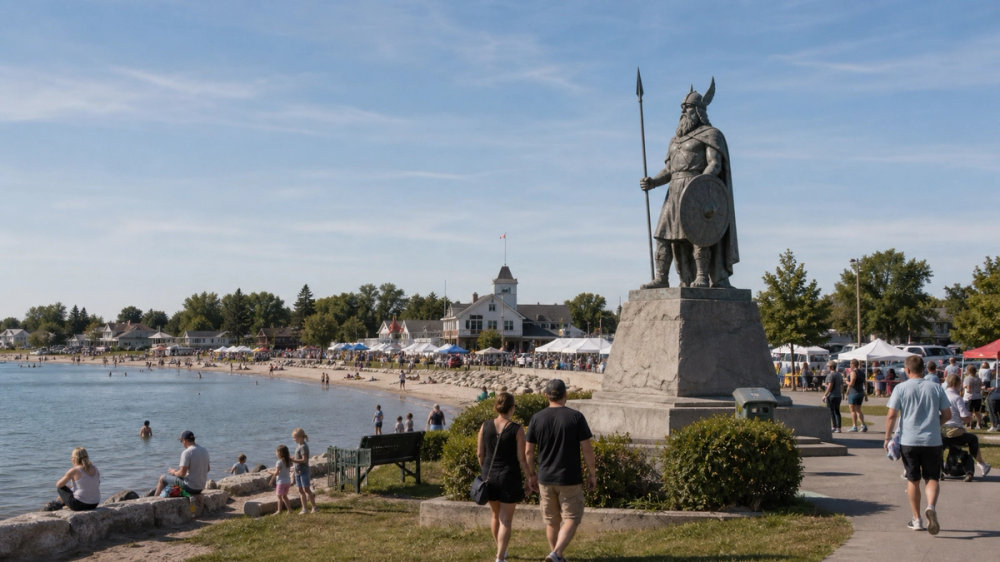
On the west shore of Lake Winnipeg, about 85 km north of Winnipeg, the lakeside town of Gimli combines long beaches, a busy harbour, and a strong Icelandic heritage that surfaces most vividly every August long weekend. Íslendingadagurinn, the Icelandic Festival of Manitoba, has been held here since 1932 and traces its roots back over 130 years, making it one of the oldest continuous ethnic festivals in North America.
During the festival, the waterfront and streets fill with live music, food vendors, sporting events, art and craft markets, and a full Viking Village where re-enactors in period dress demonstrate crafts, combat, and daily life. There are sandcastle competitions and beach volleyball on the shore, a midway, traditional Icelandic foods, and formal ceremonies honouring Icelandic and Icelandic-Canadian culture. In 2026, the 137th Icelandic Festival is scheduled for July 31–August 3, again wrapped around the August long weekend.
Outside festival days, Gimli is a relaxed beach town: people fish off the pier, families swim and paddleboard in Lake Winnipeg’s shallow waters, and the town’s Viking statue keeps watch over it all from near the harbour. Small galleries, cafés, and lakeside paths make it easy to drift through an afternoon, and sunsets over the lake can be quietly spectacular.
Watch tens of thousands of snakes emerge at Narcisse Snake Dens
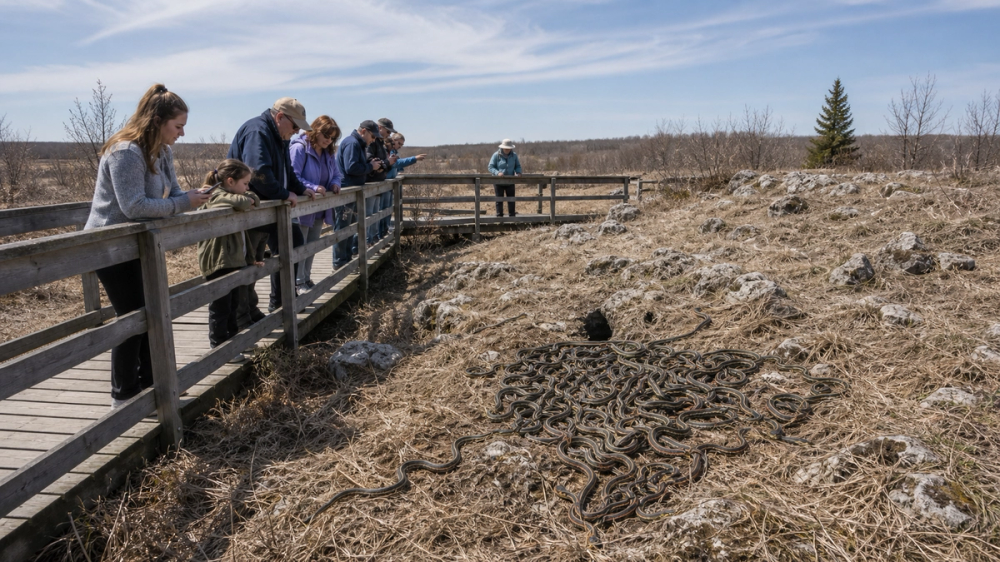
About 130 km north of Winnipeg, near the centre of the Interlake region, a set of limestone sinkholes hides one of the world’s most unsettling and fascinating wildlife events. Each spring, at the Narcisse Snake Dens, tens of thousands of red-sided garter snakes emerge from underground hibernation sites and coil together in writhing mating balls before dispersing into the surrounding prairie for summer. The site is widely described as the largest concentration of snakes in the world, with estimates of 75,000–150,000 garter snakes in the overall population and roughly 35,000 in some individual dens.
A 3 km loop trail with boardwalks and viewing platforms takes you past several main dens, where, in peak season, the ground can seem to move as piles of snakes slide over rocks and each other. Interpreters and signage explain what you’re seeing and how this unlikely aggregation depends on the specific geology and climate of the area. For those who are comfortable, you can sometimes gently pick up individual snakes near the trail under staff guidance; for the snake-averse, the experience is still worth it from a safe distance.
The spectacle typically peaks in late April through May, depending on the year’s weather, with snakes returning underground by early summer as temperatures rise. It’s an easy day trip from Winnipeg, but it feels like something you should have had to travel much further to witness.
Related travel guides:
Page details
Author: Thomas Tremblay
Updated: June 22, 2026
Last reviewed: June 22, 2026
Sources verified: June 22, 2026
Cite this page: Canooq.ca, Manitoba Bucket List: 10 Unmissable Things to Do, https://www.canooq.ca/travel/manitoba-bucket-list
Canooq content is educational and may include affiliate or referral links. It is not financial, tax, legal, immigration, employment, mortgage, real estate, or healthcare advice. Verify official sources and provider terms before acting.
Enjoy Canooq? Let us keep helping you — make Canooq a preferred source on Google.