Saucisson, Cheese and Wine: What You Can Actually Bring From France to Canada

August 13, 2026
Saucisson, cheese, wine and foie gras at the Canadian border: what clears customs, what gets seized, the $20 cheese value limit, and the $1,300 penalty for not declaring.
What's on this page
Canada lets French travellers bring wine within the personal exemption and cheese within a small value limit, treats charcuterie as a live animal health question that changes with EU outbreaks, and penalises undeclared food regardless of whether it would have been allowed.
The suitcase question comes up in every French expat group before the flight to Montreal, Toronto or Vancouver. Two bottles of Chablis, a wedge of Comte from the market, the saucisson sec your uncle cured himself, a jar of foie gras for the first Christmas away. Some of it will clear Canadian customs without a word. Some of it will be taken from you at the counter, and one category can cost you a four-figure penalty on top of losing the food.
Three separate authorities decide what happens to the food in your bag. The Canadian Food Inspection Agency sets the animal and plant health rules, the Canada Border Services Agency enforces them at the border and collects duty, and Global Affairs Canada controls the dairy quota that makes cheese expensive above a small threshold. They do not always say the same thing in the same place, which is why the rules feel contradictory when you search for them.
Declare everything, without exception
Every food, plant and animal product goes on your declaration, whether or not you think it is allowed. That includes the cheese in your hand luggage, the sandwich you did not finish on the plane, the herbs from your grandmother's garden and the dog food in the hold. You declare on the CBSA declaration at a kiosk, in the Advance Declaration app or verbally to the officer.
Declaring a product that turns out to be prohibited costs you the product. Not declaring it is what triggers a monetary penalty, and CFIA sets those penalties for undeclared food, plant and animal products at up to $1,300. A forgotten apple is the classic example, and border officers hear that explanation every day.
Wine and other alcohol
Alcohol is the simplest category. After an absence of 48 hours or more, an adult of legal drinking age in the province of arrival can bring in one of the following free of duty and taxes under the personal exemption: 1.5 litres of wine (two standard bottles), 1.14 litres of spirits, or 8.5 litres of beer (about 24 cans of 355 ml). The rules are set out on the CBSA alcohol page.
You can bring more than that. You simply pay duty, federal tax and the provincial liquor board markup on the excess, and you declare it. The markup is what surprises people: in most provinces it is charged per litre and it can easily exceed the price you paid for a mid-range bottle in France. Provinces also set their own absolute import limits, so a case of Bordeaux is a conversation with the officer, not a formality.
- Two bottles per adult is the practical answer for most flights.
- A couple travelling together each get their own exemption, so three litres between two adults.
- Age matters at the point of arrival: 18 in Alberta, Manitoba and Quebec, 19 everywhere else.
- Duty-free bought after security still counts toward the exemption.
Cheese: allowed, but the value limit is tiny
Dairy from France is admissible for personal use, and this is where most people are caught out. Cheese sits under a tariff rate quota, and a traveller without an import permit is limited to 20 kilograms and CAD $20 of value per person. Twenty dollars buys very little Comte. Above that threshold the over-quota rate applies, and for cheese it runs to 245.5 percent of the value, with a minimum charge per kilogram. Global Affairs Canada publishes the cheese import controls.
In practice the officer often waves through a single wedge for personal consumption. That is discretion, not entitlement. If you are moving with a cooler full of raw-milk cheese, expect the value calculation to be made properly.
Raw-milk cheese adds a second layer. Canada permits raw-milk cheese aged 60 days or more, which covers Comte, Beaufort, Cantal and most hard mountain cheeses. Soft raw-milk cheeses such as a young Camembert au lait cru or an Epoisses fall outside that rule, and a soft raw-milk cheese is the one most likely to be refused on inspection rather than on value.
Saucisson, jambon and the meat problem
Meat is the category that ends badly. Canada restricts personal imports of meat and meat products according to the animal health status of the country of origin, and those decisions change whenever an outbreak is reported in Europe. African swine fever, foot-and-mouth disease and avian influenza have each closed and reopened routes from EU member states in recent years. A saucisson that was admissible last winter can be refused this summer with no change in the packaging.
There is only one reliable way to check: the Automated Import Reference System, known as AIRS. It is CFIA's live decision tool. Choose the product, the origin country and the end use, and it returns the current requirement. Run it in the week before you fly, not the month before.
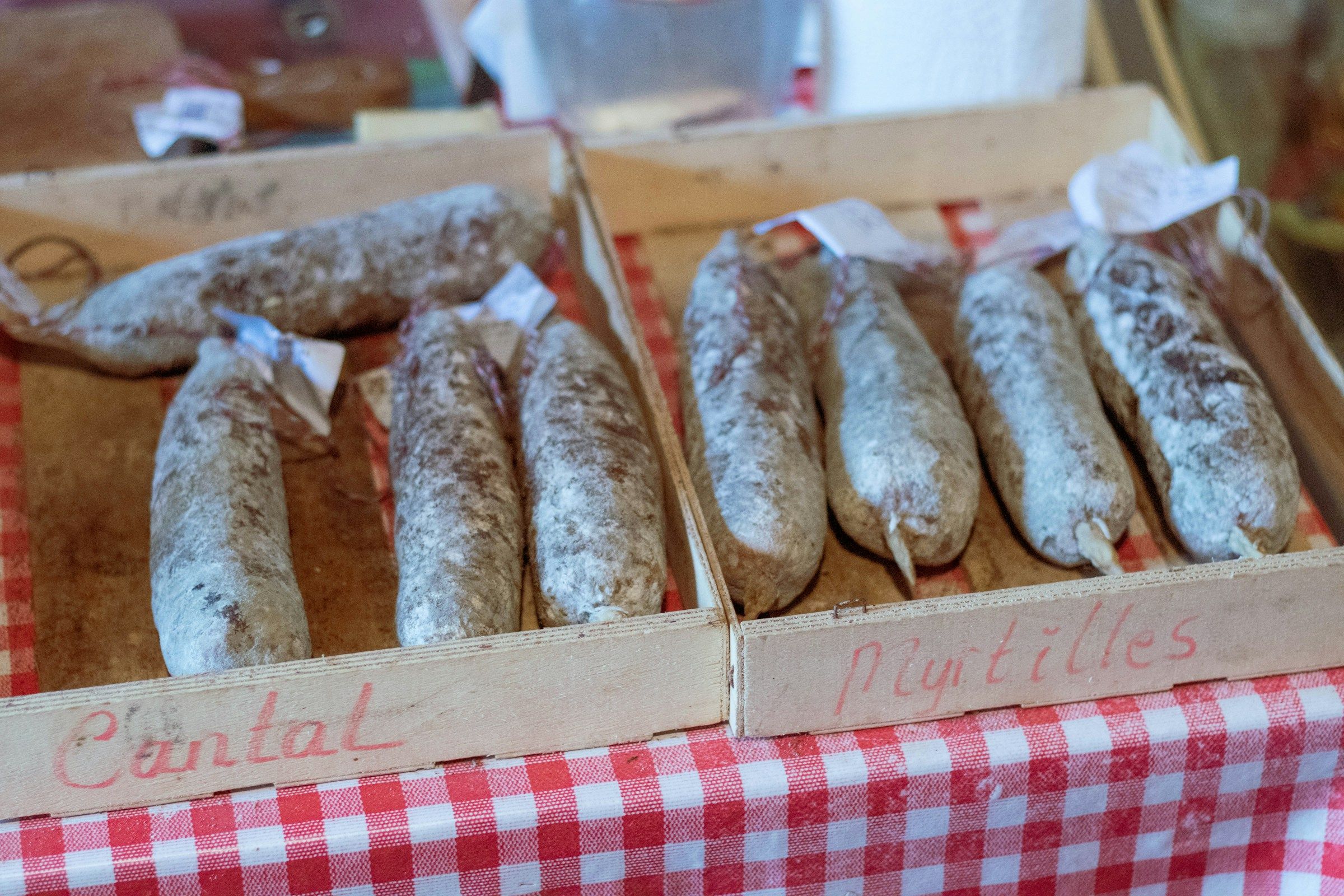
- Cured pork such as saucisson sec, jambon de Bayonne and rosette: usually the highest-risk item in the bag, and frequently refused. Confirm in AIRS before packing it.
- Foie gras and other poultry products: subject to avian influenza restrictions on French poultry, which have been reimposed repeatedly. Commercially canned and shelf-stable product has the best chance, but the AIRS decision still governs.
- Pate and rillettes in cans or jars: treated as a meat product, not as a grocery item. The same rules apply.
- Home-cured anything: no label, no establishment number, no chance. Leave it in France.
The honest summary is that charcuterie is the one thing worth eating before you get on the plane. If it matters enough to risk, carry the commercial packaging with the establishment number visible and declare it. The officer keeps the product, and that is the end of it. Hide it and the penalty starts.
What travels without trouble
Most of the pantry is fine. Shelf-stable, commercially packaged, plant-based and clearly labelled is the profile that clears every time.
- Chocolate, biscuits, confiserie and any packaged sweets.
- Coffee, tea, and herbes de Provence or other dried herbs and spices.
- Mustard, cornichons, vinegar, oil, jam, honey in commercial packaging, canned vegetables and tinned fish.
- Baked goods without meat or cheese filling, including the baguette you could not bear to throw away.
- Dried pasta, rice, flour and sugar, subject to a 20 kg per person limit on most bulk foods.
Fresh fruit, fresh vegetables, plants, cuttings, seeds and soil are a different matter. Fresh produce is assessed for pests, and the answer varies by product and season. Nothing with soil on it should be in your bag.
The three questions to answer before you pack
- Is it an animal product? Meat, poultry, dairy and eggs are the controlled categories. Run each one through AIRS.
- Is it commercially packaged and labelled? Labels with an establishment number and a country of origin give the officer something to work with. Unlabelled food is judged on suspicion.
- Would you rather lose it than declare it? If yes, do not bring it. That instinct is what turns a confiscation into a penalty and a note on your file.
If you are moving, not visiting
A permanent move changes the arithmetic. Settlers moving to Canada get a broader exemption on household goods, but it applies to belongings, not to food, and none of it overrides the CFIA rules. Your energy is better spent on the paperwork than the pantry. The documents to bring to Canada checklist covers what actually needs to be in the hand luggage, and the guide for people moving from France covers permits, banking and the first weeks.
For the rest of the move, the relocation cost estimator puts a number on flights, deposits and setup costs, and the weather and packing guide is more useful in January than any amount of cheese.
One consolation for anyone giving up a suitcase of charcuterie: Quebec has a serious cheese industry with hundreds of artisan producers, and raw-milk cheese is legal to make and sell in Canada. The Comte will be missed. The habit does not have to be.
Frequently asked questions
Can I bring cheese from France to Canada?
Yes, for personal use, within a limit of 20 kilograms and CAD $20 of value per person before over-quota duty applies. Raw-milk cheese must be aged at least 60 days, which excludes young soft cheeses such as a Camembert au lait cru.
Is saucisson allowed into Canada?
It depends on the current animal health status of France for the relevant species, which changes. Cured pork is frequently refused. Check the exact product in CFIA's Automated Import Reference System in the days before you fly, and declare it either way.
How much wine can I bring into Canada?
After 48 hours outside Canada, an adult of legal drinking age in the arrival province can bring 1.5 litres of wine free of duty and taxes. More is allowed if you declare it and pay the duty, tax and provincial markup.
What happens if I do not declare food?
Undeclared food, plant and animal products can carry a penalty of up to $1,300, and the product is still seized. Declaring a prohibited item costs you only the item.
Does duty-free alcohol count toward my limit?
Yes. Alcohol bought in an airport duty-free shop counts toward the same personal exemption as alcohol bought anywhere else.
Sources
Related articles:
Page details
Author: Thomas Tremblay
Updated: August 13, 2026
Reviewed by: Canooq Editorial
Last reviewed: August 13, 2026
Sources verified: August 13, 2026
Cite this page: Canooq.ca, Saucisson, Cheese and Wine: What You Can Actually Bring From France to Canada, https://www.canooq.ca/blog/bringing-food-from-france-to-canada
Canooq content is educational and may include affiliate or referral links. It is not financial, tax, legal, immigration, employment, mortgage, real estate, or healthcare advice. Verify official sources and provider terms before acting.
Enjoy Canooq? Let us keep helping you — make Canooq a preferred source on Google.