12 Ways to Tell If You’re Really Buying Canadian — and Avoid U.S.-Made Products

August 25, 2026
Twelve regulated claims, certification marks and manufacturing codes can help you find Canadian food, products, workers and businesses.
What's on this page
Canadian origin can be verified rather than guessed. The strongest food claims are 100% Canadian and Product of Canada; Made in Canada only means the last substantial transformation happened here. The Blue Cow certifies 100% Canadian milk, VQA certifies 100% Ontario grapes, and the CCBA Independent Craft Seal certifies an independent Canadian brewer. For non-food goods the Competition Bureau requires 98% of direct costs for Product of Canada and 51% for Made in Canada. A VIN starting with 2 means Canadian assembly, the three characters after DOT on a tire identify the plant, a CA number identifies the responsible Canadian business on a garment, and a .ca domain proves Canadian presence but not Canadian ownership.
There is probably a package in your kitchen with a maple leaf on it even though it was made far from Canada. The leaf needs no approval or audit. A designer can add one to a box in an afternoon.
That makes buying Canadian harder than it should be. Companies know a maple leaf can earn our patriotic goodwill without changing a supply chain. Canada has given us better clues: federal labelling rules, farmer-run certification marks, appellation law, textile registries and stamped manufacturing codes. I started looking for them on my own groceries, and now I see them everywhere.
I use one rule in every aisle:
Each item below is a code, regulated claim or certification with an owner who can revoke it. Learn the six that fit your shopping habits and you can check a package in seconds.
Food: start with the regulated words
The Canadian Food Inspection Agency regulates three origin claims, each with its own standard. CFIA guidance sets out the differences for shoppers and food companies.
What each food origin claim promises
Source: Canadian Food Inspection Agency, origin claims on food labels.
| Claim | What it requires | How much to trust it |
|---|---|---|
| 100% Canadian | The food or ingredient must be entirely Canadian. | The strongest claim on a Canadian food label. |
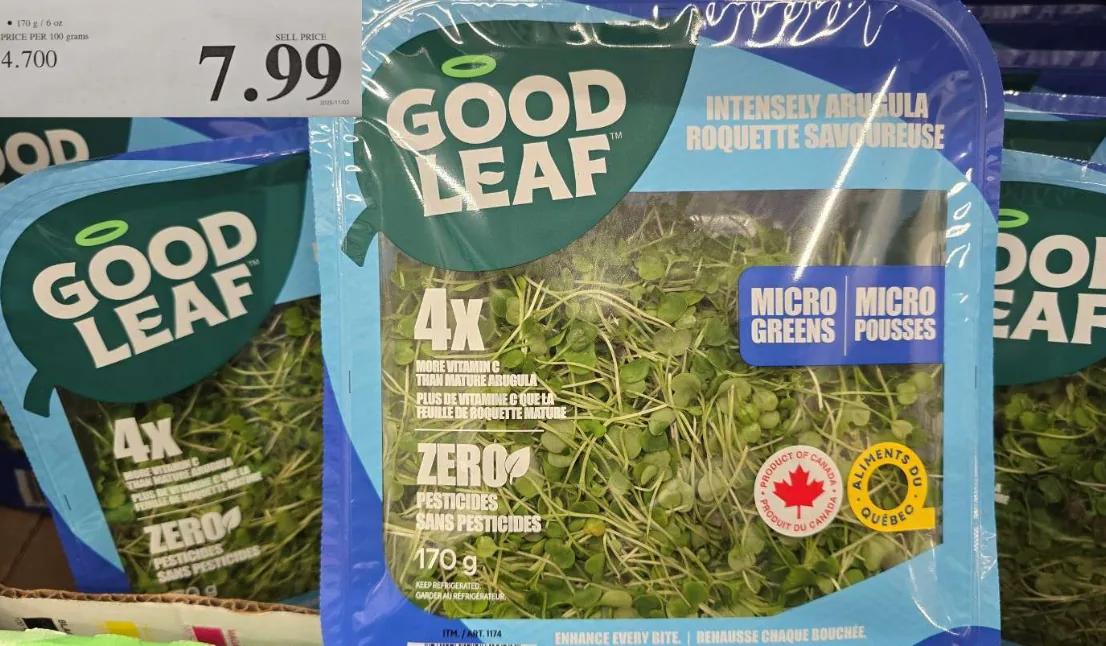
| Product of Canada | All or virtually all ingredients, processing and labour are Canadian. Up to roughly 2% may be non-Canadian, generally for ingredients not produced here. | Very strong. This is the one to look for in practice. |
| Made in Canada | The last substantial transformation happened in Canada. Must carry a qualifying statement such as made in Canada from imported ingredients. | The claim covers where the work happened. Read the qualifier for ingredient origin. |
| A maple leaf on its own | A decorative graphic with no origin standard. | Look for a regulated claim beside it. |
Read the qualifying statement beside the flag. Made in Canada from imported ingredients still means Canadian processing and Canadian jobs, while the ingredients came from elsewhere. I give Product of Canada the edge when both options sit on the shelf.
CFIA issued a notice to industry in March 2025 reminding companies that false origin claims break Canadian food law. That notice exists because the patriotic buying wave created an incentive to stretch the truth. Assume some of it is still stretched.
Dairy: the Blue Cow is the best mark in the Canadian grocery store
The Dairy Farmers of Canada Blue Cow is a licensed certification mark reserved for products made with 100% Canadian milk and milk ingredients.
This matters more than people realize, because milk ingredients hide. Modified milk ingredients, milk protein concentrate and butter oil can come from anywhere, and none of that is obvious from the front of a yogurt tub or a bag of shredded cheese. The Blue Cow settles it in one glance.
The processor can be Canadian or multinational as long as it uses Canadian milk in a Canadian plant. I look for the Blue Cow because it sends my grocery dollars to Canadian dairy farms, regardless of the corporate name on the tub.
Eggs: the EQA mark, with an honest caveat
The Egg Quality Assurance mark, launched by Egg Farmers of Canada in 2019, certifies that eggs meet the Start Clean-Stay Clean food safety program and the national Animal Care Program.
EQA certifies food safety and animal care rather than origin. Canadian regulated egg farms run the programs behind it, so shoppers see the mark on Canadian eggs. I find that more useful in the refrigerated aisle than trying to trace the owner of a national egg brand.
Meat: read the stamp, and know its limits
Federally registered meat carries an inspection legend with an establishment number identifying the last CFIA-licensed establishment that processed it. The establishment number is traceable to a real plant.
CFIA also publishes a searchable list of foreign establishments eligible to export meat to Canada. The database helps butchers more than hurried shoppers. For certainty about where an animal was raised, I buy from a butcher who can name the farm.
Wine: VQA is a law, and the label you are looking for changed in 2018
A bottle can look aggressively Canadian and be mostly foreign wine. The protection against that is VQA. Under VQA Ontario rules, 100% of the grapes must be grown in Ontario. If the label names an appellation, a varietal or a vintage, at least 85% of the wine must match that claim.
Many guides still use an outdated label. Cellared in Canada is no longer the label to watch for. Since March 2018, blended wine made from imported and domestic content must either list every country in the blend or carry the wording International blend from imported and domestic wines, or International blend from domestic and imported wines depending on which dominates. Wine Growers Canada documents the change. In Ontario, an international domestic blend can be up to 75% imported wine with a minimum of 25% Ontario grapes.
So the aisle rule is simple. VQA means all Ontario grapes. International blend means up to three quarters of what is in that bottle came from somewhere else, sold under a label designed to look local. Both are legal. Only one is Canadian wine.
Beer: the Independent Craft Seal
A rustic can with mountains and a leaf on it tells you a design agency was involved. The Canadian Craft Brewers Association Independent Craft Seal tells you the beer is 100% owned by the licence holder and brewed by that brewery or by another member brewery. That is the difference between a small independent Canadian brewer and a craft-styled brand owned by a global conglomerate.
Breweries pay an annual fee to license the seal, so some independent Canadian breweries skip it. When I see the seal, I know the beer meets the association's ownership and brewing rules.
Non-food goods: the gap between 98% and 51%
For consumer goods outside the food category, the Competition Bureau sets the thresholds, and they are much blunter than most shoppers expect.
Origin claims on non-food consumer products
Source: Competition Bureau Canada enforcement guidance.
| Claim | Minimum Canadian share of total direct costs | Other conditions |
|---|---|---|
| Product of Canada | 98% | Last substantial transformation in Canada. No qualifying statement required. |
| Made in Canada | 51% | Last substantial transformation in Canada, plus a qualifying statement such as made in Canada with imported parts. |
Made in Canada starts at 51% of direct costs. Product of Canada starts at 98%. When two similar products sit on a shelf, I choose Product of Canada because those labels can represent a 47-point difference in Canadian content.
Clothing: the CA number hidden in the seam
This is the most obscure item on the list and my personal favourite. Under the Textile Labelling and Advertising Regulations, a consumer textile article must carry the dealer's full name and address, or a CA Identification Number. It is the letters CA followed by five digits, usually tucked inside the care label.
Only Canadian manufacturers, processors, finishers, importers or sellers can register one, for a one-time $100 fee. The number identifies the Canadian business legally responsible for the label. The garment itself may have been manufactured anywhere.
I use the CA number as a first-pass filter. A Canadian-sounding brand with a moose in the logo should also show a Canadian address or a registered number.
Cars: the first digit of the VIN
Every vehicle sold in North America carries a 17-character VIN, and the first character encodes where it was built.
VIN first character
The first three characters are the World Manufacturer Identifier. The first alone gives you the country of assembly.
| First character | Built in |
|---|---|
| 2 | Canada |
| 1, 4 or 5 | United States |
| 3 | Mexico |
| J, K, L, S, W, V, Y and others | Japan, Korea, China, UK, Germany, France, Sweden and so on |
A Toyota or Honda with a VIN starting with 2 came from Canadian workers in an Ontario plant. A Ford or Chevrolet starting with 1 came from a U.S. assembly line. I check the VIN when I want my purchase to support Canadian manufacturing jobs, because the badge on the grille cannot answer that question.
Tires: your car might be Canadian. What about the four things touching the road?
Every tire carries a Tire Identification Number moulded into the sidewall after the letters DOT. Under 49 CFR 574.5, the plant code is the first group of the TIN and the last four digits are the week and year of manufacture.
Two details make this usable. The plant code is three symbols on tires made after April 13, 2025, when the three-symbol format became mandatory. Older tires may still carry a two-symbol code, and the replacement three-symbol codes were created by putting a 1 in front of the old two-symbol ones. So on a set of tires bought this year, the three characters right after DOT identify the exact factory.
Canada has real tire plants. Michelin runs three in Nova Scotia, at Bridgewater, Waterville and Granton, employing close to 4,000 people. Bridgestone has been building tires in Joliette, Quebec since 1966 and has committed roughly $300 million to expanding it. Two visually identical tires of the same brand and model can come from different continents, and the sidewall is the only place that tells you which.
Ask the shop to check the DOT code on its stock before mounting the tires. I would rather choose the plant while the tires are still on the rack.
Payments: Interac is the Canadian one
Visa and Mastercard are American companies. Interac Corp. is Canadian, owned by Canadian financial institutions, and it runs the debit network every Canadian debit card already carries. Choosing Interac Debit at the terminal instead of a card that routes through an American network is a small shift per transaction and an easy one, because the card is already in your wallet.
Retailers: ask who keeps the margin
Canada does not make every product we need, including smartphones. On those purchases, I ask which retailer keeps the margin in Canada.
Home Hardware has been 100% dealer-owned since 122 independent Ontario retailers bought the business in 1964, and it supplies more than 1,000 independently operated stores from St. Jacobs, Ontario. Simons is a Quebec City retailer founded in 1840 and still family-owned, though it has been run by a non-family CEO since 2022. Empire Company is Canadian and owns Sobeys, which operates Safeway Canada, FreshCo, Foodland, IGA, Thrifty Foods, Farm Boy and Longo's.
A Canadian-owned store keeps the retail margin here even when the product is imported. On many household purchases, that margin makes a larger Canadian economic contribution than the product's manufacturing content.
Online: .ca confirms a Canadian presence
Registering a .ca domain requires meeting one of eighteen Canadian Presence Requirements set by CIRA: Canadian citizenship, permanent residence, Indigenous status, a Canadian corporation, a Canadian trademark and so on. CIRA does audit registrants and asks for documents.
A .ca domain tells me someone met a Canadian presence requirement. Canadian-incorporated subsidiaries of foreign companies qualify too, as Amazon.ca shows, so I check the company's ownership separately.
The whole thing on one card
What to look for, by aisle
Every entry here is a regulated claim, a certification mark with an owner, or a manufacturing code.
| Category | Look for | What it proves |
|---|---|---|
| Any food | 100% Canadian, or Product of Canada | Entirely, or virtually entirely, Canadian ingredients and labour |
| Dairy | The Blue Cow | 100% Canadian milk and milk ingredients |
| Eggs | The EQA mark | Canadian farm meeting national food safety and animal care standards |
| Meat | The inspection legend and establishment number | The plant where it was processed |
| Ontario wine | VQA | 100% Ontario-grown grapes, legally enforced |
| Beer | The Independent Craft Seal | Small, independent, Canadian-owned brewer |
| Household goods | Product of Canada beats Made in Canada | 98% of direct costs versus 51% |
| Clothing | A CA##### number on the care label | A registered Canadian business is responsible for the product |
| Cars | VIN starting with 2 | Assembled in Canada |
| Tires | The three characters after DOT | The exact plant that built the tire |
| At the till | Interac Debit | A Canadian payment network |
| Online | A .ca domain | A qualifying Canadian presence |
What your four-second check supports
These codes cover specific parts of a supply chain. A Product of Canada label cannot tell you where the delivery truck bought its fuel, and some certification programs charge companies a licence fee.
Few households can replace every U.S.-made product at once. I focus on the purchases I already make and use these checks to steer them toward a Canadian farm, plant, brewery, retailer or payment network. It takes about four seconds in the aisle, and a full grocery cart gives you plenty of chances to do it.
Bottom line
I buy Canadian by checking the small print: the Blue Cow, VQA, a CA number, an establishment number or the characters after DOT. Those marks tell me which Canadian workers, farmers and businesses my money can support.
Pick the six checks that match how you shop and keep them in mind on your next grocery run. Once you know where to look, the answer takes seconds.
Further reading
- How to identify Canadian food from CFIA, written for shoppers rather than for industry.
- Textile labelling requirements from the Competition Bureau, if you want the full CA number rules.
- Wine labelling in Canada for the international blend wording introduced in 2018.
- Canooq money tools for working out what a switch actually costs you.
Related articles:
Page details
Author: Thomas Tremblay
Updated: August 25, 2026
Reviewed by: Canooq Editorial
Last reviewed: August 22, 2026
Sources verified: August 22, 2026
Cite this page: Canooq.ca, 12 Ways to Tell If You’re Really Buying Canadian — and Avoid U.S.-Made Products, https://www.canooq.ca/blog/buy-canadian-codes-and-labels
Canooq content is educational and may include affiliate or referral links. It is not financial, tax, legal, immigration, employment, mortgage, real estate, or healthcare advice. Verify official sources and provider terms before acting.
Enjoy Canooq? Let us keep helping you — make Canooq a preferred source on Google.