Canada Investment Summit 2026: what Mark Carney announced in Toronto
Canada says its first Investment Summit produced nearly $500 billion in new commitments. See what the pension funds, banks, Bell and the federal government actually announced — and what still has to happen before that money turns into projects.

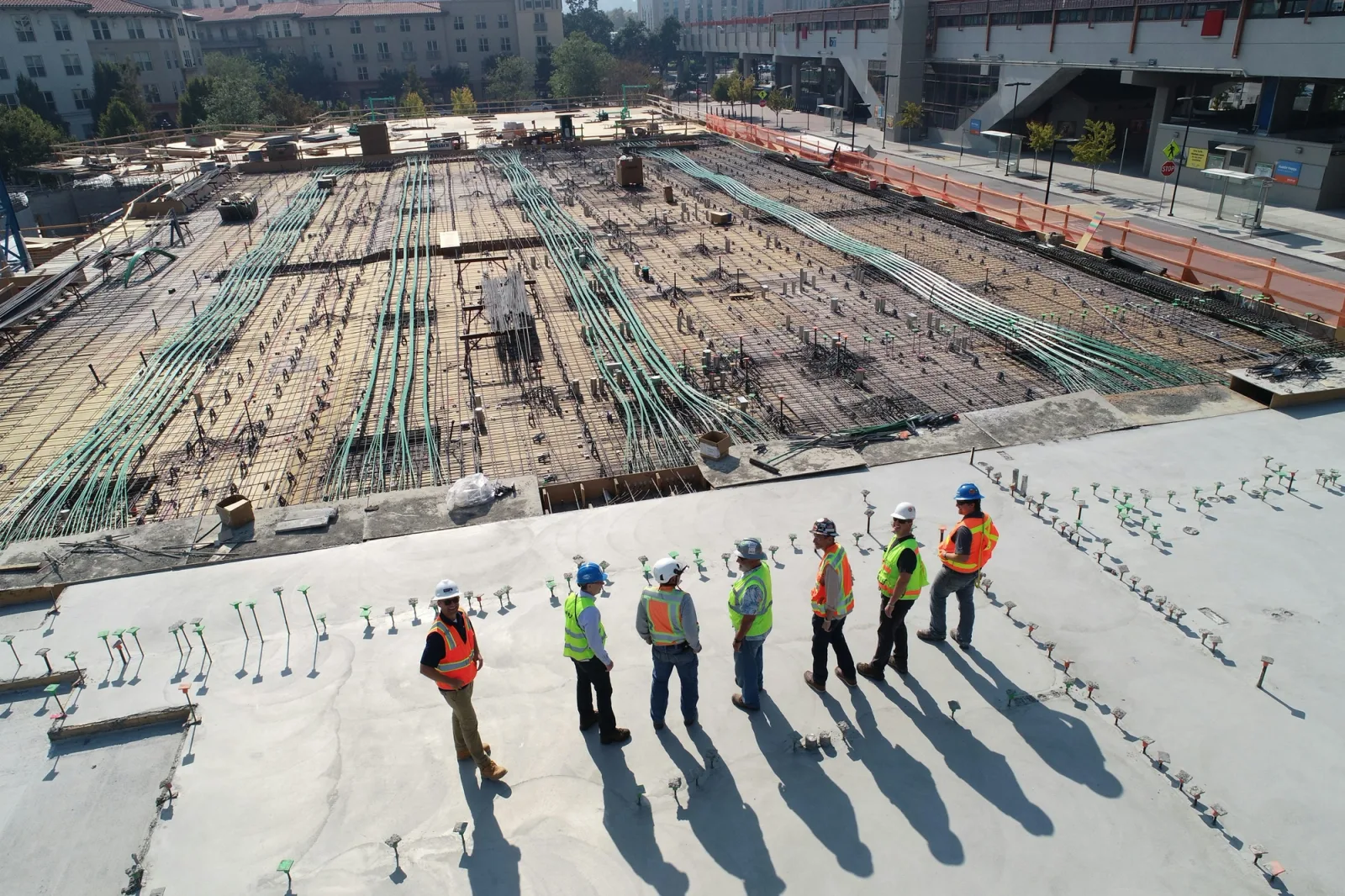
The federal government closed the first Canada Investment Summit with a very large number: nearly $500 billion in new investment commitments.
Prime Minister Mark Carney hosted the two-day summit in Toronto on September 14 and 15. It brought together investors from nearly 30 countries whose organizations manage more than $100 trillion in assets. The purpose was to persuade those investors to finance more Canadian companies, infrastructure and natural-resource projects.
The total announced combines several different things: money that pension funds and insurers intend to invest, financing that banks say they can provide, funds designed to attract additional investors and a $52.5 billion Bell project that still depends on customers, commercial agreements and regulatory approvals. The summit also produced new federal tax measures and plans to invite private investment into Canada's four largest airports.
What makes up the nearly $500 billion?
The federal government's closing announcement grouped the commitments into four main categories.
| Category | Headline amount | What it means |
|---|---|---|
| Pension funds, insurers and other institutional investors | Nearly $100 billion | Capital they intend to invest in Canadian assets over different time periods |
| Canadian banks | Nearly $325 billion | Loans, underwriting and other financing that may be available to qualifying companies and projects |
| Investment funds | More than $14 billion | Money the funds intend to invest or mobilize, sometimes with capital from other investors |
| Bell's Saskatchewan AI expansion | $52.5 billion | A proposed capital program that remains conditional on commercial demand, agreements and approvals |
The $50 billion Maple Fund is for very large Canadian projects
The largest new institutional initiative is the Maple Fund, created by CPP Investments and Brookfield Asset Management.
CPP Investments manages the money of the Canada Pension Plan. Brookfield is a large private investment manager. Under the new framework, each organization plans to make up to $25 billion of equity available over an initial five-year period, creating a combined capacity of up to $50 billion.
Equity is ownership money. If the fund invests equity in a project, it takes an ownership interest and shares in the potential gain or loss. That is different from a bank loan, which has to be repaid with interest.
The Maple Fund will look at Canadian infrastructure and strategic industries, with a particular interest in unusually large opportunities that could require more than $5 billion of equity.
It is not a $50 billion account that has already been assigned to named projects. CPP Investments and Brookfield describe it as a cooperation framework, and each organization will still assess and approve every investment independently. A proposal will have to make financial sense before pension money goes into it. (CPP Investments and Brookfield)
Other pension funds and insurers promised at least $40 billion more
The summit also brought commitments from PSP Investments, the Ontario Teachers' Pension Plan and Sun Life.
- PSP Investments expects to increase its Canadian investments by 30% to 40%. The federal government describes that as an additional $25 billion, taking PSP's Canadian investments to about $100 billion.
- Ontario Teachers' Pension Plan intends to invest an additional $10 billion in Canadian public and private markets by the end of 2027.
- Sun Life plans to invest $5 billion over five years in infrastructure such as digital technology, energy and transportation.
These organizations manage retirement and insurance money. They cannot simply place it wherever a government asks. Their managers still have to judge the risk and expected return of an investment.
PSP made that point directly. Its chief executive said the fund invested $10 billion in Canada during its last fiscal year because it found attractive opportunities, not because of a government instruction. The new commitment creates a target and more capacity to invest in Canada; it does not remove the normal investment tests. (PSP Investments)
The banks offered financing, not $325 billion of direct investment
Five Canadian banks announced commitments that the federal government values at nearly $325 billion.
| Institution | Commitment | Time period and focus |
|---|---|---|
| TD | $150 billion | Five years; energy, critical minerals, defence, aerospace, digital technology, AI and infrastructure |
| Scotiabank | More than $100 billion | Five years; Canadian companies and projects in sectors tied to the government's growth plan |
| BMO | $70 billion | 10 years; energy, transportation, mining, critical minerals, AI computing, defence and security |
| CIBC | $2 billion | Financing for small and medium-sized defence and dual-use businesses |
| RBC | Nearly $1.5 billion | Investment and capital mobilization for high-growth Canadian technology companies |
The summit’s bank commitments are financing capacity
Announced commitments · CAD billions
Rung bars · Government and company announcements, September 2026
Bank financing can include loans, credit facilities and help raising money through bonds or other securities. It is important because many expensive projects cannot proceed without debt.
But the announcements are not grants, and they are not promises that every applicant will be approved. A company still needs a viable project, acceptable risk and the ability to repay what it borrows. The money would also be deployed over several years rather than arriving at once.
TD, for example, calls its $150 billion announcement a five-year financing commitment. That makes the capital available for eligible activity in the named sectors; it does not identify $150 billion of completed transactions. (TD)
Radical Ventures and Power Sustainable added more than $14 billion
Two investment managers announced funds intended to support Canadian businesses and infrastructure.
Power Sustainable plans to invest and mobilize more than $10 billion for power grids, fibre networks, data infrastructure, environmental services and food supply chains.
Radical Ventures plans to invest and mobilize $4 billion through a new Radical Breakouts Fund for Canadian artificial intelligence companies that are ready to grow.
The word mobilize deserves attention. It can include the manager's own capital, money raised from other investors and financing attracted alongside the fund. It does not necessarily mean the manager has placed the entire headline amount into companies on day one.
The Radical fund is meant to address a familiar Canadian problem: a promising company can start here, then leave or sell to a foreign buyer when it needs much larger amounts of growth capital. A bigger domestic fund gives those companies another way to finance expansion while remaining based in Canada.
Bell's $52.5 billion Saskatchewan AI project is still conditional
Bell and the Government of Saskatchewan announced the largest single project associated with the summit: a proposed $52.5 billion expansion of the Bell AI Fabric.
Bell is already developing up to 300 megawatts of computing capacity in British Columbia. The Saskatchewan plan could add another 900 megawatts, creating a 1.2-gigawatt network of Canadian AI infrastructure. Bell and the federal government say the expansion could support more than 4,500 jobs across construction, operations and related services.
The project is about sovereign AI infrastructure. In plain language, that means the computers, data centres and networks used to train or run AI systems would be located in Canada and subject to Canadian laws.
The scale is enormous, but the project is not yet a guaranteed $52.5 billion build. Bell's agreement with Saskatchewan is non-binding. The expansion depends on customer demand, commercial contracts, permits, environmental assessments and the availability of power.
Bell says the data centres would use closed-loop cooling systems, which circulate water rather than continually drawing new water. That addresses one environmental concern, but the electricity requirements and the source of that electricity will still be central questions as individual sites are proposed. (Bell)
The Productivity Mega Deduction changes when businesses deduct investment costs
The most important federal policy announced at the summit may be the Productivity Mega Deduction.
When a business buys a long-lasting asset — a piece of machinery, a computer system or a pipeline, for example — it normally cannot always deduct the full cost from its taxable income immediately. The deduction may be spread over several years as the asset depreciates.
Immediate expensing moves that deduction forward. If an eligible business buys a $10 million asset, it may be able to deduct the eligible cost much sooner instead of claiming smaller deductions over many years.
That does not mean the government reimburses the $10 million purchase. A tax deduction reduces the income on which the business pays tax. The actual tax saving depends on the company's taxable income, tax rate and whether the asset meets the final rules.
The federal government says the new measure will cover a much broader range of assets, including:
- fibre-optic cable and computer equipment;
- software, patents and research and development;
- mining property and oil and gas pipelines;
- aircraft and vehicles; and
- railway track, bridges and roads.
The government also says it will make immediate expensing permanent. It estimates the combined change will reduce Canada's marginal effective tax rate on new business investment from roughly 13% to 6.4%.
The marginal effective tax rate is not the corporate income-tax rate shown on a tax return. It is an economic estimate of how corporate taxes, deductions and credits affect the return on a new investment. The government uses the 6.4% figure to compare how heavily a new project is taxed in Canada with the same type of investment elsewhere.
The announcement sets the policy direction, but businesses will need the detailed legislation to know exactly which purchases qualify, from what date and under what conditions. (Prime Minister of Canada)
Private investors may be invited to operate Canada's four largest airports
The federal government also announced that it will seek private investment through long-term concessions for Canada's four largest airports: Toronto Pearson, Montréal-Trudeau, Vancouver International and Calgary International. (Reuters)
A concession is not the same as selling an airport. Under the model described by the government, Canada would retain ownership of the underlying land and assets. A private operator or investor would receive the right to operate the airport under a long-term agreement, usually in exchange for an upfront payment, ongoing payments or both.
The government says the process could raise tens of billions of dollars. It wants to reinvest the proceeds in regional airports, local transportation, other major infrastructure and a Canadian broadband backbone.
No concession agreements have been signed. The government still has to work with airport authorities, airlines and local governments, design a competitive process and decide what rules would protect passengers and the public interest.
The financial result will depend heavily on those rules. An operator could bring capital and operating experience, but a long contract also has to address airport charges, service standards, investment obligations and what happens if the operator does not meet them. The announcement starts that process; it does not complete it. (Prime Minister of Canada)
Ottawa added $700 million for defence technology and $140 million for critical minerals
The federal government made two more direct funding announcements.
The Business Development Bank of Canada, or BDC, will deploy $700 million in new funding for Canadian defence and dual-use technology businesses. Of that amount, $500 million will go through specialized investment funds and $200 million will be added to StrongNorth, increasing that fund from $300 million to $500 million.
Dual-use technology has both civilian and military or security applications. A cybersecurity platform, a drone, a satellite system or advanced communications equipment could fall into that category depending on how it is used.
The $700 million is part of BDC's broader $6 billion Defence Platform, which provides loans, investments and advice to Canadian businesses.
The Canada Growth Fund also committed approximately $140 million to Generation Mining's Marathon Project in northwestern Ontario. The proposed mine would produce copper and palladium, two minerals used in industrial and clean-technology supply chains. The government describes Marathon as fully permitted and ready for construction, although the investment still represents support for a particular project rather than mineral production that has already begun.
Large investors can now get priority for advance CRA tax rulings
The Canada Revenue Agency announced a separate change for proposed investments of $1 billion or more.
An advance income tax ruling is a binding explanation of how the CRA will apply Canadian income-tax law to a proposed transaction. A company can request one before committing money, which can remove uncertainty about the tax treatment of a complicated deal.
As of September 14, the CRA will give qualifying billion-dollar investments priority in the ruling queue.
This is not a lower tax rate and it does not guarantee a favourable answer. It gives very large projects faster access to a process that can clarify their tax consequences before a final investment decision is made. (Canada Revenue Agency)
Manitoba offered a sales-tax exemption for Port of Churchill investments
Manitoba used the summit to announce a provincial sales-tax exemption for major capital investments in the Port of Churchill Plus project.
The exemption could apply to a new energy corridor and liquefied natural gas facilities, Hudson Bay Railway upgrades, icebreakers or ice-class ships and other parts of the port expansion.
Manitoba also presented investors with a broader pipeline of mining, infrastructure and agriculture projects worth more than $85 billion.
That $85 billion is the estimated value of projects the province wants to attract investment into. It is not $85 billion of secured financing. The concrete announcement was the tax exemption intended to make eligible investment less expensive. (Government of Manitoba)
What is firm, and what still has to happen?
The summit produced real commitments, but they sit at different stages.
| Stage | Announcements |
|---|---|
| Already in effect | CRA priority for advance tax-ruling requests tied to investments of at least $1 billion |
| Capital frameworks and targets | Maple Fund, pension-fund commitments, bank financing programs, Power Sustainable and Radical Ventures funds |
| Conditional corporate project | Bell's Saskatchewan AI expansion |
| Federal policies still needing detailed implementation | Productivity Mega Deduction and airport concessions |
| Announced public capital for specific areas | $700 million through BDC and approximately $140 million through the Canada Growth Fund |
The next useful numbers will be less dramatic than the summit total: how much each fund actually raises, which projects receive financing, when final investment decisions are signed and how much construction begins.
The government is still aiming to catalyze more than $1 trillion of total investment over five years, supported by roughly $280 billion of federal capital and incentives. The summit moved that campaign forward, but the $1 trillion remains a target rather than money already committed.
For the nearly $500 billion announced this week, progress will become visible project by project — when a loan closes, a pension fund buys an asset, an airport concession is signed or construction starts on a data centre, mine, power line or railway.
Updated September 16, 2026, with the summit's closing announcements, including the Maple Fund, additional pension and bank commitments, the Productivity Mega Deduction, the airport-concession plan and new federal funding for defence technology and critical minerals.
Page details
- Written by
- Thomas Tremblay
- Last updated
- September 15, 2026
Sources
Primary summit announcements checked 2026-09-15. Headline totals are labelled as commitments, financing capacity, targets or conditional projects in the article body.
- Prime Minister of Canada: First Canada Investment Summit unleashes nearly $500 billion in new commitmentsfederalChecked 2026-09-15
- CPP Investments and Brookfield Asset Management: CPP Investments and Brookfield launch Maple FundproviderChecked 2026-09-15
- PSP Investments: PSP Investments remarks at the Canada Investment SummitproviderChecked 2026-09-15
- TD: TD five-year commitmentproviderChecked 2026-09-15
- Bell: Bell AI Fabric expansionproviderChecked 2026-09-20
- Prime Minister of Canada: Prime Minister Carney delivers remarks at the Canada Investment SummitfederalChecked 2026-09-15
- Canada Revenue Agency: Greater tax certainty for major investmentstaxChecked 2026-09-15
- Government of Manitoba: Port of Churchill PlusprovincialChecked 2026-09-15
Cite this page: Canooq.ca, Canada Investment Summit 2026: what Mark Carney announced in Toronto, https://www.canooq.ca/blog/canada-investment-summit-2026
Canooq content is educational and may include affiliate or referral links. It is not financial, tax, legal, immigration, employment, mortgage, real estate, or healthcare advice. Verify official sources and provider terms before acting.