Four Nights on The Canadian: Should You Book Economy or a Sleeper?

August 29, 2026
VIA Rail's Canadian crosses the country in four nights. An honest comparison of Economy and Sleeper Plus, plus the case for riding only one segment.
What's on this page
The Canadian runs about 4,500 kilometres from Toronto to Vancouver over four nights. Economy is a large reclining seat with no shower and no meals. Sleeper Plus adds a berth or cabin, all meals and the dome car. The right answer depends far more on how many nights you book than on the price difference.
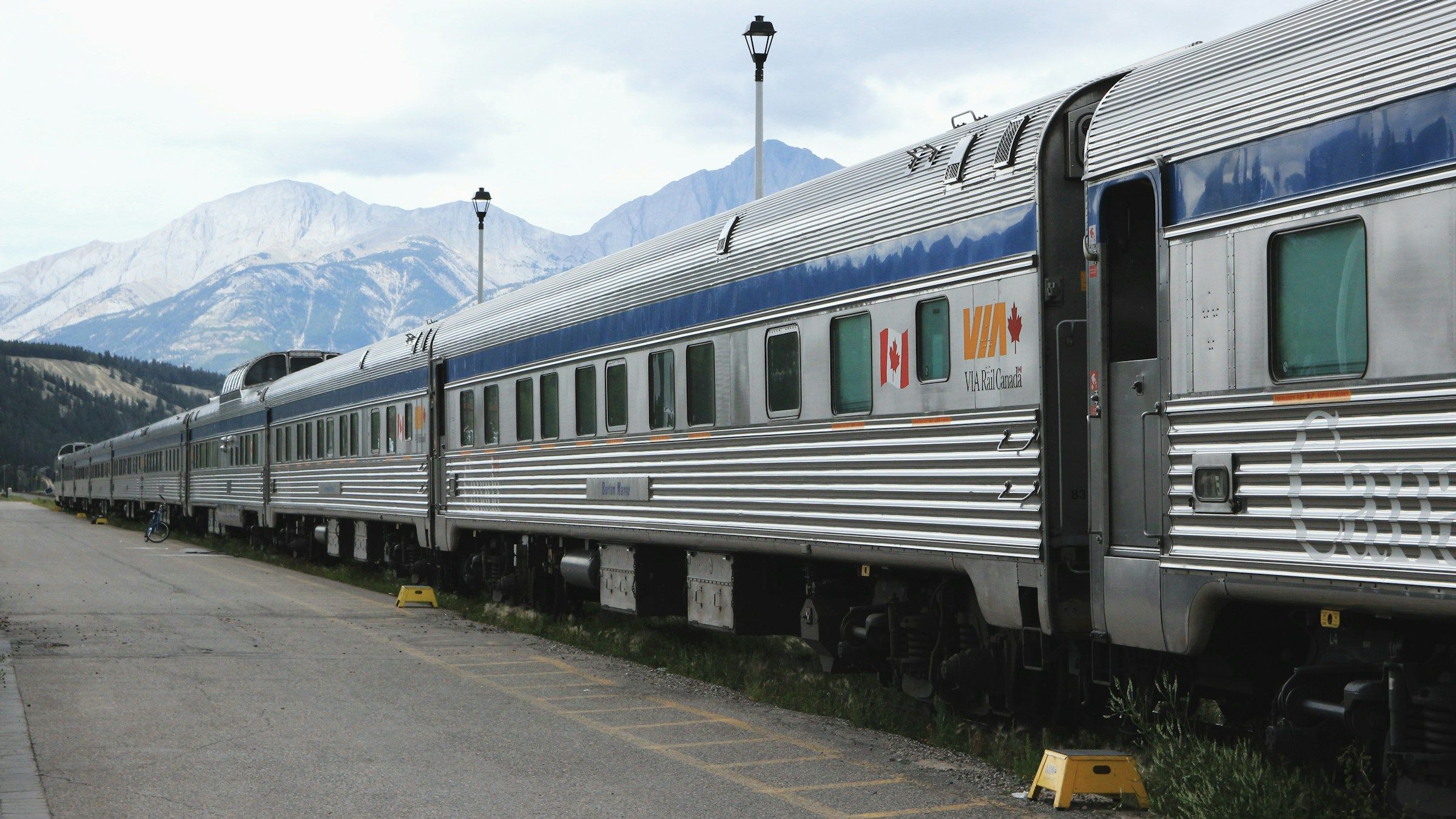
There is no fast way to cross Canada by train, and that is the entire proposition. VIA Rail's Canadian covers roughly 4,500 kilometres between Toronto and Vancouver across four nights, through northern Ontario lakes, the prairies, the Rockies at Jasper and down the Fraser and Thompson canyons to the coast.
The question nobody answers honestly is which ticket to buy. Economy costs a fraction of a sleeper, and every review of it is written either by someone who did one night or by someone selling cabins.
What you are actually choosing between
The Canadian by class
Inclusions and fares change by season. Confirm current details with VIA Rail before booking.
| Class | You sleep in | Meals | Best for |
|---|---|---|---|
| Economy | A large reclining seat | Not included, food available to buy | One or two nights, tight budgets |
| Sleeper Plus berth | A curtained upper or lower berth | All meals included | The classic four-night trip |
| Sleeper Plus cabin | A private cabin with a basin and toilet | All meals included | Couples, light sleepers |
| Prestige | A larger cabin with a double bed and concierge | All meals and drinks included | A one-off splurge |
What Economy is really like
The seat is genuinely large, with more recline and legroom than any airline economy cabin, and seats can be turned to face each other. There is a car with food for sale and, on most consists, a viewing car that Economy passengers can use.
What you do not get is a shower. Four nights sleeping upright with no way to properly wash is the part that breaks people, and it is rarely mentioned. One night is an adventure. Two is manageable. Four is endurance, and by the prairies you will have stopped caring about the view.
What the sleeper adds
A berth is a curtained bunk made up each evening by an attendant, with shared washrooms and showers at the end of the car. A cabin is a private room with a fold-down bed, a basin and a toilet. Both include every meal in the dining car, served at a table with other passengers, which is where most of the trip's conversation happens.
Sleeper Plus also gets you into the Park car, the domed lounge at the rear of the train. In peak season that access can be restricted to certain hours, so ask when you book rather than assuming the dome is yours all day.
The recommendation
Ride Economy for one or two nights. Book a sleeper for three or more. If the full crossing is the goal and a sleeper is out of reach, split the trip instead of spending four nights upright.
- Toronto to Winnipeg. Two nights through northern Ontario, the most underrated stretch of the route: lakes, rock and bush with no road beside the track.
- Winnipeg to Edmonton or Saskatoon. One night across the prairies. Flat, enormous and better at sunrise than most people expect.
- Edmonton or Jasper to Vancouver. The mountain segment, and the one to pay for if you only take one. Jasper to Vancouver is a single night with the Rockies and the canyons in daylight.
Stopping over also fixes the other weakness of the end-to-end trip, which is that you see the best scenery through glass and then leave. A few days in Jasper turns a train ride into a trip. Our guide to Banff without a car covers how to keep going through the mountains once you step off.
What the four days actually look like
Day one and two: northern Ontario
Out of Toronto in the evening, and by morning you are in the Canadian Shield. This section runs for the better part of two days through lakes, muskeg and rock, past communities with no road access where the train is still the only way in. Almost nobody flies over this landscape and thinks about it, and the train makes the scale obvious.
Day two and three: the prairies
Winnipeg gets a long stop, usually enough to walk to The Forks and back. After that comes the part people warn you about: hours of flat farmland. It is either tedious or hypnotic depending on your mood, and it is when the dining car and the lounge earn their place in a sleeper fare.
Day four: the mountains
Jasper is the highlight stop and the point where many passengers get off. Past it, the train crosses the Yellowhead and drops into the Thompson and Fraser canyons through the afternoon and evening. Arrival in Vancouver is scheduled for the morning after.
Who the train is wrong for
It is not a sightseeing service. The schedule puts particular stretches in darkness depending on the direction and the season, and nobody stops the train because the light is good. If the goal is photographs of the Rockies, a car or the tourist rail operations that run daylight-only between Vancouver and Banff will serve you better and cost accordingly.
It is also poor value as pure transport. A flight covers the same distance in five hours for less than a sleeper fare. The people who love this trip are the ones who wanted four days with no decisions in them, and the people who regret it are the ones who wanted to arrive.
Practical notes before you book
- There is no reliable internet on board and long stretches have no cell signal. Download everything, and tell people you will be out of contact.
- Bring a pillow, an eye mask and earplugs in Economy. In a berth, bring the earplugs anyway.
- Fares move like airline fares. Booking months ahead, and travelling outside July and August, changes the price substantially.
- Frequency drops in the winter months, which also makes it the quietest and cheapest time to ride.
For the other long-distance routes, the Ocean runs Montreal to Halifax overnight and the Skeena runs Jasper to Prince Rupert in daylight with a hotel stop in Prince George. Both are shorter, cheaper introductions to the same idea. The Experience Finder filters Canooq guides by trip length and travel style, and if you are pairing rail with parks, the Pass and Parking Checker covers what park access costs once you arrive.
The route also collects a striking number of the views on our list of unforgettable Canadian views without a single day of driving.
Plan the rest of the trip
Rail travel pairs naturally with park visits at either end, which have their own booking rules.
Common questions
How long does the train take from Toronto to Vancouver?
Four nights and most of four days when it runs to schedule. Delays of several hours are common because freight traffic has priority.
Can you sleep in Economy on The Canadian?
Yes, in a reclining seat, and one or two nights is reasonable. Four nights with no shower is a different proposition and is the main reason people upgrade.
Are meals included on The Canadian?
In Sleeper Plus and Prestige, yes, in the dining car. In Economy, no, though food is available to buy on board.
What is the best section of the route?
Jasper to Vancouver for mountains and canyons, and northern Ontario for empty, unreachable landscape that no road runs through.
Sources
Related travel guides:

Page details
Author: Thomas Tremblay
Updated: August 13, 2026
Last reviewed: August 13, 2026
Sources verified: August 13, 2026
Cite this page: Canooq.ca, Four Nights on The Canadian: Should You Book Economy or a Sleeper?, https://www.canooq.ca/travel/the-canadian-train-economy-or-sleeper
Canooq content is educational and may include affiliate or referral links. It is not financial, tax, legal, immigration, employment, mortgage, real estate, or healthcare advice. Verify official sources and provider terms before acting.
Enjoy Canooq? Let us keep helping you — make Canooq a preferred source on Google.