Fall Colours in Canada: Peak Leaf Dates by Province and Region

September 9, 2026
Find typical peak fall-colour dates across Canada, with province-by-province timing, scenic routes, live foliage trackers and trip-planning tips.
What's on this page
Find typical peak fall-colour dates across Canada, with province-by-province timing, scenic routes, live foliage trackers and trip-planning tips.
Canada’s fall-colour season begins while most of the country is still thinking about summer.
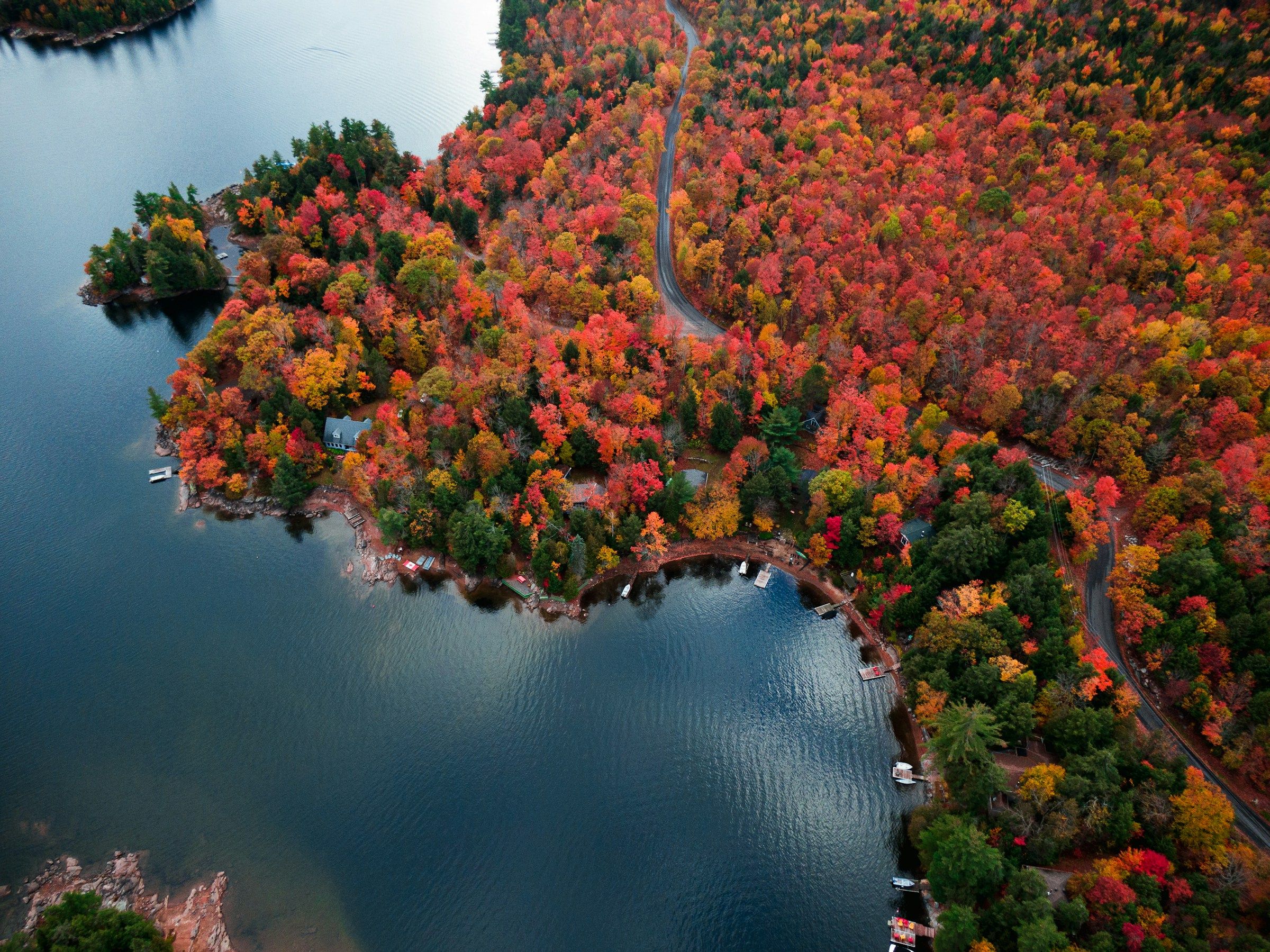
By late August, tundra and shrubs in the northern territories can already be turning red and gold. Mountain larches in Alberta follow in September. Ontario and Quebec usually deliver their best-known displays from late September into October, while parts of Atlantic Canada and coastal British Columbia may hold colour until the end of the month or even early November.
There is no single “best weekend” for fall colours in Canada. A road trip through Yukon, Algonquin Provincial Park and Prince Edward Island would encounter three completely different seasons.
The dates below are planning windows based on typical conditions and official tourism guidance. They are not exact forecasts. Temperature, rainfall, drought, wind, elevation and the timing of the first frost can move peak colour forward or backward by a week or more.
Peak fall-colour dates across Canada
| Province or territory | Region | Typical peak window |
|---|---|---|
| Yukon | Northern Yukon and Tombstone | Late August to early September |
| Yukon | Whitehorse, Kluane and southern highways | Early to mid-September |
| Northwest Territories | Yellowknife and Ingraham Trail | Late August to mid-September |
| Nunavut | Iqaluit and southern tundra | Late August to early September |
| British Columbia | Rockies, Kootenays and alpine larches | Mid-September to early October |
| British Columbia | Okanagan and Thompson valleys | Late September to mid-October |
| British Columbia | Vancouver, Victoria and the coast | Mid-October to early November |
| Alberta | Canadian Rockies and Kananaskis larches | Mid-September to early October |
| Alberta | Edmonton, Calgary and aspen parkland | Mid-September to early October |
| Saskatchewan | Northern forests | Early to late September |
| Saskatchewan | Central and southern valleys | Mid-September to early October |
| Manitoba | Northern Manitoba | Early to mid-September |
| Manitoba | Riding Mountain and Whiteshell | Mid-September to early October |
| Manitoba | Winnipeg and southern Manitoba | Late September to mid-October |
| Ontario | Northwestern and northern Ontario | Mid-September to early October |
| Ontario | Algonquin, Muskoka and Haliburton | Late September to mid-October |
| Ontario | Ottawa Valley and Georgian Bay | Early to mid-October |
| Ontario | Southern Ontario and Niagara | Mid- to late October |
| Quebec | Northern and higher-elevation regions | Mid- to late September |
| Quebec | Laurentians, Charlevoix and Mauricie | Late September to early October |
| Quebec | Eastern Townships and Quebec City region | Late September to mid-October |
| Quebec | Montreal and Montérégie | Early to late October |
| New Brunswick | Appalachian region | Late September |
| New Brunswick | Saint John River Valley | Late September to early October |
| New Brunswick | Fundy coast and southern areas | Early to mid-October |
| Nova Scotia | Cape Breton Highlands | Early to mid-October |
| Nova Scotia | Annapolis Valley and mainland | Early to late October |
| Prince Edward Island | Province-wide | Early to late October, usually peaking mid-month |
| Newfoundland and Labrador | Labrador and western Newfoundland | Mid-September to early October |
| Newfoundland and Labrador | Central and eastern Newfoundland | Late September to mid-October |
Yukon: Canada’s fall season starts in August
Yukon does not wait for the September equinox. In the northern part of the territory, fall colours can peak before August is over.
Tundra around Tombstone Territorial Park may begin changing in the second half of August. Dwarf birch, willow and other low-growing vegetation turn red, orange and gold beneath the Tombstone Mountains. This is one of Canada’s most dramatic autumn landscapes, but it is also remote. The Dempster Highway is largely gravel, fuel stops are limited and early snow is possible.
Around Whitehorse, aspen forests commonly reach their strongest gold in early to mid-September. Travel Yukon says colour usually peaks in late August in northern Yukon and around mid-September in the Whitehorse area.
The South Klondike Highway toward Carcross is an easy scenic route from Whitehorse. For a longer trip, drive west along the Alaska Highway toward Haines Junction and Kluane National Park and Reserve. The combination of golden forest, red ground cover, mountains and fresh snow is much more varied than a conventional maple display.
Best time to book: The first two weeks of September for Whitehorse and Kluane. Travel in late August for Tombstone and the northern Dempster Highway.
The catch: Services and campgrounds begin reducing their hours in September. Yukon government campgrounds generally close at the end of the month, and overnight temperatures can fall below freezing.
Use Travel Yukon’s seasonal guidance before departure.
Northwest Territories: a brief blaze of gold around Yellowknife
The Northwest Territories has a short, fast-moving colour season. Birch and aspen around Yellowknife can turn intensely yellow from late August into the first half of September, often while the first dark nights bring the aurora back into view.
The Ingraham Trail is the most practical fall-colour drive from Yellowknife. The highway passes lakes, exposed Canadian Shield and boreal forest on its way toward Tibbitt Lake. Prelude Lake and Hidden Lake territorial parks are natural stops, although seasonal services may be reduced after Labour Day.
Farther north, tundra colour begins earlier. The change can arrive in August and disappear quickly once frost and wind settle in.
Best time to book: Late August through the first ten days of September.
The catch: The window can be measured in days rather than weeks. Check territorial park operations and local weather shortly before travelling.
Nunavut: autumn happens at ground level
Nunavut is not a conventional leaf-peeping destination. Most of the territory lies beyond the tree line, so the colour comes from tundra vegetation rather than forests.
Around Iqaluit, Sylvia Grinnell Territorial Park can show deep reds, rusts and yellows in late August and early September. The effect is subtle from a distance and vivid underfoot, with coloured shrubs and ground cover set against rock, water and enormous skies.
Road access is limited to the immediate area around each community. A Nunavut fall trip requires flights, local planning and weather flexibility rather than a scenic drive between towns.
Best time to book: Late August or the first week of September.
The catch: Snow can arrive early, and tourism services are more limited than in southern Canada. Arrange accommodation, transportation and any guided excursion before arrival.
British Columbia: three different fall seasons in one province
British Columbia’s fall-colour calendar depends heavily on elevation and distance from the coast.
The Rockies and Kootenays
Alpine larches in the Purcell and Rocky mountains generally turn gold from mid-September into early October. Popular areas include Yoho National Park, the Bugaboos, Mount Assiniboine Provincial Park and trails around Fernie, Golden and Kimberley.
These are mountain trips rather than gentle woodland walks. Some larch areas require long hikes, backcountry preparation or reservations. Snow and ice may appear at elevation before the colour season is finished.
The Okanagan and Thompson valleys
The Okanagan usually offers its best mix of vineyard gold, cottonwoods and orchard colour from late September through mid-October. Routes around Kelowna, Naramata, Okanagan Falls and Oliver combine foliage with harvest-season wineries and farm stands.
The Kettle Valley Rail Trail is particularly attractive in fall. Short sections around Myra Canyon or the Naramata Bench make practical day trips without committing to a full cycling tour.
Vancouver, Victoria and the coast
Coastal British Columbia turns considerably later. Vancouver’s urban maples, sweetgums and other deciduous trees often reach their strongest colour from mid-October into early November.
Queen Elizabeth Park, VanDusen Botanical Garden, Stanley Park and the University of British Columbia campus are reliable choices. In Victoria, Beacon Hill Park, Government House and the residential streets of Rockland tend to look their best in the second half of October.
Best time to book: Mid- to late September for the mountains, early October for the interior and late October for Vancouver or Victoria.
The catch: British Columbia’s native coastal forests are largely evergreen. The most concentrated red and orange displays around Vancouver are usually in parks, gardens and residential neighbourhoods rather than vast wild forests.
Alberta: golden larches and aspen valleys
Alberta’s headline attraction is larch season. These deciduous conifers remain green through summer, turn brilliant gold in September and then lose their needles.
Travel Alberta identifies mid-September to early October as the best general window, with exact timing dependent on weather.
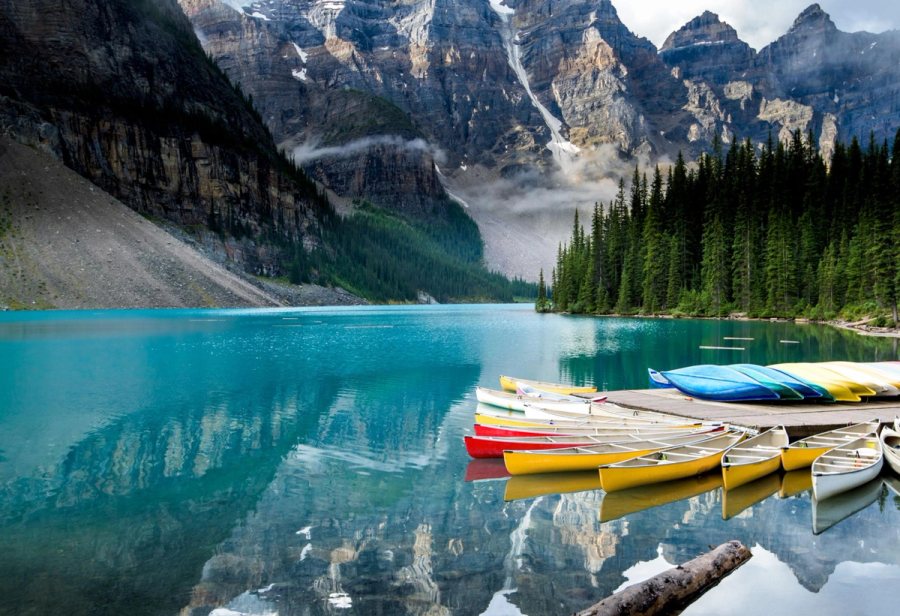
Larch Valley above Moraine Lake is the famous destination. Access to Moraine Lake is controlled, and private vehicles are not permitted on the road under normal visitor arrangements. Parks Canada shuttles and approved transportation services require advance planning.
For a less complicated day, consider Ptarmigan Cirque near Highwood Pass, Arethusa Cirque or trails around Kananaskis. Vehicles parked in Kananaskis Country require a valid Kananaskis Conservation Pass.
Outside the mountains, aspen forests around Edmonton, Elk Island National Park and the river valleys of Calgary and Edmonton usually turn from mid-September into early October.
Best time to book: The final two weeks of September.
The catch: Larch trails can become extremely crowded. Start early, reserve transportation and carry traction devices when snow or overnight freezing is possible.
Travel Alberta maintains a detailed guide to Alberta’s larch season.
Saskatchewan: short, golden and surprisingly varied
Saskatchewan’s fall season is brief. Tourism Saskatchewan describes September as the main colour period, with northern forests changing before the southern valleys.
Prince Albert National Park is the obvious northern destination. The drive toward Waskesiu passes boreal forest, lakes and stands of aspen. Narrow Hills and Duck Mountain provincial parks are other strong choices, with Duck Mountain offering more red and orange than much of the province.
In southern Saskatchewan, the Qu’Appelle Valley provides a ribbon of trees through open prairie. Echo Valley Provincial Park and the roads around Fort Qu’Appelle work well for a one-day drive from Regina.
Cypress Hills usually turns later than the northern forest and offers a different mix of lodgepole pine, aspen, grassland and high-country views.
Best time to book: Mid- to late September. Use the final week of September for southern valleys.
The catch: Wind can end the display abruptly. If the trees are near peak and the forecast calls for a strong storm, go before the storm.
Tourism Saskatchewan lists several autumn road-trip routes.
Manitoba: boreal forest, escarpment views and migrating birds
Northern Manitoba can begin turning in early September. The season then travels south through Riding Mountain, the Whiteshell and Winnipeg.
Riding Mountain National Park is one of the province’s best fall destinations. Highway 10 climbs from farmland into forest, and trails around Clear Lake offer a mix of maple, birch, aspen and evergreen. The park is roughly three hours from Winnipeg, making it better for an overnight trip than a rushed day drive.
Whiteshell Provincial Park generally looks strongest from late September into early October. The Trans-Canada Highway and Provincial Road 307 provide easy access to lakes and short trails.
Closer to Winnipeg, Assiniboine Forest, FortWhyte Alive and Birds Hill Provincial Park usually hold colour into early or mid-October. Oak Hammock Marsh adds fall bird migration to the trip, with large numbers of geese moving through the region in September and October.
Best time to book: The final week of September for Riding Mountain and Whiteshell. Early October is safer for Winnipeg.
The catch: Some park services and seasonal businesses reduce hours after Labour Day, even when the colours are still developing.
Ontario: a rolling colour season from Lake Superior to Niagara
Ontario’s size creates one of Canada’s longest and most trackable foliage seasons. The colour begins in the northwest and north, reaches Algonquin and Muskoka around the end of September, then continues south toward Niagara and Lake Erie.
Northwestern and northern Ontario
The Lake Superior coast, Thunder Bay region and northern highways can show strong colour from mid-September into early October. The drive between Sault Ste. Marie and Wawa is one of the province’s great autumn routes, with forested hills, rocky shoreline and Lake Superior lookouts.
Agawa Canyon train excursions are popular during the colour season and should be booked well ahead.
Algonquin Provincial Park
Algonquin’s Highway 60 corridor is Ontario’s most famous foliage destination. Sugar and red maples normally produce the first major peak from late September into early October.
Ontario Parks says the historical average for the park’s main maple peak is around September 27, based on observations dating back to 1973. That does not mean September 27 is automatically the best date every year.
After the red and orange maples decline, yellow birch and aspen create a second, more golden phase through early and mid-October.
Popular roadside lots and trailheads fill quickly. A daily vehicle permit may be required and can be reserved through Ontario Parks up to five days before arrival for participating parks.
Muskoka, Haliburton and Georgian Bay
Muskoka and Haliburton commonly reach strong colour from late September into the Thanksgiving period. Huntsville, Dorset, Bracebridge and the roads around Lake of Bays provide easy access to lake views and forest.
Arrowhead Provincial Park, Dorset Scenic Lookout Tower and the back roads east of Huntsville are popular. Expect slower traffic during peak weekends.
Along Georgian Bay, parks such as Killbear may peak closer to Thanksgiving and can retain golden beech colour through much of October.
Ottawa Valley and Eastern Ontario
Gatineau Park lies across the Quebec border but is the major foliage destination for the Ottawa area. In Ontario, the Rideau Lakes, Calabogie, Frontenac Provincial Park and the 1000 Islands corridor usually look strongest in early to mid-October.
The historic Rideau Canal route between Ottawa and Kingston makes a good multi-day drive, with stops in Perth, Westport and smaller lockstation communities.
Southern Ontario
Southern Ontario turns later than Algonquin. The Niagara Escarpment, Hamilton waterfalls, Dundas Valley, the Grand River and the Niagara Parkway commonly peak from mid- to late October.
Pinery Provincial Park is later again. Ontario Parks says reds, oranges and yellows there can remain visible from late October into early November.
Best time to book: Late September for Algonquin, Thanksgiving for Muskoka and Georgian Bay, and the second half of October for Niagara and southwestern Ontario.
The catch: Do not use Algonquin’s timing for the whole province. Southern Ontario may still be mostly green when northern areas are near peak.
Check the live Ontario Parks Fall Colour Report before leaving. Use Canooq’s travel section for more Ontario trip ideas.
Quebec: the most useful live colour map in Canada
Quebec’s official tourism season runs from mid-September through the end of October, with the colours moving south and down from higher elevations.
Bonjour Québec maintains an interactive map showing whether each area is beginning, at midpoint, near peak, peaking or in its final stage. The 2026 map is scheduled to begin updating in September.
Laurentians and Charlevoix
The Laurentians north of Montreal often approach peak from late September into early October. Mont-Tremblant is the best-known base, but roads around Val-David, Saint-Sauveur and Lac-Supérieur offer plenty of colour without requiring a major resort weekend.
Charlevoix combines forested mountains, the St. Lawrence River and villages such as Baie-Saint-Paul and Les Éboulements. Higher areas turn earlier than the riverfront.
Mauricie and Quebec City
La Mauricie National Park usually offers strong colour from late September through early October. The Route des Rivières and roads around Shawinigan provide alternatives when park parking is limited.
Near Quebec City, Parc national de la Jacques-Cartier is the obvious destination. Its steep valley creates layered views, with colour changing at different elevations.
Eastern Townships
The Eastern Townships commonly peak from late September into mid-October. Mont-Orford, Sutton, Knowlton and the roads around Lake Memphremagog form a logical weekend loop.
This is one of the easiest regions in Canada to combine foliage with villages, restaurants, wineries and accommodation.
Montreal and Montérégie
Montreal’s urban trees tend to peak in October, often after the Laurentians. Mount Royal, the Botanical Garden and the parks of Île Sainte-Hélène provide colour without leaving the city.
Mont-Saint-Hilaire, Mont-Saint-Bruno and Mont Rigaud are practical day trips, but parking and trail access can become busy on sunny weekends.
Best time to book: The final weekend of September for northern and higher areas, then the first two weekends of October for the Eastern Townships and southern Quebec.
The catch: A warm September can delay colour in the valleys while mountaintops are already changing. Use the map, not the calendar alone.
Follow the Bonjour Québec fall-colour map during the season.
New Brunswick: the Appalachian region turns first
New Brunswick’s display generally begins in the higher Appalachian region, moves through the Saint John River Valley and reaches the southern coast last.
Tourism New Brunswick says the Appalachian region can peak around the final week of September. The upper Saint John River Valley often follows around the first weekend of October, while the southern valley and Bay of Fundy area may peak roughly a week later.
For a northern road trip, base yourself around Campbellton and follow routes through the Appalachian landscape. Mount Carleton Provincial Park is a major hiking destination, although weather and seasonal operations should be checked.
The Saint John River Valley provides an easy autumn drive through Edmundston, Grand Falls, Florenceville-Bristol and Fredericton. Covered bridges and farms add more than forest colour alone.
Farther south, the Fundy Trail Parkway and roads around St. Martins, Alma and Fundy National Park commonly offer their best colour in early to mid-October.
Best time to book: The last week of September for northern New Brunswick and the first two weeks of October for the Fundy coast.
The catch: Thanksgiving weekend can be busy, and some seasonal restaurants and attractions begin closing even while southern foliage is still strong.
Use Tourism New Brunswick’s regional leaf-peeping guide.
Nova Scotia: Cape Breton gets the attention, but not all the colour
Nova Scotia’s strongest foliage often appears from late September through October. The province’s coastal climate can slow the change compared with inland New Brunswick.
Cape Breton and the Cabot Trail
Early to mid-October is generally the strongest planning window for the Cabot Trail, according to Tourism Nova Scotia. The road climbs through Cape Breton Highlands National Park, creating broad views over maple and birch forest, cliffs and the Gulf of St. Lawrence.
Do not rush the full loop in a few hours. Chéticamp, Ingonish and Baddeck are the practical bases for a two- or three-night trip. The Skyline Trail is popular and parking arrangements should be checked before arrival.
October also brings the Celtic Colours International Festival, which increases demand for rooms and restaurants across Cape Breton.
Annapolis Valley and mainland Nova Scotia
The Annapolis Valley, Wentworth Valley and inland parts of the mainland generally turn through October. The valley combines foliage with orchards, farm markets and wineries.
The South Shore is less densely forested than Cape Breton but can remain attractive later in the month. Coastal fog and evergreen forest create a more subdued autumn landscape.
Best time to book: The first half of October for Cape Breton and early to late October for the mainland.
The catch: Cape Breton weather changes quickly. Fog can hide lookoffs that were clear an hour earlier, so leave flexibility in the itinerary.
Tourism Nova Scotia publishes a seasonal Nova Scotia Leaf Watch.
Prince Edward Island: aim for the middle of October
Prince Edward Island usually peaks later than much of mainland Canada. Tourism PEI consistently identifies the middle of October as the strongest general window, with colour often remaining into the second half of the month.
The Island’s landscape is gentle rather than mountainous. Red and gold trees line country roads, frame farm fields and contrast with the red soil.
The Confederation Trail is an easy option for walking or cycling. Bonshaw Hills Provincial Park offers more elevation, while heritage roads and inland routes around New Glasgow, Victoria-by-the-Sea, Montague and Georgetown provide quiet driving.
Many coastal attractions and seasonal restaurants reduce their hours after Thanksgiving. Charlottetown remains the safest base when late-season services are important.
Best time to book: The week surrounding the second weekend of October.
The catch: Coastal wind can remove leaves quickly once they reach peak. Mid-October is a better target than the final week of the month.
Tourism PEI describes mid-October as the typical peak.
Newfoundland and Labrador: colour between the rock and the sea
Labrador and western Newfoundland generally turn before the eastern side of the island. The planning window runs from mid-September into mid-October, with large differences between regions.
Gros Morne National Park is the obvious destination. Forest around Bonne Bay and the park’s lower trails can turn from late September into early October, while the Tablelands add rust-coloured rock and low vegetation to the view.
The Humber Valley and roads around Corner Brook are strong alternatives. Central Newfoundland, including the area around Gander and Terra Nova National Park, often follows in early October.
The Avalon Peninsula and St. John’s region may hold colour into mid-October, although coastal wind can shorten the display.
Fall weather is unpredictable, and some boat tours, restaurants and accommodations close after the summer season. Confirm every important stop instead of assuming October operations.
Best time to book: Late September for Labrador and western Newfoundland, then early to mid-October for central and eastern areas.
The catch: Driving distances are substantial. Gros Morne and St. John’s are not realistic parts of the same weekend trip.
Canada’s best fall-colour road trips
For a first foliage trip, these routes offer the strongest combination of scenery, practical access and places to stop:
- Algonquin Highway 60, Ontario: Maple hills, short trails and a well-maintained colour report.
- Cabot Trail, Nova Scotia: Highland forest, ocean cliffs and several days of worthwhile stops.
- Laurentians to Mont-Tremblant, Quebec: Easy access from Montreal with a live regional tracker.
- Fundy Trail Parkway, New Brunswick: Coastal lookouts and later-season colour.
- Icefields Parkway and Kananaskis, Alberta: Golden larches, aspen valleys and mountain scenery.
- South Klondike Highway, Yukon: Aspen, tundra, mountains and early-season colour.
- Lake Superior coast, Ontario: Long-distance driving with forest, rock and open water.
- Okanagan Valley, British Columbia: Vineyards, orchards and harvest-season stops.
- Riding Mountain, Manitoba: Escarpment views and accessible boreal forest.
- Central Coastal Drive, Prince Edward Island: Country roads, red soil and mid-October foliage.
How to plan around an unpredictable peak
Check live reports during the final week
A typical date is useful when reserving accommodation. A live colour report is more useful when choosing the exact trail or driving route.
Ontario, Quebec and Nova Scotia operate particularly useful seasonal trackers. Regional tourism offices and park social accounts can help elsewhere, but confirm operational details through the official park website.
Use elevation to your advantage
Higher elevations and northern slopes tend to change first. A route that moves between valleys and uplands improves the odds of finding strong colour somewhere.
This is particularly useful in Alberta, Quebec, northern New Brunswick and Cape Breton.
Book refundable accommodation
Peak colour cannot be guaranteed months ahead. A refundable hotel lets you change the route if one region turns earlier than expected.
Track accommodation and transportation costs with Canooq’s budget planner.
Avoid the obvious parking lot at noon
Peak weekends create traffic jams at Algonquin, Mont-Tremblant, Cape Breton lookoffs and popular larch trailheads. Arrive early, visit midweek or choose a secondary route.
A quieter road with slightly less colour is usually more enjoyable than an hour in a queue for the famous lookout.
Expect winter conditions in the mountains and North
September can mean autumn in the valley and snow on the trail. Pack warm layers, waterproof footwear and emergency supplies. Check road conditions, trail reports and daylight hours before setting out.
Watch the wind forecast
A hard frost may intensify colour, but strong wind can end the season overnight. If an area is near peak and a major storm is approaching, go before it arrives.
Frequently asked questions
When do fall colours peak in Canada?
Canada’s national colour season runs from late August through early November. Northern regions turn first, followed by mountain elevations, the Prairies, Ontario and Quebec. Atlantic Canada and coastal British Columbia often peak later in October.
What is the best overall week for fall colours in Canada?
The final week of September and first two weeks of October cover the largest number of major destinations. No single week catches every province at peak.
Late September works well for Alberta’s larches, Algonquin and northern New Brunswick. Early October is stronger for Quebec, Muskoka and Cape Breton. Mid-October is better for Prince Edward Island, southern Ontario and parts of coastal British Columbia.
When does Algonquin Park usually peak?
The main red and orange maple peak historically occurs around September 27 on average, but the date varies. Yellow birch and aspen often produce a second golden phase in early to mid-October.
Check the Ontario Parks report before driving.
When is the Cabot Trail best for fall colours?
Early to mid-October is the normal planning window. Stay at least two nights and leave time for weather changes, trails and lookoffs.
When do larches turn gold in Alberta?
The strongest general window is mid-September to early October. The display is brief, and higher trails can already have snow or ice.
Is Thanksgiving weekend always the best time?
No. Canadian Thanksgiving is often well timed for Muskoka, Georgian Bay, southern Quebec and Atlantic Canada. It may be too late for northern Yukon, northern Ontario and some high-elevation larch areas, while southern Ontario and coastal British Columbia may still be developing.
Live fall-colour trackers and official planning sources
- Ontario Parks Fall Colour Report
- Bonjour Québec fall-colour map
- Nova Scotia Leaf Watch
- Tourism New Brunswick foliage guide
- Travel Alberta larch guide
- Tourism Saskatchewan autumn road trips
- Travel Manitoba fall guide
- Tourism PEI fall-colour timing
- Travel Yukon seasonal guide
Last reviewed August 29, 2026. Peak dates are typical planning windows rather than guarantees. Check current colour, weather, road and park reports before travelling.
Related travel guides:
Page details
Author: Thomas Tremblay
Updated: August 29, 2026
Reviewed by: Canooq Editorial
Last reviewed: August 29, 2026
Sources verified: August 29, 2026
Cite this page: Canooq.ca, Fall Colours in Canada: Peak Leaf Dates by Province and Region, https://www.canooq.ca/travel/fall-colours-canada-peak-dates
Canooq content is educational and may include affiliate or referral links. It is not financial, tax, legal, immigration, employment, mortgage, real estate, or healthcare advice. Verify official sources and provider terms before acting.
Enjoy Canooq? Let us keep helping you — make Canooq a preferred source on Google.