What a Trip to Nunavut Actually Costs, and What You Get for It

August 30, 2026
A realistic cost breakdown for a first trip to Nunavut, from Ottawa flights and Iqaluit hotel rates to grocery prices, plus what to do once you land.
What's on this page
Nunavut has no road connection to the rest of Canada, so flights, food and beds all carry the cost of arriving by air. A four or five day first trip to Iqaluit realistically runs into the thousands per person. Here is where the money goes and how to keep the total sensible.
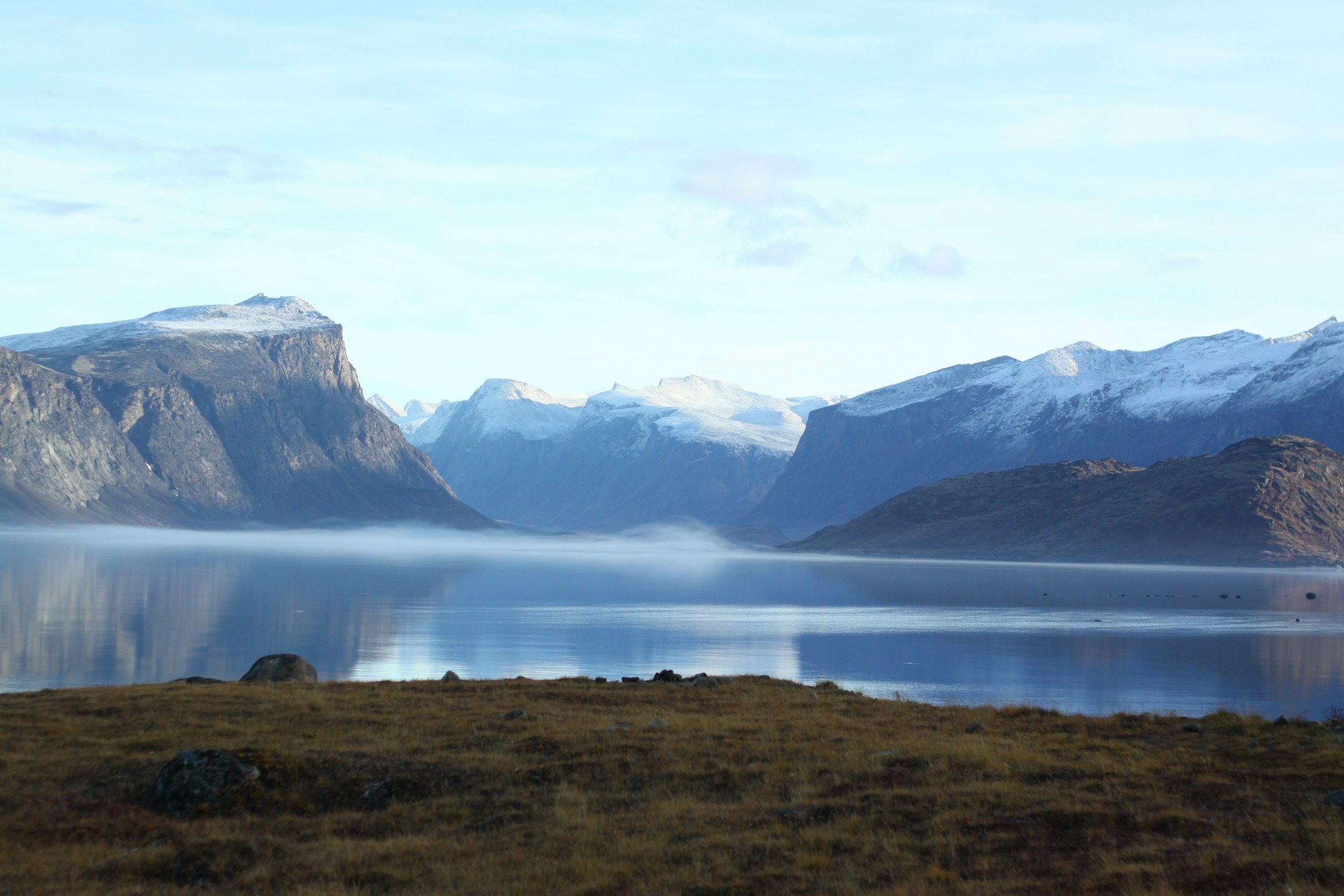
Nunavut is a fifth of Canada's land area and has no road connecting it to anywhere else. Not one. Every person, every crate of milk and every sheet of plywood arrives by aircraft or, in the brief open-water season, by sealift barge. That single fact sets the price of everything, including your holiday.
People are usually put off by rumours of the cost rather than by real numbers. So here are real numbers, what they buy, and how to bring them down.
Where the money goes
A first trip to Iqaluit, per person
Indicative 2026 ranges for a four or five day trip. Airfares in particular move sharply, so price your own dates.
| Cost | Typical range | Notes |
|---|---|---|
| Return flight from Ottawa | $1,200 to $1,800 | About three hours each way, the shortest southern gateway |
| Hotel, per night | $250 to $400 | Limited rooms, business rates, book early |
| Food, per day | $100 to $180 | Restaurant mains commonly $30 to $60 |
| Guided day trips | $200 to $500 each | Boat, snowmobile, dog team or cultural tours |
| Four to five days, all in | $3,500 to $5,500 | Before any flights on to smaller communities |
The flight is the immovable part. Iqaluit is served from Ottawa, with connections from Montreal and elsewhere, and fares behave like a regional monopoly route rather than a leisure one. Booking well ahead helps, and seat sales exist, but there is no version of this trip where the airfare is cheap.
How to bring the total down
- Stay somewhere with a kitchen. A bed and breakfast or apartment lets you buy groceries instead of eating three restaurant meals a day, which is the single biggest saving available.
- Bring food with you. Shelf-stable staples in checked baggage cost the price of the bag rather than the price of the north. Do this.
- Travel in shoulder season. Late August and September have open water, fewer visitors and softer rates than the July peak.
- Pick one community. Adding a flight to Pangnirtung or Pond Inlet doubles the transport budget. A first trip works better as Iqaluit done properly.
What you get for it
This is the part the cost conversation usually swallows. Iqaluit is a territorial capital of roughly 7,500 people on Baffin Island, on Frobisher Bay, and it is unlike anywhere else in the country.
Sylvia Grinnell Territorial Park
A short walk from town, where a river cuts through open tundra to a small waterfall and Arctic char run in season. It is the easiest introduction to a landscape with no trees in it, and it costs nothing.
Art, and the reason it matters here
Nunavut produces an extraordinary volume of carving, printmaking and textile work relative to its population. The museum and the galleries in Iqaluit are the honest way to buy directly from the people making it, rather than through a southern gallery markup.
The Legislative Assembly
Free to visit, built around a consensus government with no political parties, and holding a serious collection of Inuit art including a mace carved from narwhal tusk. It takes an hour and explains more about how the territory works than any guidebook.
Getting out on the land
Boat trips to Qaummaarviit, a former Thule settlement on an island in the bay, snowmobile and dog team trips in spring, and floe edge tours where the sea ice meets open water and the wildlife concentrates. These need outfitters, they are the expensive line in the budget, and they are the reason to come.
When to go
- April and May. Sea ice, long light, snowmobile and dog team travel, and the Toonik Tyme spring festival in Iqaluit.
- Late June to August. Open water, hiking on the tundra, near-endless daylight, and the Alianait arts festival. Nunavut Day falls on July 9.
- September. Autumn tundra colour, fewer visitors, and the last of the boat season before freeze-up.
- Winter. Dark, very cold and heavy with aurora, but with the least visitor infrastructure of the year.
For the aurora side of a northern trip, our northern lights guide covers timing across the north, and the Yukon and Northwest Territories bucket list covers the two territories that are considerably cheaper to reach.
What the town is like to be in
Iqaluit surprises people by being ordinary in ways they did not expect and strange in ways they did not anticipate. There are office buildings, a hockey rink, coffee shops and taxis that run a flat fare and pick up other passengers along the way. There are also no trees, no highway out, and buildings raised on piles because you cannot dig foundations into permafrost. Water and sewage move by truck to much of the town.
Distances are short enough to walk in summer, though the wind off the bay makes that a different proposition than the temperature suggests. In June and July the light barely leaves, which does strange things to your sense of an evening, and in winter it barely arrives.
Give yourself four full days rather than a long weekend. Weather cancels flights and boat trips routinely, and a trip with no slack in it is a trip where the one thing you came for does not happen.
Travelling respectfully, which is also practical
Nunavut is about 85 percent Inuit, and Inuktitut is spoken daily. A few things are worth knowing before you arrive rather than after.
- Ask before photographing people, homes or hunting activity. This should not need saying and it frequently does.
- Alcohol rules vary by community and are stricter than most visitors expect. Some communities are dry, others restrict quantities. Check the rules for the specific community, not the territory.
- Country food, including seal and narwhal, is a food system rather than a spectacle. Approach it the way you would any other culture's cooking.
- National park visits, including Auyuittuq and Sirmilik, require registration and an orientation with Parks Canada, and polar bear precautions are mandatory rather than advisory.
Park registration and fee rules are covered in the Pass and Parking Checker, and the Experience Finder will show what else in the north fits the time you have.
Plan the rest of the trip
Northern park visits carry registration requirements that southern parks do not.
Common questions
Can you drive to Nunavut?
No. No road connects Nunavut to the rest of Canada, and no road connects its communities to each other. Air travel is the only practical option.
How much does it cost to fly to Iqaluit?
Return fares from Ottawa commonly run between $1,200 and $1,800, with the exact figure depending heavily on dates and how far ahead you book.
Is Nunavut worth visiting?
If you want landscape and culture that exist nowhere else in Canada, yes. If you are optimising cost per day of holiday, no. It is a deliberate trip, not a cheap one.
What is the best month to visit Nunavut?
July and August for open water and hiking, or April and May for sea ice travel and the spring festival season.
Sources
Related travel guides:
Page details
Author: Thomas Tremblay
Updated: August 13, 2026
Last reviewed: August 13, 2026
Sources verified: August 13, 2026
Cite this page: Canooq.ca, What a Trip to Nunavut Actually Costs, and What You Get for It, https://www.canooq.ca/travel/what-a-trip-to-nunavut-costs
Canooq content is educational and may include affiliate or referral links. It is not financial, tax, legal, immigration, employment, mortgage, real estate, or healthcare advice. Verify official sources and provider terms before acting.
Enjoy Canooq? Let us keep helping you — make Canooq a preferred source on Google.