Newcomer guide
Best credit cards for newcomers to Canada
Reviewed August 17, 2026 by Thomas Tremblay
Your credit file starts empty on landing day, and that one fact decides which cards will approve you in your first year. This guide sorts the cards that accept a thin file, then ranks them on what they actually pay back.
Every card below is in the Canooq comparison table, so the annual fee, welcome bonus, and first-year value shown here are the same numbers we verify against issuer terms.
The picks
1. Best first card overall
CIBC · Visa
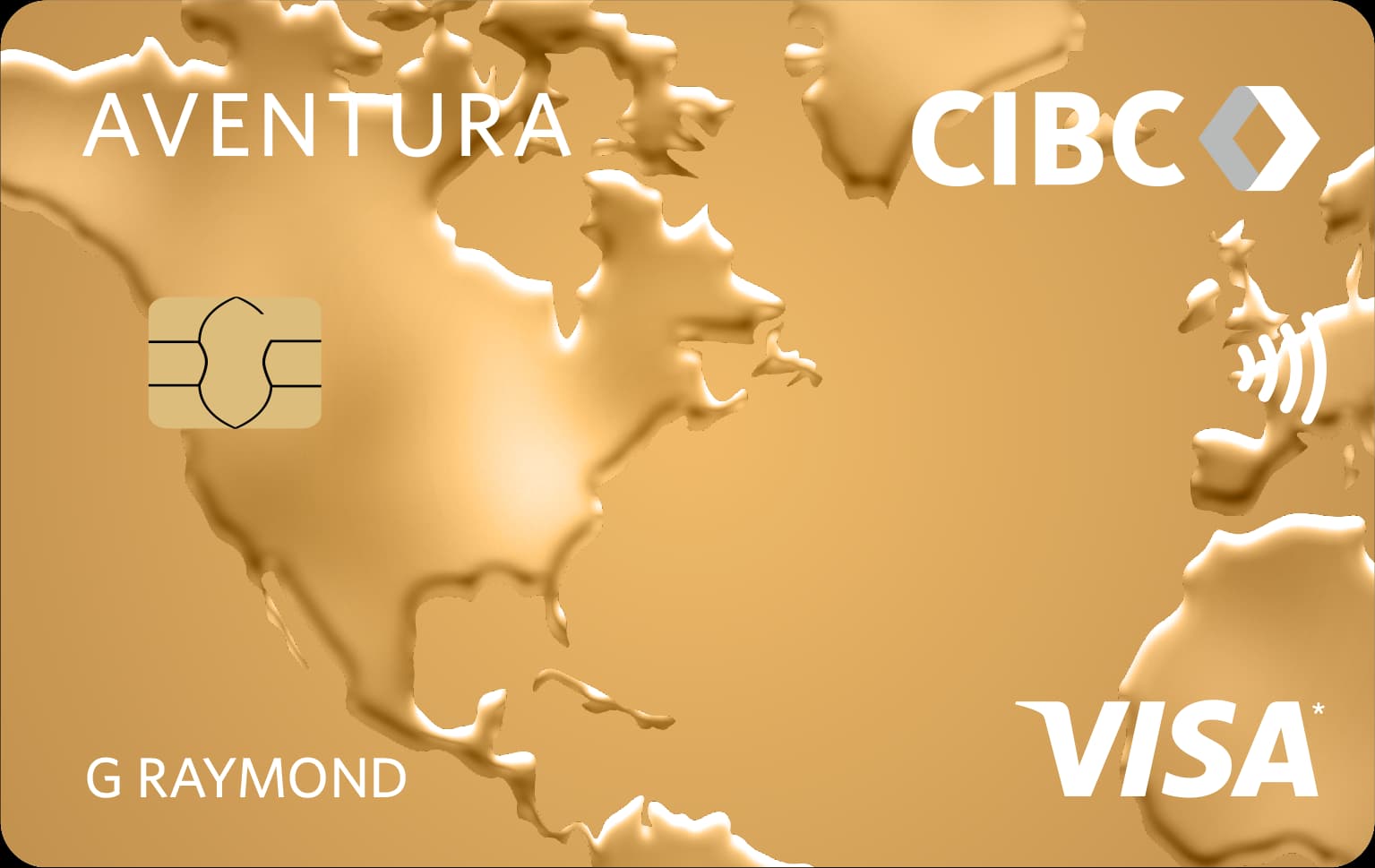
CIBC Aventura Visa Gold
CIBC waives the fee for year one and accepts newcomer applications without a Canadian credit file. The Aventura bonus, lounge passes, and NEXUS credit make it the highest first-year value of any card a new arrival can realistically get approved for.
Watch out: Aventura points are worth the most through the CIBC Rewards Centre. Redeeming for merchandise cuts their value roughly in half.
- Annual fee
- $139
- Welcome bonus
- 15,000 - 60,000 pts
- Minimum spend
- $3,000
- First-year value
- $760
2. Best for groceries and no FX fees
Scotia · Amex
Scotia Amex Gold Scene+
No foreign transaction fee plus 5x Scene+ on groceries and dining. If you shop at Sobeys, Safeway, or FreshCo the rate goes to 6x, and Scotiabank StartRight will consider you without Canadian credit history.
Watch out: American Express acceptance is thinner than Visa or Mastercard at independent grocers. Pair it with a Visa for the stores that decline Amex.
- Annual fee
- $120
- Welcome bonus
- 25,000 - 45,000 pts
- Minimum spend
- $2,000 - $7,500
- First-year value
- $330
3. Best plain cash back
TD · Visa
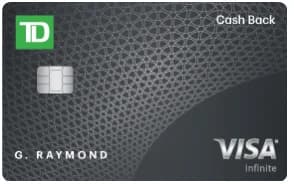
TD Cashback Visa Infinite
First year free, 3 percent on groceries, gas, transit, and recurring bills, and a large opening cash back promotion. Cash back needs no redemption strategy, which matters while you are still learning the market.
Watch out: Visa Infinite cards require $60,000 personal or $100,000 household income. Below that, the TD Cash Back Visa is the same idea at a lower tier.
- Annual fee
- $139
- Welcome bonus
- 10% on $3,500
- Minimum spend
- specific categories
- First-year value
- $350
4. Best no-fee starter
Simplii · Visa
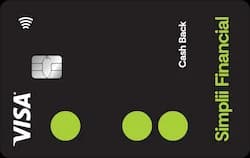
Simplii Financial Cash Back Visa
No annual fee and no income floor, so it clears when premium cards decline. It also sits inside Simplii, whose Global Money Transfer service charges no transfer fee on remittances.
Watch out: The cash back rates are modest. Treat this as the card that builds your file, not the card that maximises rewards.
- Annual fee
- $0
- Welcome bonus
- Up to 20% cashback (up to $100) in the first 3 months
- Minimum spend
- None
- First-year value
- $100
5. Best backup card
BMO · Mastercard
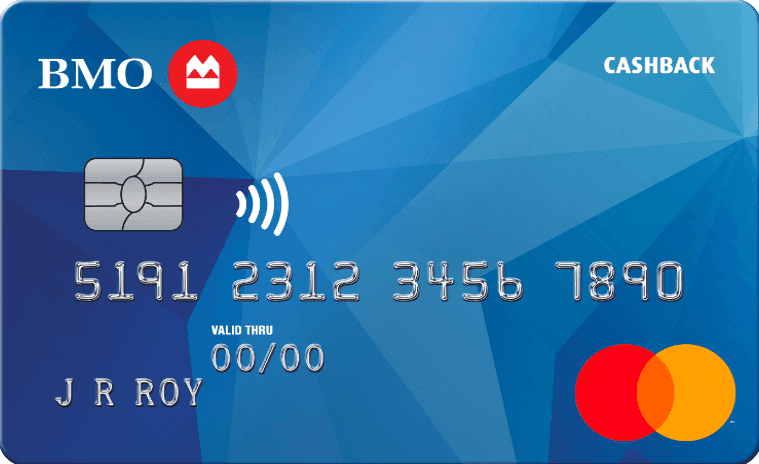
BMO CashBack Mastercard
No annual fee, Mastercard acceptance, and BMO NewStart behind it. Useful as the second card that covers the merchants your Amex cannot.
Watch out: The top grocery rate is capped. Once your spending outgrows the cap, move the grocery spend to a category card.
- Annual fee
- $0
- Welcome bonus
- Check current application offer
- Minimum spend
- None
- First-year value
- $0
Getting approved with no Canadian credit history
Canadian lenders score you on a file that starts empty the day you land. That is a timing problem, not a credit problem, and every large bank runs a program built around it.
Apply through the newcomer program by name rather than the general application form. The general form runs a standard credit decision and will decline a thin file that the newcomer stream would have approved.
- Scotiabank StartRight, RBC Newcomer Advantage, CIBC Welcome to Canada, TD New to Canada, and BMO NewStart all issue unsecured cards to people with no Canadian credit file.
- Bring your permanent resident card or work permit, passport, SIN, and proof of a Canadian address. Some branches also accept a credit report from your home country to support a higher limit.
- Your first limit is usually $1,000 to $5,000. It grows on request after six to twelve months of on-time payments.
- A secured card, where you post a deposit equal to the limit, is the fallback if a newcomer program turns you down. It reports to the bureaus the same way.
Rank the cards on year-one dollars, not on the brand
A first-year-free card with a reachable bonus usually beats a no-fee card by $300 to $700 in the first twelve months. The trap is the minimum spend: a bonus that needs $7,500 in three months is worthless if your household spends $2,000 a month.
Work out your real monthly spend on the card first, multiply by three, and only then look at which bonuses you can clear. The Canooq table shows minimum spend beside every offer for exactly this reason.
- Under $1,200 a month: take a no-fee card and skip the bonus chase.
- $1,200 to $2,500 a month: a first-year-free card with a $3,000 to $5,000 target is comfortable.
- Over $2,500 a month: premium bonuses become reachable, but check the income requirement before applying.
The habits that build your score fastest
Payment history and utilization drive most of a Canadian credit score. Pay the statement balance in full every month, and keep the balance you carry at statement time under about 30 percent of your limit.
One card used well beats three cards used carelessly. Add a second card once the first has six months of clean history, not before.
- Set the full-balance autopay the day the card arrives. A single missed payment costs more than a welcome bonus is worth.
- Do not close your first card once you upgrade. Length of history counts, and the oldest account anchors it.
- Check your report free at Equifax and TransUnion. Errors on newcomer files are common because names get transliterated inconsistently.
What to do in your first twelve months
The order matters more than the card. Open a chequing account first, because most newcomer card programs are bundled with one and the bank wants to see the deposit relationship.
- Month 1: chequing account, SIN, and the newcomer card from the same bank.
- Months 1 to 6: run all household spending through the card, pay it in full, and do not apply anywhere else.
- Month 6: request a limit increase. A higher limit lowers utilization even if you spend the same.
- Months 9 to 12: add a second card that covers a category the first one misses, and start comparing welcome bonuses on your own terms.
Questions, answered
Can a newcomer to Canada get a credit card with no credit history?
Yes. Scotiabank, RBC, CIBC, TD, and BMO each run a newcomer program that approves unsecured credit cards without a Canadian credit file. You apply with your PR card or work permit, passport, SIN, and a Canadian address rather than a credit score.
How long does it take to build a Canadian credit score?
A score appears after about three to six months of reported activity. Most newcomers reach the 660 range that unlocks mainstream cards within a year of paying a first card in full every month.
Should a newcomer start with a no-fee card or a first-year-free card?
A first-year-free card wins if you will hit the minimum spend without changing your habits, because the welcome bonus is worth more than the fee you avoid. Choose a no-fee card if your spending is under about $1,200 a month or your income is below the $60,000 threshold most premium cards require.
Does a newcomer credit card application hurt your credit score?
Each application creates a hard inquiry, which costs a few points for a year. That matters little on a new file. Applying to four banks in the same week does matter, so pick one program and apply there first.
Can you use your home country credit history in Canada?
Canadian bureaus do not import foreign files, but several newcomer programs will read a credit report you bring yourself and use it to justify a higher starting limit. Request the report before you leave, because it is harder to obtain once you are here.
Related guides
- Best credit cards for newcomers from India
Cards that skip the 2.5 percent rupee surcharge, pay on grocery spend, and reach Delhi on Aeroplan.
- Best credit cards for newcomers from the Philippines
Cards built around grocery spend, no-fee peso purchases, and cheap remittances home.
- Best credit cards for newcomers from China
Cards that avoid the yuan surcharge, work through Alipay and WeChat Pay, and reach Beijing on points.
- Best credit cards for newcomers from Pakistan
Cards that approve on an empty credit file, skip the rupee surcharge, and reach Islamabad on Star Alliance partners.
- Best credit cards for newcomers from Nigeria
Cards that approve without a Canadian file, skip the naira surcharge, and reach Lagos on Star Alliance partners.
Offers, fees, rewards, income requirements, and approval criteria change without notice. Canooq verified the card figures on this page on August 17, 2026 against issuer terms. Issuers make all approval decisions. Some links pay Canooq a commission, which never changes how a card is ranked. See the affiliate disclosure.