Newcomers from India
Best credit cards for newcomers from India
Reviewed August 17, 2026 by Thomas Tremblay
Indian households in Canada tend to share three spending patterns: heavy grocery bills, regular rupee-billed purchases, and at least one trip home every couple of years. Those three lines decide which card is worth carrying.
The picks below are ranked on that spending, not on a generic best-card list, and every number comes from the same verified comparison table on Canooq.
The picks
1. Best all-round pick
Scotia · Amex

Scotia Amex Gold Scene+
No foreign transaction fee kills the 2.5 percent surcharge on rupee-billed purchases, and 5x Scene+ on groceries and dining fits a household that cooks at home. Scotiabank StartRight will consider the application without Canadian credit history.
Watch out: Independent South Asian grocers often take Visa and Mastercard only. Pair this with the CIBC Dividend below rather than relying on it everywhere.
- Annual fee
- $120
- Welcome bonus
- 25,000 - 45,000 pts
- Minimum spend
- $2,000 - $7,500
- First-year value
- $330
2. Best for grocery spend anywhere
CIBC · Visa
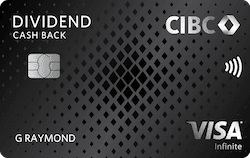
CIBC Dividend Visa Infinite
4 percent cash back on groceries and gas on a Visa, so it works at the stores that decline Amex. First year is free, and the cash back needs no redemption decisions.
Watch out: The 4 percent rate is capped annually. Past the cap the rate drops to 1 percent, so check where your household lands.
- Annual fee
- $120
- Welcome bonus
- 10% up to $2,000 + $50 PAP
- Minimum spend
- -
- First-year value
- $250
3. Best for flights to India
TD · Visa
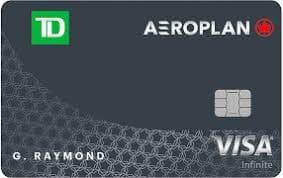
TD Aeroplan Visa Infinite
Air Canada flies nonstop Toronto to Delhi and Vancouver to Delhi, and Air India joined Star Alliance, so Aeroplan covers the routes people actually fly. The free first checked bag is worth real money on family trips with heavy luggage.
Watch out: The fee is rebated in year one only. Decide before month twelve whether the checked bag and Aeroplan earn justify $139.
- Annual fee
- $139
- Welcome bonus
- 10,000 - 40,000 pts
- Minimum spend
- $3,000
- First-year value
- $375
4. Best for frequent travellers
Scotia · Visa

Scotia Passport Visa Infinite+
No foreign transaction fee on a Visa, plus lounge passes that matter on a long Delhi connection. It is the card to hold if you fly home more than once a year.
Watch out: The $150 fee is not waived in year one, so it only pays off above roughly $6,000 of annual foreign-currency spending.
- Annual fee
- $150
- Welcome bonus
- 25,000 - 35,000 pts
- Minimum spend
- $2,000 - $40,000
- First-year value
- $200
Getting approved with no Canadian credit history
Canadian lenders score you on a file that starts empty the day you land. That is a timing problem, not a credit problem, and every large bank runs a program built around it.
Apply through the newcomer program by name rather than the general application form. The general form runs a standard credit decision and will decline a thin file that the newcomer stream would have approved.
- Scotiabank StartRight, RBC Newcomer Advantage, CIBC Welcome to Canada, TD New to Canada, and BMO NewStart all issue unsecured cards to people with no Canadian credit file.
- Bring your permanent resident card or work permit, passport, SIN, and proof of a Canadian address. Some branches also accept a credit report from your home country to support a higher limit.
- Your first limit is usually $1,000 to $5,000. It grows on request after six to twelve months of on-time payments.
- A secured card, where you post a deposit equal to the limit, is the fallback if a newcomer program turns you down. It reports to the bureaus the same way.
Rupee purchases are where the quiet money goes
Foreign transaction fees of 2.5 percent apply on almost every Canadian card. On a household that spends $6,000 a year in Indian currency, that is $150 that a no-FX card keeps.
The surcharge applies to more than holiday spending. Indian streaming subscriptions, flight bookings on Indian airline sites, gifts sent to family through Indian retailers, and any app billed in rupees all trigger it.
- Check the merchant's billing currency, not its country. An Indian company billing in Canadian dollars costs you nothing extra.
- Declining dynamic currency conversion at a terminal in India is almost always cheaper than accepting the merchant's rate.
Flying home on points
Aeroplan is the strongest program for India from Canada because Air Canada operates nonstops from Toronto and Vancouver to Delhi and Air India is a Star Alliance partner. Award seats price on distance, so a Toronto to Delhi economy award sits well below what the same route costs in cash during peak season.
The trap is carrier surcharges. Aeroplan does not add them on Air Canada metal, but partner routings through European hubs can, so compare the total including taxes before booking.
Sending money home is a separate decision
Do not fund a remittance with a credit card. Most providers code it as a cash advance, which starts interest immediately and adds a fee on top of the exchange margin.
The India corridor is competitive, and the gap between the cheapest and the most expensive provider on a $2,000 transfer is routinely more than $40. Compare on the total received in rupees rather than the advertised fee.
The habits that build your score fastest
Payment history and utilization drive most of a Canadian credit score. Pay the statement balance in full every month, and keep the balance you carry at statement time under about 30 percent of your limit.
One card used well beats three cards used carelessly. Add a second card once the first has six months of clean history, not before.
- Set the full-balance autopay the day the card arrives. A single missed payment costs more than a welcome bonus is worth.
- Do not close your first card once you upgrade. Length of history counts, and the oldest account anchors it.
- Check your report free at Equifax and TransUnion. Errors on newcomer files are common because names get transliterated inconsistently.
Compare transfer costs to India: see the provider comparison.
Questions, answered
Which Canadian credit card is best for Indian newcomers?
For most Indian households the Scotiabank Gold American Express wins on maths: no 2.5 percent foreign transaction fee, and 5x Scene+ on groceries and dining. Carry a Visa alongside it, because Amex acceptance at independent South Asian grocers is inconsistent.
Can I fly to India on Aeroplan points?
Yes. Air Canada flies nonstop from Toronto and Vancouver to Delhi, and Air India is a Star Alliance partner Aeroplan can book. Economy awards from Canada to India typically start around 40,000 points one way in off-peak periods, plus taxes and carrier charges.
Do Canadian credit cards charge a fee on rupee purchases?
Almost all of them add 2.5 percent on top of the network exchange rate for any purchase billed in rupees, including Indian websites and app subscriptions. The Scotiabank Gold Amex, Scotiabank Passport Visa Infinite, and Wealthsimple cards do not.
Should I use a credit card to send money to India?
No. Funding a remittance with a credit card is usually treated as a cash advance, which means interest from day one plus a fee. Send from a chequing account through a transfer provider and keep the card for spending.
Will my Indian CIBIL score help me in Canada?
Canadian bureaus will not import it, but CIBC, RBC, and TD newcomer advisers will read a CIBIL report you bring with you and can use it to justify a higher starting limit. Download it before you fly.
Related guides
- Best credit cards for newcomers to Canada
The cards Canadian banks approve without a Canadian credit file, ranked by what they pay in year one.
- Best credit cards for newcomers from Pakistan
Cards that approve on an empty credit file, skip the rupee surcharge, and reach Islamabad on Star Alliance partners.
Offers, fees, rewards, income requirements, and approval criteria change without notice. Canooq verified the card figures on this page on August 17, 2026 against issuer terms. Issuers make all approval decisions. Some links pay Canooq a commission, which never changes how a card is ranked. See the affiliate disclosure.