Nova Scotia Bucket List: 9 Unmissable Things to Do

June 22, 2026
Plan a Nova Scotia bucket-list trip with 9 memorable places, practical notes, realistic photos and ideas for building a better Canadian road trip.
What's on this page
Plan a Nova Scotia bucket-list trip with 9 memorable places, practical notes, realistic photos and ideas for building a better Canadian road trip.
Nova Scotia is almost an island, and it behaves like one: long ragged coastlines, fishing villages, cliff-edge roads, and a capital city that is happiest when everyone is on a patio staring at the harbour. Distances are short but the moods change fast: highland cliffs on Cape Breton, the world’s highest tides on the Bay of Fundy, vineyard country in the Annapolis Valley, and old wooden towns that still smell faintly of salt and sawdust.
Here’s a Nova Scotia bucket list of 10 unmissable things to do, with some proper variety: road trips, tides, whales, hikes, history, wine, and a genuinely big cultural festival.
Drive, hike, and listen along the Cabot Trail
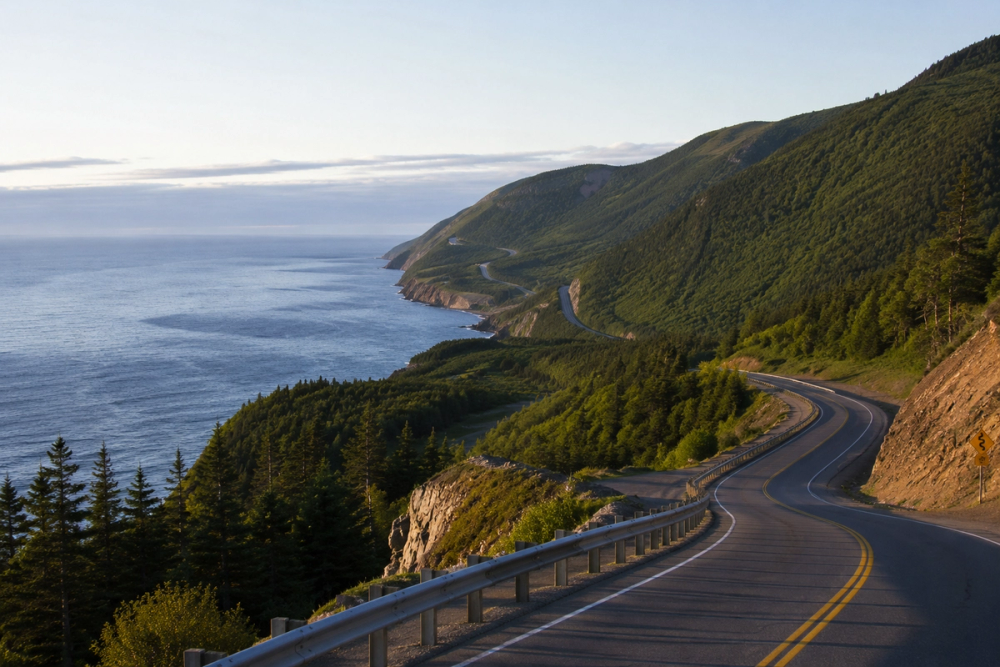
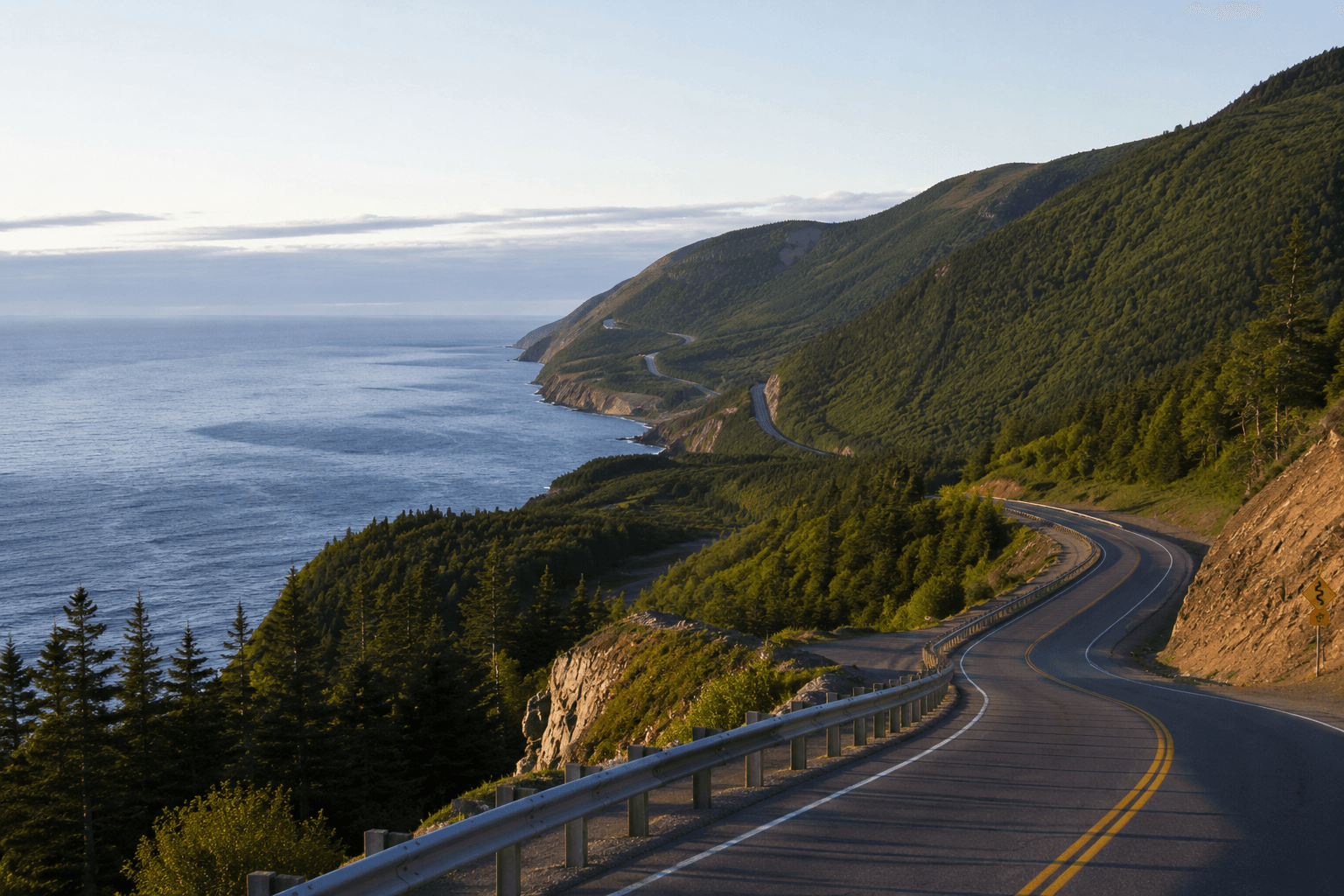
Cape Breton’s Cabot Trail is the province’s marquee road trip: a roughly 300 km loop around the northern tip of the island, with its most dramatic stretch winding through Cape Breton Highlands National Park. Cliffs drop to the Gulf of St. Lawrence, the road snakes in and out of coves and highland passes, and tiny communities like Pleasant Bay, Cheticamp, and Ingonish hang on to the few flat bits of land that exist between sea and forest.
Inside the park, 26 hiking trails range from short strolls to proper backcountry treks. If you only have time for one, the Skyline Trail on the western side is the classic: a mostly level route of about 6.5–8.5 km (out-and-back or loop) that ends on a headland boardwalk with astonishing views of the Cabot Trail dropping to the sea and, on lucky days, whales cruising offshore. Other trails like Mica Hill and Fishing Cove give you barrens and coves, while roadside lookouts like MacKenzie Mountain and Lakies Head deliver big views with almost no effort.
Cabot Trail basics
- Best view: Skyline Trail’s headland boardwalk at sunset, with the Cabot Trail curling below and the Gulf stretching out forever.
Top 10 Scenic Stops Along the Cabot Trail - Landsby
Distance & access: Halifax to the Canso Causeway is roughly 300 km (about 3.5 hours), then about 100 km (1 hour) more to Baddeck, a common base for the loop.
- Timing: June–October is prime; early October adds peak foliage, which looks frankly ridiculous from the clifftop lookouts.
Nova Scotia's Top 25 Experiences | Must-See Attractions & Highlights
Let Celtic Colours take over your October
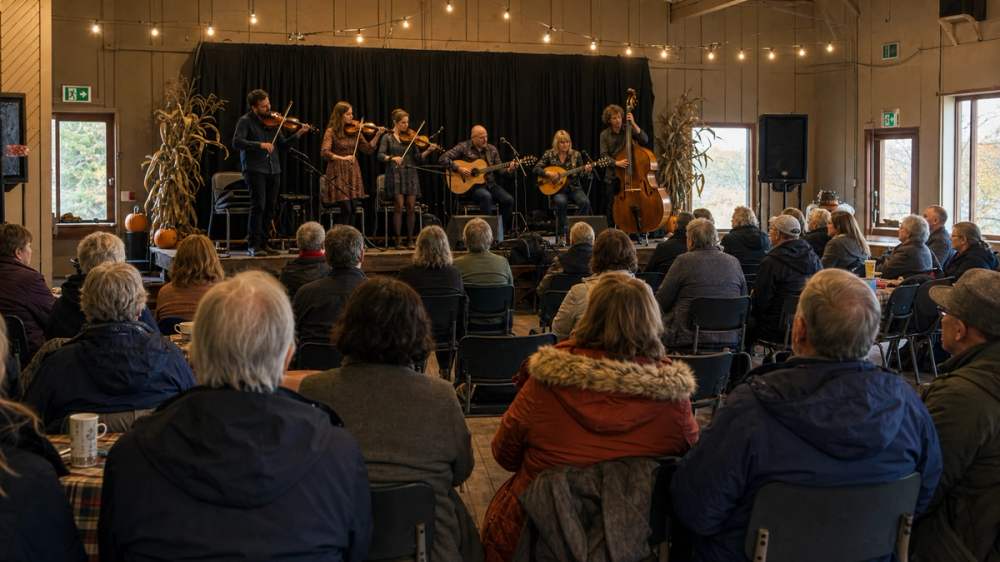
If you like the Cabot Trail idea but want music, food, and community halls in the mix, plan around the Celtic Colours International Festival. Each October, for nine days, Cape Breton turns itself into a moving festival: 50+ concerts and hundreds of community events in churches, school gyms, theatres, and halls across more than 30 communities.
Days might mean guided hikes, house concerts, quilting bees, and community suppers in places like Christmas Island and Pleasant Bay; evenings bring full-on concerts pairing Cape Breton fiddlers and step-dancers with visiting artists from Scotland, Ireland, Brittany and beyond. The legendary Festival Club at the Gaelic College runs late into the night, where musicians jam informally after official shows and the most memorable sets are often the unplanned ones.
Celtic Colours basics
Why it’s bucket-list: It’s as central to Cape Breton’s cultural identity as the Calgary Stampede is to Alberta’s cowboy mythology – just with fiddles instead of rodeo stock.
When & where: Annually in early–mid October; the 30th edition runs October 9–17, 2026, with events scattered all over the island.
How to do it: Pick a few base towns (Baddeck, Sydney, Cheticamp) and plan your drives between concerts like mini road trips; tickets for popular shows and suppers sell out, so book ahead.
Feel the world’s highest tides at the Bay of Fundy
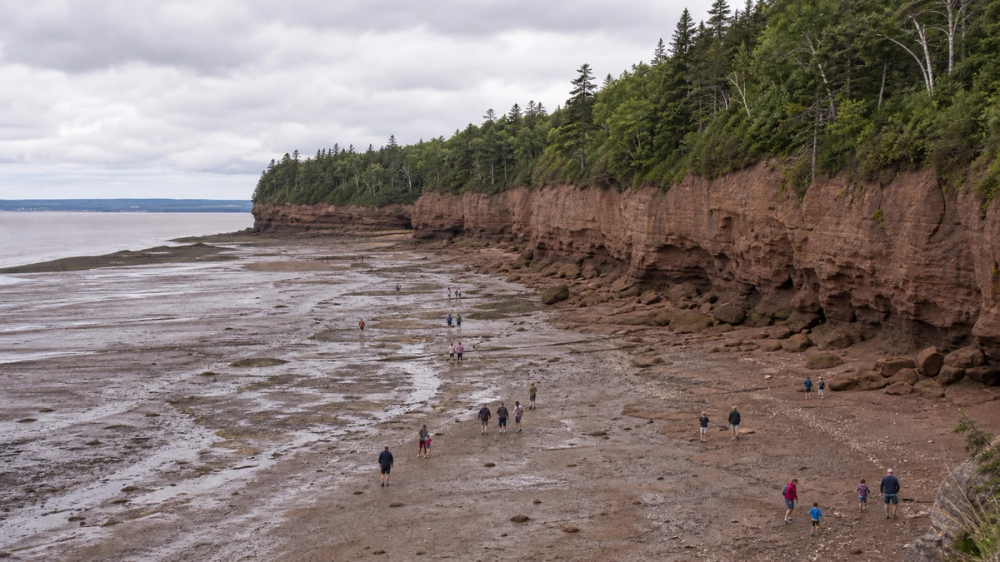
The Bay of Fundy between Nova Scotia and New Brunswick is famous for having some of the highest tides in the world, and Nova Scotia’s side gives you several ways to feel it rather than just read a sign. At Burntcoat Head Park on the Minas Basin, the tidal range has been measured at up to 16.3 metres (53.5 feet) – roughly the height of a five-storey building. At low tide, you can walk on the ocean floor among seaweed-draped rocks; a few hours later, the same spot is underwater with fishing boats floating far above your footprints.
If you want something wilder, Cape Chignecto Provincial Park on the Fundy shore offers the Cape Chignecto Coastal Loop, a roughly 50 km, 3–4 day backpacking route along cliffs, beaches, and deep inlets. It’s often called Nova Scotia’s top multi-day trail, with campsites perched above the water and long views down the coast that change mood entirely between fog, sun, and tide cycles. Less ambitiously, you can day-hike sections from trailheads like Eatonville or Red Rocks.
Fundy basics
- Best view: Low-tide walks at Burntcoat Head, then returning at high tide to see just how much water has snuck in; or the cliff-edge lookouts of Cape Chignecto at sunset.
Tide timing: Use tide tables for Burntcoat Head and the Fundy coast; plan to arrive an hour or so before low tide if you want to walk the sea floor safely.
Trail warning: Cape Chignecto’s loop is remote and strenuous with steep climbs and limited facilities; best for experienced hikers with proper gear.
Why Nova Scotia is the Perfect Road Trip Destination (And What You Can't Miss Along the Way) - Tourism Nova Scotia
Paddle, camp, and stargaze in Kejimkujik
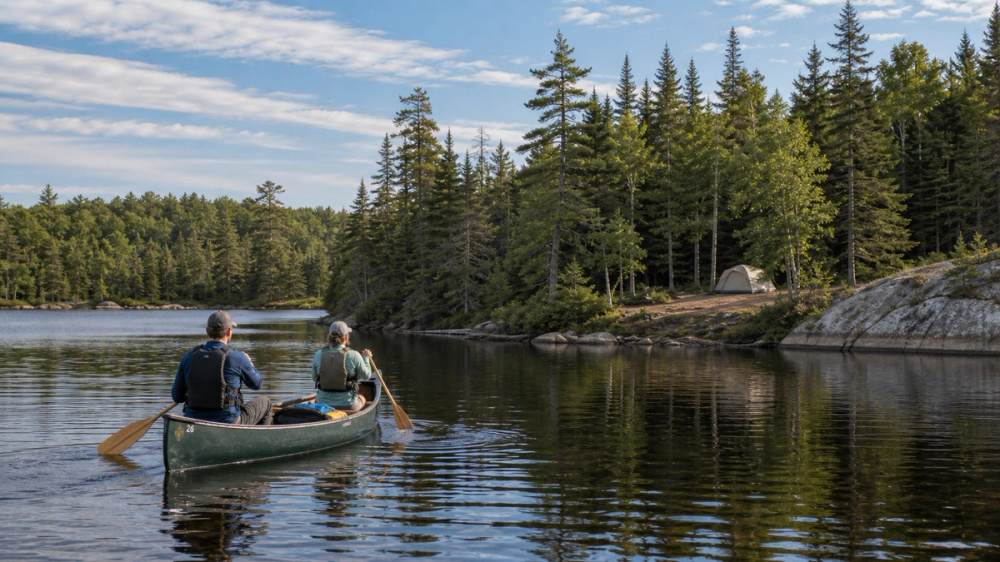
In the interior, Kejimkujik National Park and National Historic Site (known as Keji) is all lakes, rivers, old-growth forest, and Mi’kmaq history. The park protects traditional Mi’kmaq lands and features petroglyph sites along the Mersey River where rock carvings – some more than 3,000 years old – depict people, animals, canoes, and symbols. Guided tours help you see and interpret the carvings without damaging them.
Kejimkujik is built for multi-day canoe trips and relaxed front-country camping. Dozens of lakes and streams link together in loop routes, with backcountry campsites accessible only by paddle and portage. On land, trails wind through old hemlock stands, along rivers, and to lookouts. At night, Keji’s Dark Sky Preserve designation means the Milky Way shows up in full detail; spots like the Sky Circle viewing area give you wide horizons and minimal light pollution for stargazing.
Keji basics
- Best view: A still lake at dusk or full dark, canoe pulled up on a simple backcountry site, stars dropping all the way to the treeline.
Highlights: Petroglyph tours, canoe-camping routes, old-growth forest walks, and ranger-led night sky programs in summer.
Bonus: There’s also Kejimkujik Seaside on the Atlantic coast – separate from the main park – with white sand beaches and rugged headland trails.
Stroll Halifax’s waterfront and eat its official 2 a.m. food
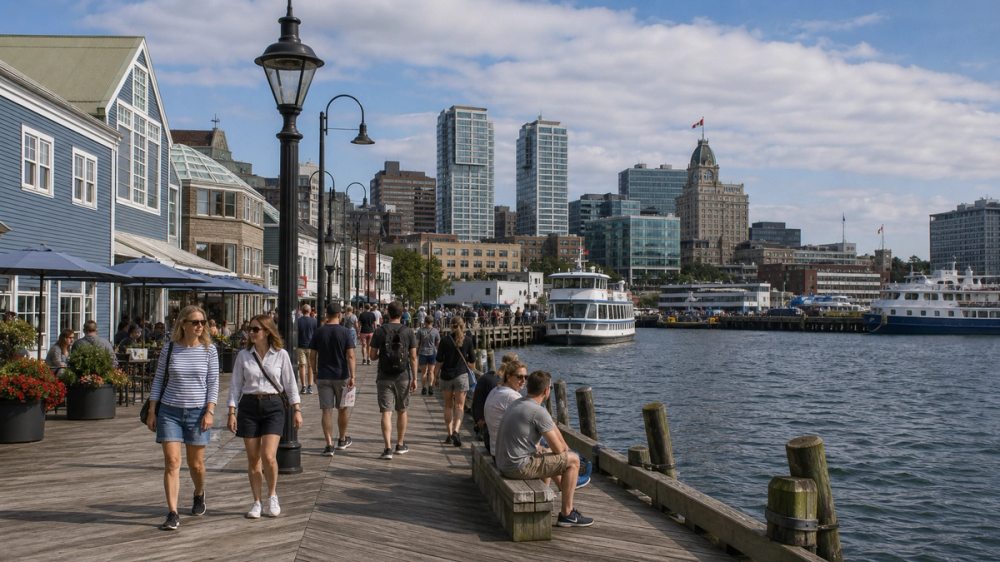
Halifax is a small capital with a big harbour and a dangerous concentration of places to eat and drink along its waterfront. Start at Halifax Citadel National Historic Site, a star-shaped hilltop fort where you can wander ramparts and hear the noon gun, then drop down to the Harbourfront Boardwalk, a several-kilometre run of piers, restaurants, patios, the Maritime Museum of the Atlantic, and the Halifax Seaport Farmers’ Market. On summer evenings, buskers, boats, and beer gardens keep things lively without feeling overwhelming.
For a very specific cultural experience, try a Halifax donair. In 2015, Halifax city council voted the donair – spiced shaved beef in a pita with sweet garlic sauce and chopped onions and tomatoes – as the official food of Halifax after a close 8–7 vote, decided by the mayor’s tie-breaker. It’s messy, sweet, and best appreciated after a night out when you’re slightly smug and slightly underdressed for the wind coming off the harbour.
Halifax basics
- Best view: Late-day stroll along the waterfront boardwalk, with the harbour lit up and the Citadel silhouetted behind downtown.
Don’t miss: Donairs from long-running spots like the pizza shops downtown, a brewery or distillery stop, and the Maritime Museum’s Titanic and Halifax Explosion exhibits.
Handy detail: Halifax is a practical base for day trips to Peggy’s Cove, Lunenburg, the Annapolis Valley wine region, and the Eastern Shore.
Wander colourful Lunenburg and the South Shore
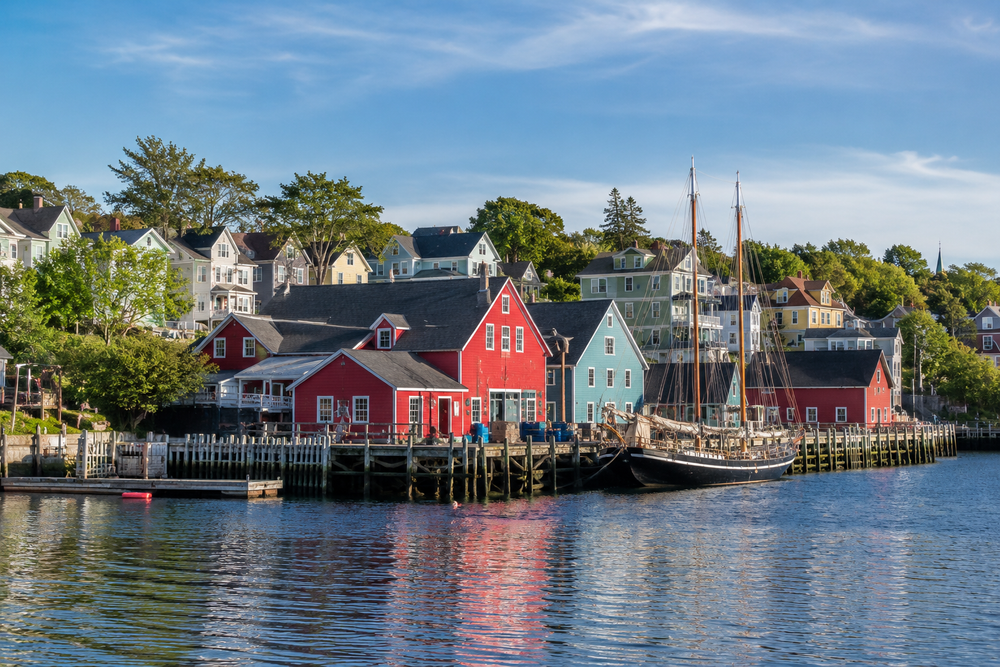
Lunenburg, on the South Shore, is a compact, walkable town of sloping streets and wooden houses painted like someone spilled a box of crayons down the hill. Its Old Town is a UNESCO World Heritage Site for being a remarkably intact example of a planned British colonial settlement, with a grid layout and 18th–19th century wooden architecture that survived both time and prosperity. Down by the waterfront, the Bluenose II – a replica of the famous racing schooner on Canada’s dime – often sits at the wharf between sailing tours.
Nearby Mahone Bay adds a quieter curve of shoreline with iconic churches and more boutiques and cafés, while fishing villages like Blue Rocks deliver classic Nova Scotian photo ops: seaweed-draped skiffs, weathered shacks, and rock outcrops leading straight into the Atlantic. The food scene leans seafood and local produce; sitting on a deck with fishcakes or chowder while fog slides in and out of the harbour will make you unreasonably smug about your destination choice.
Lunenburg basics
- Best view: Lunenburg’s waterfront from across the harbour or a higher street, colourful façades stacked above the wharves.
What to do: Old Town walking tour, Fisheries Museum of the Atlantic, possible sail on Bluenose II, and a side trip to Mahone Bay or Blue Rocks for quieter coastal wandering.
Peggy’s Cove add-on: Combine Lunenburg with Peggy’s Cove lighthouse – beautiful, but stay off the dark, wet rocks; rogue waves here are not a joke.
Watch whales off Brier Island at the end of the road
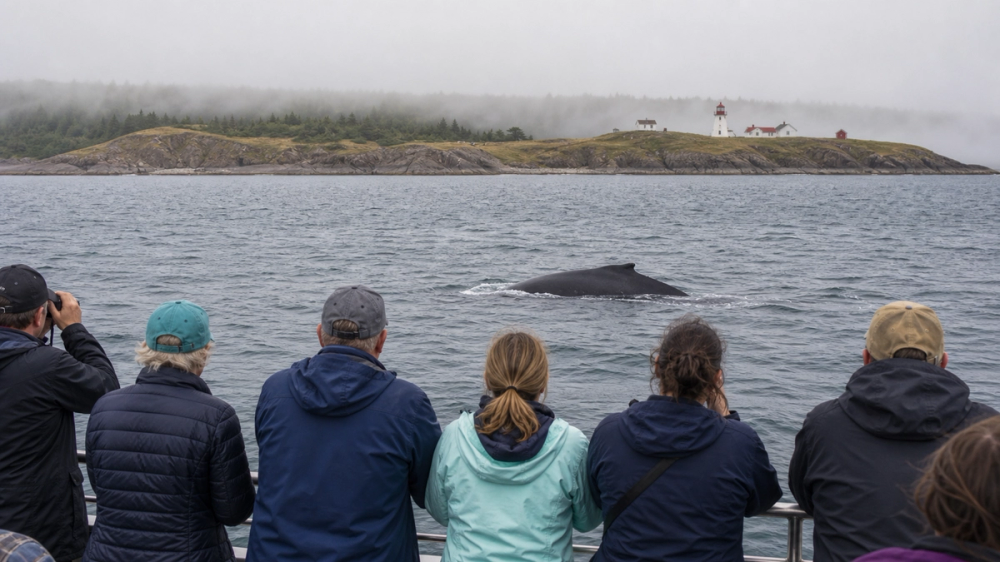
At the far tip of Digby Neck and the Islands, Brier Island is a small basalt island that punches way above its weight for wildlife. Whale and seabird watching is the main event: tours leave from Westport and neighbouring islands, heading into the rich feeding grounds where the Bay of Fundy meets the Gulf of Maine.
Operators on Digby Neck and Brier Island often coordinate so that only two boats at a time are around any given whale or group, following a code of ethics to keep things calm for the animals while still giving passengers close, respectful views. From June through September, humpbacks, minkes, fin whales and others show up, along with porpoises and a rotating cast of seabirds; tours are typically 3–4 hours, though captains will often stay longer if whales are just out of reach. Between trips, trails around the island – including lighthouse walks and coastal paths – give you cliff-top viewpoints over the Fundy chop.
Brier Island basics
- Best view: Boat decks with humpbacks surfacing nearby, or clifftops near the Western Light at sunset.
- Getting there: Brier Island sits about 3 ferries and several causeways away from Digby; it’s a bit of a mission but a very scenic one.
- Pair it with: A stop in Digby itself for scallops, and Annapolis Royal / Annapolis Valley on the way back toward Halifax.
Sip wine between tides in the Annapolis Valley
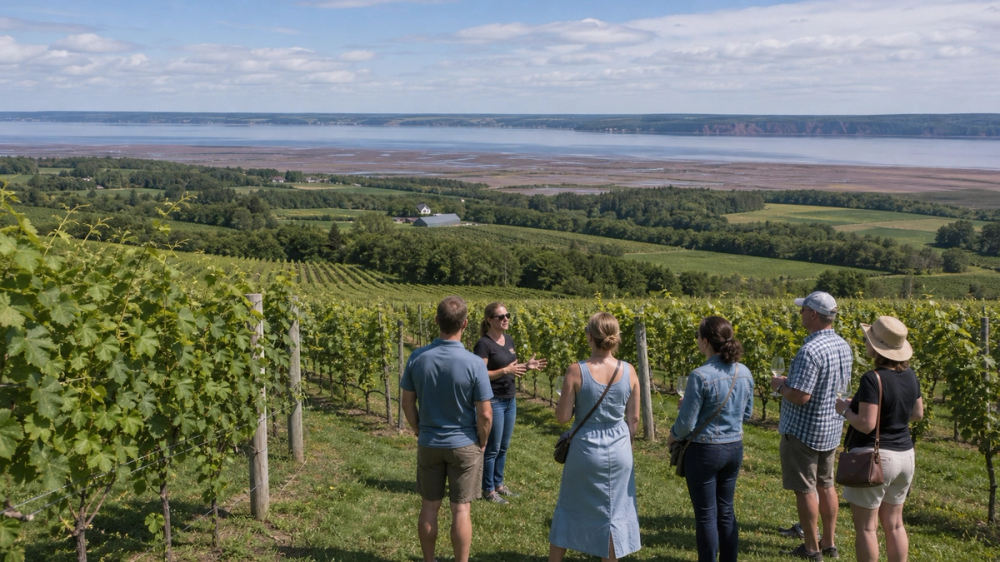
The Annapolis Valley, especially around Wolfville, Gaspereau, and Grand Pré, is Nova Scotia’s wine country: a long, fertile valley framed by low ridges and open to the moderating influence of the Bay of Fundy. Vineyards here have been producing wine grapes in some form since the 1600s, and the region around Grand Pré is now recognized as a UNESCO World Heritage Site for its cultural landscape – a patchwork of dykes, fields, villages, and marshlands created by Acadian settlers adapting to Fundy’s huge tides.
Modern wineries cluster in the Gaspereau Valley and along Highway 1 between Wolfville and Grand Pré, with well-known names like Benjamin Bridge and Luckett Vineyards offering tastings, patios, and sweeping views over rows of vines toward the Minas Basin. Many focus on crisp whites and sparkling wines that suit the cool climate, and several have picnic menus or encourage you to bring your own picnic to enjoy on the grass. Just down the road, Grand-Pré National Historic Site tells the story of Acadian settlement and the 18th-century deportations, tying the landscape and its agriculture to a deeper history. Nearby hikes like Cape Split and the Blomidon look-off give you high views across Fundy’s tide-sculpted shoreline.
Valley basics
- Best view: Vineyard patios in the late afternoon, bay and dykelands stretching out behind rows of vines; or the Blomidon look-off over the Minas Basin.
Tasting tips: Join a wine tour from Halifax or Wolfville if you want to fully participate; roads are narrow, and designated drivers deserve nice things too.
Add-ons: Grand-Pré National Historic Site, Annapolis Royal’s historic core, and Fundy hikes like Cape Split and Blomidon.
Walk the streets and surf the waves of the Eastern Shore
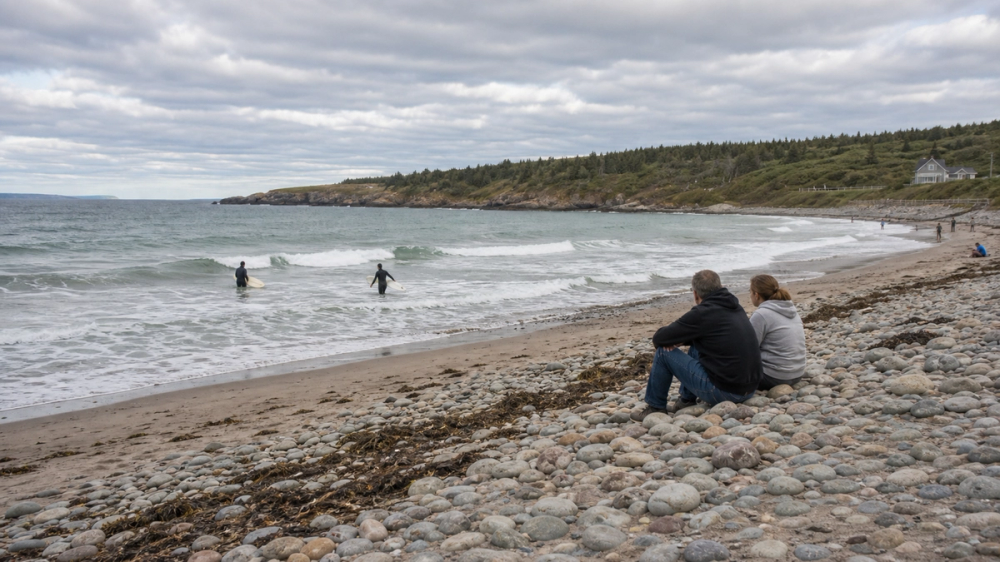
For a quieter coastal fix, the Eastern Shore east of Halifax threads together small communities, long beaches, and surf breaks without the crowds of the South Shore. Lawrencetown Beach is a well-known year-round surf spot, with rental shops and schools catering to everyone from beginners to winter-wetsuit fanatics. Further along, beaches and provincial parks like Taylor Head offer dune-backed sand and wooded trails around headlands where you might see as many eagles as people.
Inland detours lead to lakes and old gold-mining communities, but the real draw here is that the Atlantic feels close and unpolished: fewer souvenir shops, more weathered wharves and real working harbours. It’s a good place to slow down once you’ve ticked off the more obvious icons.
Eastern Shore basics
- Best view: Cliff-edge trails and beaches around Taylor Head or Lawrencetown, especially in shoulder season light when the crowds disappear.
What to do: Surf lessons or rentals, beach walks, coastal hikes, and a lot of staring at waves.
- When to go: Summer for warmish water and full services; spring and fall for moody weather, fewer people, and dramatic surf.
Stitch your own loop through the province
The nice thing about Nova Scotia’s size is that you don’t have to choose between these experiences unless you’re in a serious hurry. A couple of weeks lets you combine Halifax, the South Shore, Annapolis Valley, Bay of Fundy, Kejimkujik, and Cape Breton/Cabot Trail without feeling frantic. Add Celtic Colours in October and the whole island becomes one extended cultural road trip on top of the scenery.
However you draw your route, expect a lot of coastline, more lobster and chowder than you planned on, and a surprising number of places where you will think “one more night here wouldn’t hurt.”
Related travel guides:
Page details
Author: Thomas Tremblay
Updated: June 22, 2026
Last reviewed: June 22, 2026
Sources verified: June 22, 2026
Cite this page: Canooq.ca, Nova Scotia Bucket List: 9 Unmissable Things to Do, https://www.canooq.ca/travel/nova-scotia-bucket-list
Canooq content is educational and may include affiliate or referral links. It is not financial, tax, legal, immigration, employment, mortgage, real estate, or healthcare advice. Verify official sources and provider terms before acting.
Enjoy Canooq? Let us keep helping you — make Canooq a preferred source on Google.