Vancouver Whale Watching: Tours, Wildlife, and the Best Time to Go

July 16, 2026
This practical guide will help you plan Vancouver whale watching from tours, whale sightings, seasonal timing, departure points, packing, to responsible wildlife viewing.
What's on this page
Plan a Vancouver whale-watching trip with practical advice on the best season, sighting likelihood, departure points, boat styles, what to pack, responsible viewing, and current GetYourGuide tour options.
Vancouver whale watching: what the day feels like
Vancouver puts you within easy reach of the Salish Sea, where forested islands, mountain horizons, and productive feeding waters create one of British Columbia's most memorable outdoor days. A whale-watching trip can feel like a proper escape from the city while still fitting into a single morning or afternoon.
The experience builds through small moments: the skyline falling behind you, a guide reading the water, seabirds gathering over a feeding area, and then a blow, fin, or tail appearing on the horizon. Plan for a few hours on the water, bring warm layers, and choose a tour that gives the wildlife room to behave naturally.
What you can see
The Salish Sea supports several species, and the mix changes with season, tide, food availability, and the route your captain chooses. A good trip gives you context for every sighting rather than rushing from one animal to the next.
Orcas
Orcas are the sighting many visitors hope for. Bigg's, or transient, orcas travel in family groups and hunt marine mammals such as seals and sea lions. Southern Resident orcas feed on salmon and move through the region in relation to prey availability. Each population has its own behaviour and conservation story, which a marine naturalist can explain on the water.
Humpback whales
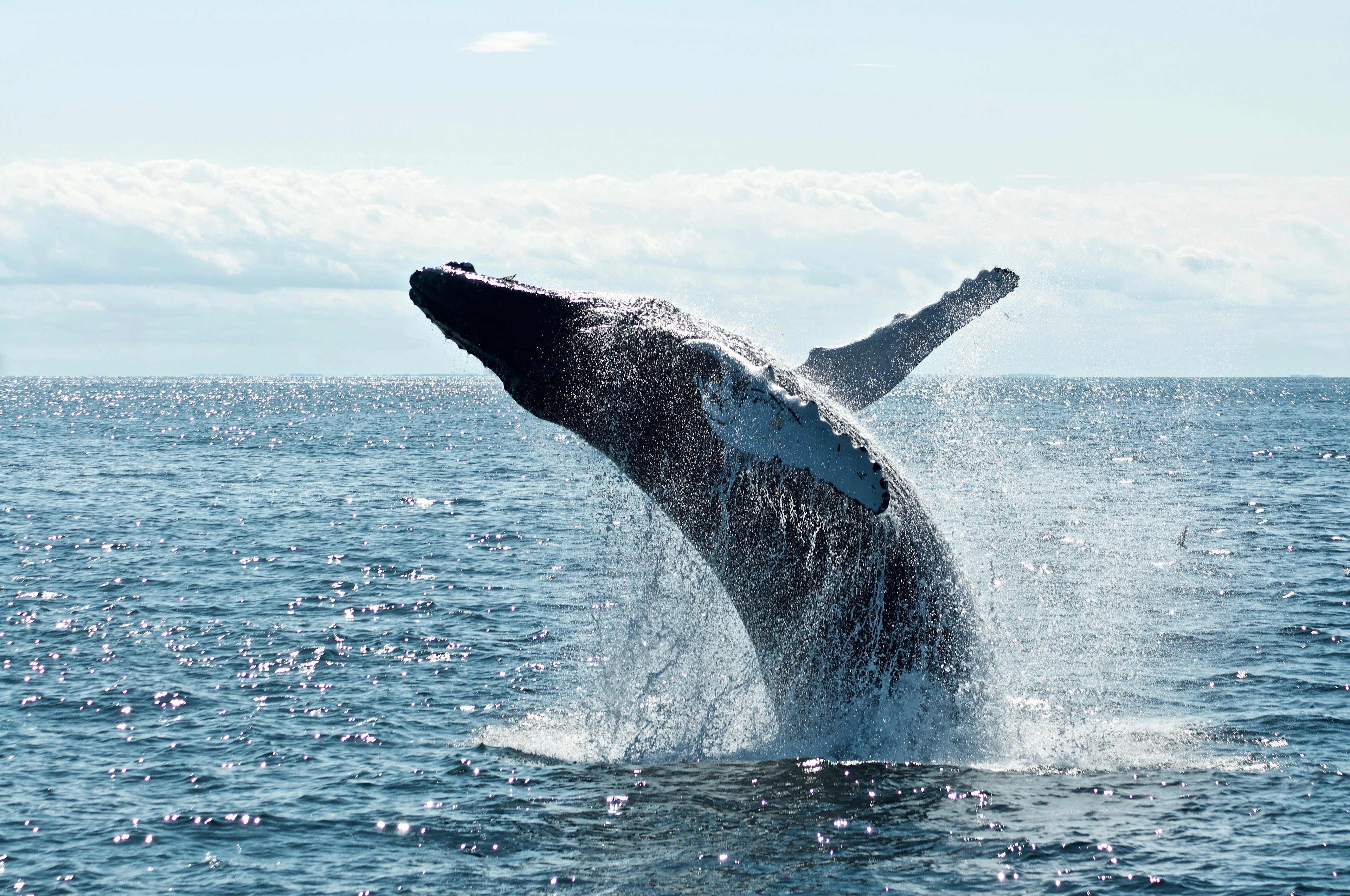
Humpbacks are a major draw from spring through fall. Their blows are often the first sign that a whale is nearby, followed by a broad back, a tail fluke, or an occasional breach. A humpback surfacing beside a quiet stretch of ocean is the kind of encounter that makes the whole boat go silent for a moment.
Other marine life
Seals, Steller sea lions, Dall's porpoises, grey whales, minke whales, bald eagles, and seabirds can all add to the day. These sightings keep the trip interesting while the captain searches for larger whales, and they make binoculars worth packing even when the water looks empty at first glance.
How likely are you to see a whale?
Destination Vancouver currently lists a 95% whale-sighting success rate for Vancouver tours. That is a strong planning benchmark: most departures produce a whale sighting, and many outings also include seals, porpoises, sea lions, or seabirds. Your specific trip depends on weather, route, season, and where wildlife is feeding that day, so choose an operator that makes the search and marine interpretation part of the experience. See the current Destination Vancouver whale-watching guide for its latest season and sighting information.
- Best odds: plan between April and October, keep one flexible day in your itinerary, and book with an operator that actively shares recent sighting information.
- Best mindset: expect a real wildlife search rather than a scheduled performance. The scenery, guide commentary, and smaller marine mammals carry the outing while the boat looks for whales.
- Best backup plan: ask about the operator's return-trip or sighting policy before booking, then keep enough flexibility to use it if conditions or wildlife movement make the first trip quieter.
When to go whale watching in Vancouver
The main viewing season runs through spring, summer, and early fall, with April to October the most useful window for visitors planning around wildlife. Operators and routes vary, so check the live calendar rather than relying on a single seasonal label.
- April to June: migrating humpbacks and early-season wildlife make spring a strong choice, with cooler air and a fresh feel on the water.
- July to August: the busiest period, with frequent departures, long daylight, and comfortable sightseeing conditions when the marine forecast cooperates.
- September to October: a quieter shoulder season with excellent humpback opportunities, lighter visitor traffic, and a greater chance of cool or windy conditions.
Where Vancouver whale-watching tours leave from
Your departure point affects both logistics and the shape of the trip. Read the meeting-point details carefully because travel time, parking, transit, and the route to open water can differ significantly.
Steveston Village in Richmond
Steveston is a practical choice when you want to reach the Gulf Islands and nearby feeding grounds efficiently. It also gives you a pleasant waterfront before or after the tour, with fish-and-chip shops, docks, and a village atmosphere that can turn the excursion into a relaxed half-day plan.
Downtown Vancouver
Coal Harbour and other downtown departure points work well for visitors staying in central hotels. The trip can begin with harbour views, the skyline, Stanley Park, and the Lions Gate Bridge before the boat heads toward more open water. That city-to-wilderness transition is part of the appeal, though the longer run may add time to the outing.
- Choose the closest departure point when you have limited time or motion-sensitive travellers in your group.
- Choose downtown when you want the harbour scenery and an easy fit with a Vancouver sightseeing day.
- Choose Steveston when you prefer a waterfront village and a route that can reach wildlife areas more directly.
Choosing the right boat and tour
The best boat depends on your comfort, your group, and the kind of day you want. Tour listings usually identify the vessel style, duration, meeting point, and age or mobility requirements.
Covered catamarans
Larger covered boats offer indoor seating, washrooms, and more shelter from wind and spray. They are a comfortable fit for families, older travellers, and anyone who wants the option to warm up between sightings while still using the viewing decks.
Open zodiac-style boats
Smaller open boats feel faster and closer to the water, with a more adventurous ride and strong sightlines around the vessel. Operators generally provide flotation gear and instructions, but these tours can be a poor match for anyone with back, neck, or motion-sensitivity concerns. Read the operator's restrictions before booking.
What to check before paying
- Departure point and check-in time, including parking or transit instructions.
- Vessel type, enclosed seating, washrooms, and the amount of time spent outside.
- Tour duration, cancellation terms, weather policy, and any age or mobility requirements.
- Whether a marine naturalist or similar guide is included.
Book a Vancouver whale-watching tour
Compare the available Vancouver whale-watching options on GetYourGuide and choose the departure, vessel, and schedule that fit your trip. Reserve summer dates early, especially if you want a specific time or a covered boat.
What to wear and pack
The water feels colder than downtown Vancouver, even on a sunny summer afternoon. Dress for wind first and sunshine second, then adjust as the boat moves into open water.
- A windproof or waterproof outer layer over warm, flexible layers.
- Closed-toe shoes with good grip for wet decks.
- Sunglasses, sunscreen, and a hat that fits securely.
- Binoculars and a phone or camera with enough battery for a few hours outside.
- Motion-sickness medication if you use it, taken according to the product instructions before departure.
Choose a responsible whale-watching operator
Responsible operators slow down, keep their distance, and let whales choose the direction of travel. Fisheries and Oceans Canada says vessels must keep at least 100 metres from whales, dolphins, and porpoises, 200 metres when the animals are resting or with a calf, and 200 metres from killer whales in Pacific Canadian waters. Current 2026 measures also set a 1,000-metre distance for Southern Resident killer whales in defined southern B.C. coastal waters. Review the latest DFO marine-wildlife viewing guidance before you go.
- Look for a crew that explains its distance rules and avoids crowding animals.
- Treat a distant sighting as a successful wildlife encounter; binoculars and patience are part of the experience.
- Keep food, hands, drones, and other objects away from marine mammals, and follow every crew instruction on deck.
Is whale watching in Vancouver worth adding to your trip?
For travellers who want a distinctly coastal Vancouver experience, whale watching is one of the easiest ways to move from city energy into open water, islands, forest, and mountain scenery in a single outing. The current 95% benchmark makes the trip a strong choice for visitors who want a good chance of seeing a whale, while the variety of marine life gives the day value from departure to return.
Build the outing around the water, choose a departure point that suits your schedule, and leave room for the animals to set the pace. When you are ready, compare the live tour options above and book your Vancouver whale-watching day on GetYourGuide.
Sources and planning links
For current season and sighting context, use Destination Vancouver's whale-watching guide. For approach distances and responsible viewing rules, use Fisheries and Oceans Canada's marine-wildlife guidance.
Related travel guides:
Page details
Author: Thomas Tremblay
Updated: July 16, 2026
Sources verified: July 16, 2026
Cite this page: Canooq.ca, Vancouver Whale Watching: Tours, Wildlife, and the Best Time to Go, https://www.canooq.ca/travel/whale-watching-vancouver
Canooq content is educational and may include affiliate or referral links. It is not financial, tax, legal, immigration, employment, mortgage, real estate, or healthcare advice. Verify official sources and provider terms before acting.
Enjoy Canooq? Let us keep helping you — make Canooq a preferred source on Google.