A Dark Sky Weekend in Cypress Hills: Where Saskatchewan Gets High and the Stars Get Loud

August 17, 2026
Cypress Hills rises out of the southern Saskatchewan prairie as a forested plateau and a dark sky preserve. How to plan a stargazing weekend around it.
What's on this page
Cypress Hills Interprovincial Park is a dark sky preserve straddling the Saskatchewan and Alberta border, high enough to hold lodgepole pine forest above open prairie. Go on a new moon between May and September, stay in the park rather than in Maple Creek, and give yourself one full night with nothing scheduled.
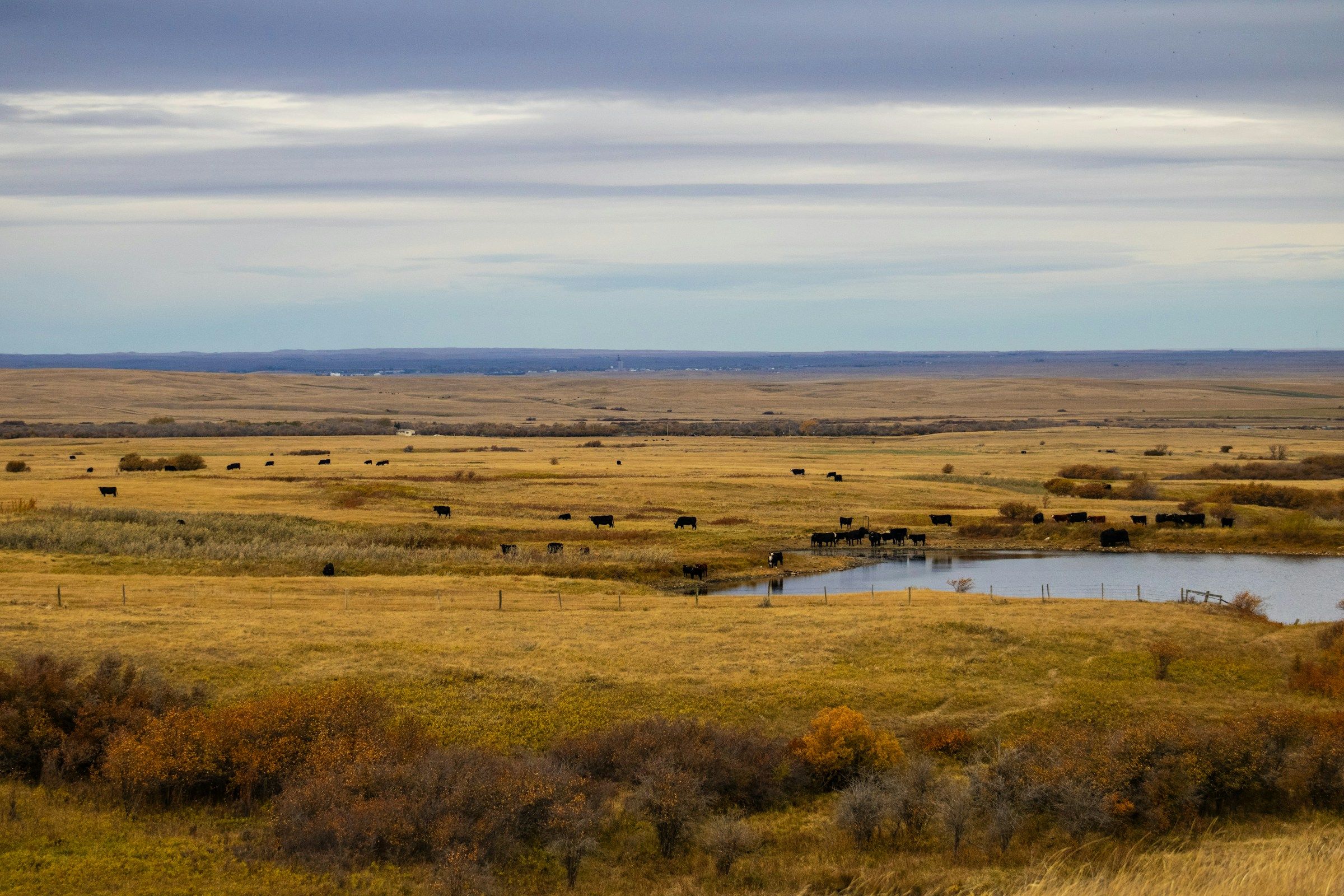
Drive southwest across Saskatchewan long enough and the land does something it is not supposed to. It rises. A green plateau appears above the wheat, wooded with lodgepole pine, and by the time you are on top of it you are higher than the townsite of Banff and standing in the highest ground in Canada between the Rocky Mountains and Labrador.
That is Cypress Hills. It escaped the last glaciation, which is why its plants and animals look wrong for the prairie, and it is a designated dark sky preserve, which is why people drive four hours to lie on their backs in a field.
Why the sky here is different
Dark sky preserves commit to controlling artificial light. In practice that means the park replaced or shielded its lighting, and there is no significant city glow for a very long way in any direction. On a clear moonless night the Milky Way is not a faint smudge. It has structure, dust lanes and enough brightness to cast a suggestion of shadow.
Elevation helps too. At around 1,300 metres on the plateau, you are above a good share of the haze that sits on the plains in summer. Combine that with the dry southwest Saskatchewan climate and you get more usable clear nights than almost anywhere else in the province.
Getting there and where to base
The Saskatchewan side has two areas. Centre Block, near Loch Leven above Maple Creek, holds the campgrounds, cabins, the resort and most services. West Block is wilder, with gravel access, fewer facilities and better solitude. The Alberta side centres on Elkwater, about half an hour further west.
- From Calgary. Around four hours east on the Trans-Canada, with Medicine Hat as the last full-service stop.
- From Regina. Around four hours west, turning south at Maple Creek.
- From Saskatoon. Closer to five hours, which makes this a three-night trip rather than two.
Maple Creek, at the base of the hills, is a genuinely pleasant small town with a hotel, a brewery and a heritage main street, and it is the fallback if the park is full. Staying in the park is better for the sky, since the drive back down at one in the morning on a deer-heavy road is the least enjoyable part of the trip.
Saskatchewan provincial parks require an entry permit, sold daily, weekly or annually per vehicle. Check current permit rules with the Pass and Parking Checker before you leave, since the park gate may be unstaffed when you arrive late.
What to do with the daylight
The nights are the point, but the days hold up. Loch Leven has a beach and canoe rentals. The Conglomerate Cliffs viewpoint looks north across the whole prairie from the edge of the plateau, and it is the single best photograph in the park.
Fort Walsh National Historic Site is the region's most substantial historical site. Its interpretation addresses the North-West Mounted Police post and the Cypress Hills Massacre of 1873 directly, and the visit is worth half a day.
Wildlife is unusually visible: elk, moose, deer, wild turkeys and over 200 bird species, including trumpeter swans. The forest holds species that otherwise stop at the foothills, which is what makes the plateau ecologically strange.
Pair it with Grasslands if you have three nights
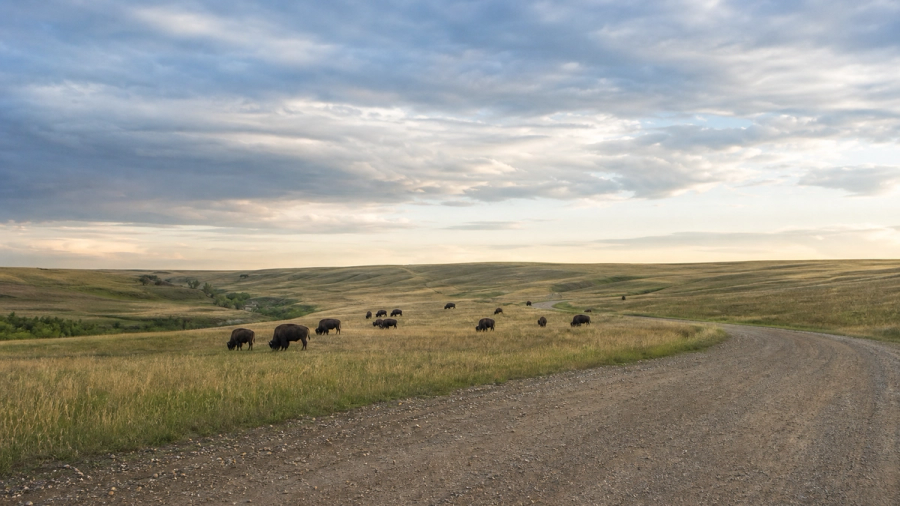
Two and a half hours southeast, Grasslands National Park is also a dark sky preserve and offers the opposite landscape: no trees, badlands, bison and horizon in every direction. Doing both in one trip gives you two of the darkest skies in Canada and a genuine contrast between plateau forest and open prairie.
This part of Saskatchewan is where the Saskatchewan bucket list earns its keep, and if you are chasing aurora rather than stars, our northern lights guide covers the timing that matters at this latitude.
Planning a Cypress Hills weekend
Drive times are one way and assume good summer road conditions.
| From | Drive | Suggested nights | Note |
|---|---|---|---|
| Calgary | About 4 hours | Two | Break the drive at Medicine Hat |
| Regina | About 4 hours | Two | Turn south at Maple Creek |
| Saskatoon | About 5 hours | Three | Consider pairing with Grasslands |
| Medicine Hat | About 1.5 hours | One or two | Closest city base |
How a night out under the sky actually goes
Astronomical darkness in June arrives late, close to eleven at this latitude, and the sky does not properly finish twilight until later still. In September you get full darkness by nine, which is one reason the autumn trips are easier with anyone who needs a bedtime. Give your eyes 20 to 30 minutes to adapt before you decide the sky is disappointing, because it takes that long.
Pick an open spot away from the treeline and away from the campground washroom lights. The field near the Conglomerate Cliffs and the open ground around Loch Leven both work. Then do very little. The point of a dark sky preserve is that nothing needs to happen: satellites cross, the Milky Way rotates, and every fifteen minutes or so something falls.
What to bring for the night
- A red light headlamp. White light destroys night vision for everyone around you, including yourself.
- More layers than the daytime temperature suggests. The plateau drops hard after dark, even in July.
- A reclining chair or a foam pad. Standing and craning gets old in ten minutes.
- Binoculars before a telescope. For the Milky Way, a decent pair beats a small scope every time.
To compare this with other quiet-weekend options by province and trip length, the Experience Finder filters Canooq guides by both.
Plan the rest of the trip
Park permits, campground bookings and moon phase decide whether this weekend works.
Common questions
Is Cypress Hills really higher than Banff?
The plateau tops out above the elevation of the Banff townsite, though nothing near the surrounding peaks. It is the highest ground in Canada between the Rockies and Labrador.
When is the best time to visit for stargazing?
Late spring through early autumn, on a clear night within a few days of a new moon. Mid-August adds the Perseids.
Can you see the northern lights from Cypress Hills?
Sometimes. It is far enough south that aurora needs a strong geomagnetic event, but the dark northern horizon means you will see it when it happens.
Do you need to book accommodation in advance?
Yes for summer weekends and absolutely for the Perseids. Cabins and serviced sites in Centre Block are the first to go.
Sources
Related travel guides:
Page details
Author: Thomas Tremblay
Updated: August 13, 2026
Last reviewed: August 13, 2026
Sources verified: August 13, 2026
Cite this page: Canooq.ca, A Dark Sky Weekend in Cypress Hills: Where Saskatchewan Gets High and the Stars Get Loud, https://www.canooq.ca/travel/cypress-hills-dark-sky-weekend
Canooq content is educational and may include affiliate or referral links. It is not financial, tax, legal, immigration, employment, mortgage, real estate, or healthcare advice. Verify official sources and provider terms before acting.
Enjoy Canooq? Let us keep helping you — make Canooq a preferred source on Google.